- Define the machine's operation
- Check mixture and finish fit
- Confirm operator and access plan
Reddit discussions identify questions; technical guidance comes from the linked primary sources. This article is not a site inspection or an engineered specification. How we research.
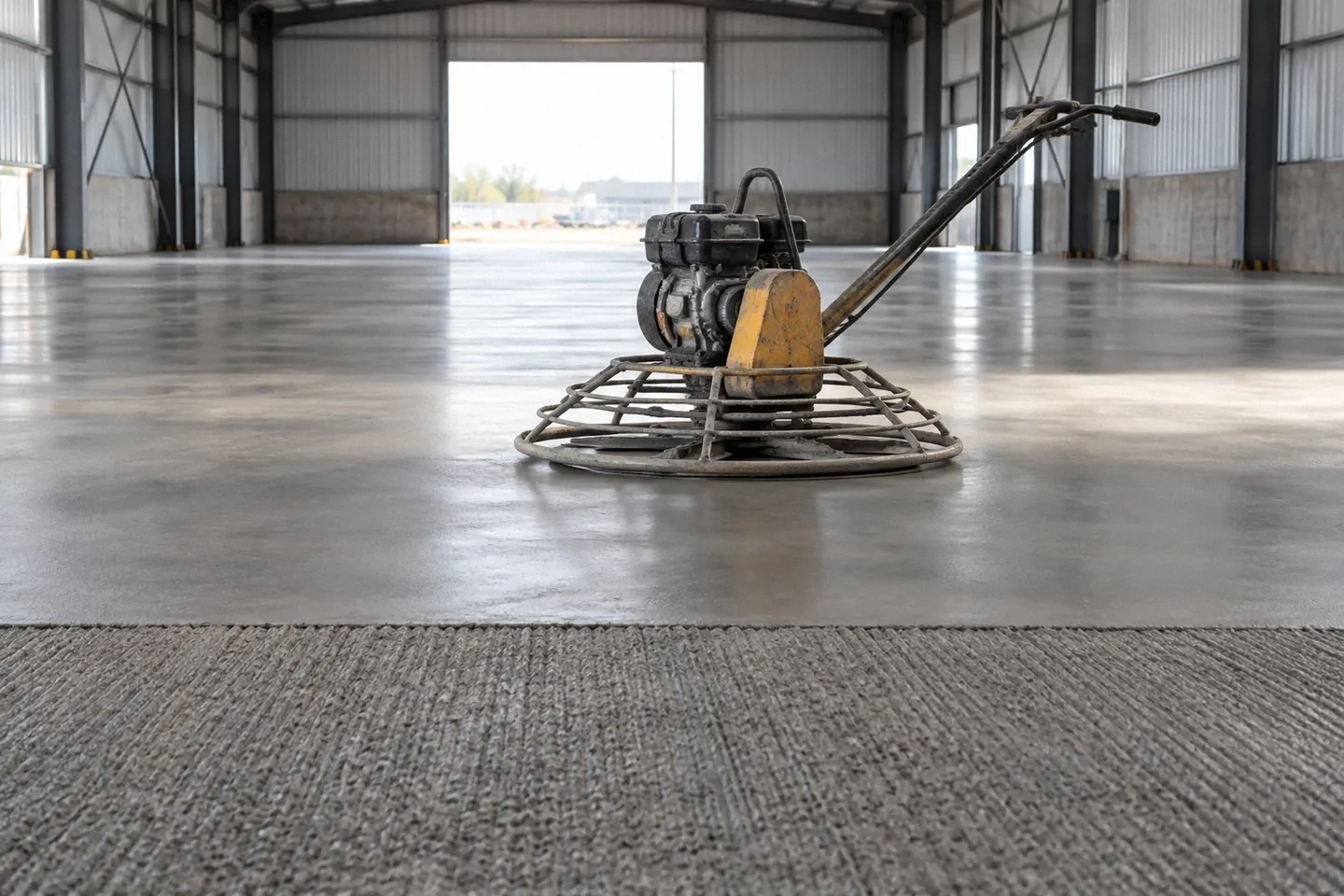
A power trowel can appear on a large broom-finished project without implying that the surface will receive a glossy interior-floor finish. Conversely, a crew may complete good exterior flatwork without using one. The equipment name alone does not describe the operation.
A Reddit concreter asked why power trowels with pans were uncommon on some broom-finished jobs. The question is useful because it separates the machine from one particular way of using it. Owners should make the same distinction when reviewing a proposed method.
Ask what attachment and operation are intended
A floating pan and finishing blades serve different purposes. The MARSHALLTOWN power-trowel manual describes floating and finishing operations separately.
Ask the contractor to explain the planned sequence in ordinary language. What problem will the machine solve, when will it be used, and what happens afterward? “We power trowel everything” does not answer those questions.
Do not infer the sequence from a photograph of the machine parked near the slab. The relevant facts are its attachment, use, and timing within the actual process.
Match the operation to the mixture
The mixture and exposure requirements matter to finishing. A technique used for a dense interior floor should not be copied automatically onto an air-entrained exterior slab.
NRMCA's flatwork guidance addresses appropriate finishing practices. Use that context to ask whether the proposed operation is compatible with the specified concrete and final texture.
This is not a rule that every machine operation is wrong outdoors. It is a reason to evaluate the actual process rather than approve or reject the equipment categorically.
Consider the size and shape of the work
A broad unobstructed field differs from a narrow patio with corners, columns, steps, and fences. A machine may cover the open area efficiently while leaving substantial detail work.
Map the perimeter and obstacles. Ask how edges and transitions will be coordinated with the machine-worked field. The owner should not assume a large piece of equipment eliminates the need for skilled handwork.
Also consider access for moving the machine on and off the work. An equipment plan is incomplete if transportation, setup, and removal are improvised after placement.
A hypothetical patio rental decision
Suppose a homeowner sees a video of a large slab being machine finished and decides to rent a power trowel for a small backyard patio. Nobody in the group has operated one.
On review, the patio contains tight corners and a narrow access gate. The planned finish is a simple broom texture. The rental adds setup, handling, and operator demands without a clearly identified benefit.
The better decision may be an appropriate hand-tool sequence with enough experienced help. Alternatively, if the project genuinely needs machine floating, arranging a competent operator may be more sensible than learning during the pour.
The example is not a size cutoff. It illustrates why equipment should follow the operation and crew capability.
Compare complete finishing plans
| Factor | Question for the installer |
|---|---|
| Mixture | Is the operation compatible with the specified concrete? |
| Attachment | Pan, combination blade, or finishing blade? |
| Timing | What concrete condition triggers the operation? |
| Geometry | How are corners and edges handled? |
| Crew | Who operates and who manages detail work? |
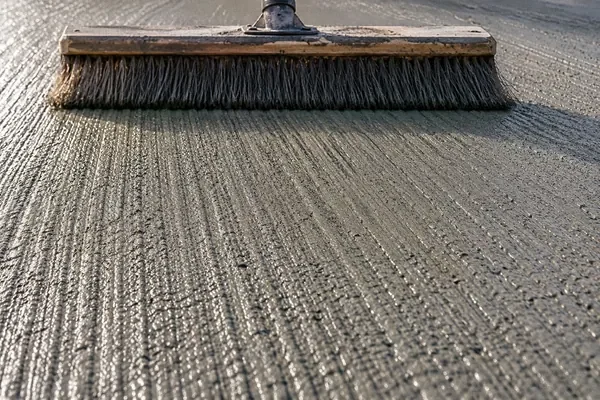
| Texture | How will the agreed broom finish follow? |
| Curing | Who starts protection after finishing? |
A contractor who can explain this sequence provides more useful evidence than one who treats machine ownership as a quality guarantee.
Timing cannot be rented with the machine
A machine distributes its load differently from a person's hand tool. That does not mean it can be used whenever the surface looks ready.
The operator needs to understand the actual concrete condition and the equipment's intended use. A fixed clock interval copied from another pour is not a dependable universal instruction.
If the surface and underlying concrete are behaving differently because of weather or mixture conditions, the crew must respond to that situation. More equipment does not remove the need for judgment.
Keep operating competence explicit
Read the manual for the exact model and use the required guards and controls. The MARSHALLTOWN manual emphasizes operator attention and functioning safety devices; a borrowed machine should not be treated as self-explanatory.
For an owner hiring a crew, ask who will operate the equipment. For a do-it-yourself project, arrange appropriate instruction and practice before a consequential pour.
Do not use the slab as the first opportunity to discover that the machine is difficult to control or unsuitable for the available space. That is a planning failure that can be avoided.
Specify the result independently of the tool
Approve the texture, direction, edge treatment, and any sample before placement. The machine is part of the contractor's method for achieving that result, not the result itself.
Avoid paying for a “power-troweled upgrade” without understanding what changes in the finished surface or process. A more expensive operation may be unnecessary or unsuitable for the desired use.
Equally, do not reject a well-supported pan-floating method merely because you associate the equipment with glossy floors. Ask for the actual sequence and its rationale.
Map the areas that still need handwork
Before choosing a machine, count the areas it cannot meaningfully serve: narrow strips, inside corners, and spaces around fixed objects. Put those areas on the crew's sketch and assign the detail work explicitly. A large open field can make machine floating efficient while the perimeter still determines the overall schedule. That distinction helps compare labor plans without assuming that mechanization eliminates hand finishing.
Frequently asked questions
Are pans and finishing blades interchangeable?
No. They perform different operations and require appropriate use. Identify the exact attachment and purpose.
Is a power trowel a good first-patio rental?
Not automatically. Start with the required finish, geometry, and available competence, then choose equipment that supports a realistic plan.
Research references
- primary · search-excerpt
MARSHALLTOWN Power Trowel Manual - primary · full
NRMCA CIP 14 Finishing Concrete Flatwork - reddit · search-excerpt
Power trowel on brushed concrete