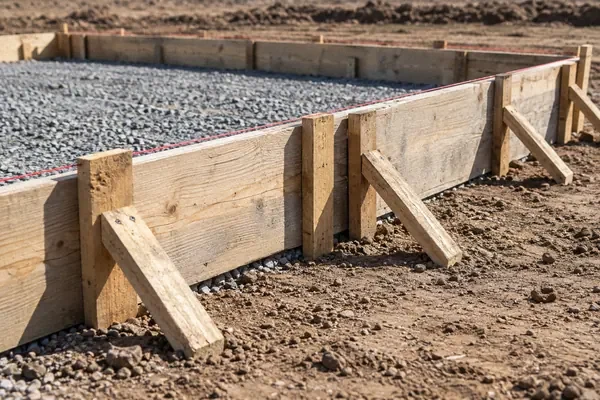
- Check form and aggregate clearance
- Choose the consolidation method
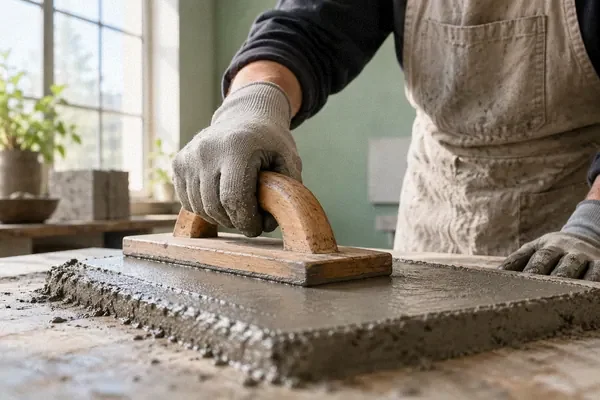
- Coordinate placement and finish
Reddit discussions identify questions; technical guidance comes from the linked primary sources. This article is not a site inspection or an engineered specification. How we research.
A bag of concrete can look too rocky when the desired result is a clean formed edge. That does not automatically mean the aggregate must be removed or extra cement added. The first questions are whether the mixture suits the section and whether the placement method can fill it properly.
A Reddit owner casting raised beds worried that coarse particles would spoil the appearance. The useful planning response is to examine the whole casting process rather than redesign a packaged mixture by guesswork.
Start with the narrowest passage
Concrete must move through the actual space between forms, reinforcement, and embedments. A broad slab field can be easy to fill while a narrow edge or congested corner creates a different challenge.
Check those clearances before selecting the mixture. If the geometry is too tight for the proposed material or method, resolve it before placing begins.
NRMCA's ordering guidance connects aggregate selection with section dimensions and spaces through which concrete must pass. Use that principle to ask the supplier a specific question about your formed section.
Prepare the face that creates the appearance
The form surface contributes to the finished face. Joints, fasteners, texture, release treatment, and cleanliness should be reviewed against the appearance the owner expects.
An architectural face needs a more explicit appearance discussion than an edge that will be concealed. A sample using the actual form material and mixture can reveal whether the proposed process produces the desired result.
Do not assume that stripping the form will erase a rough or inconsistent setup. Temporary construction leaves a permanent impression, so inspect it while corrections are still possible.
Define consolidation as part of placement
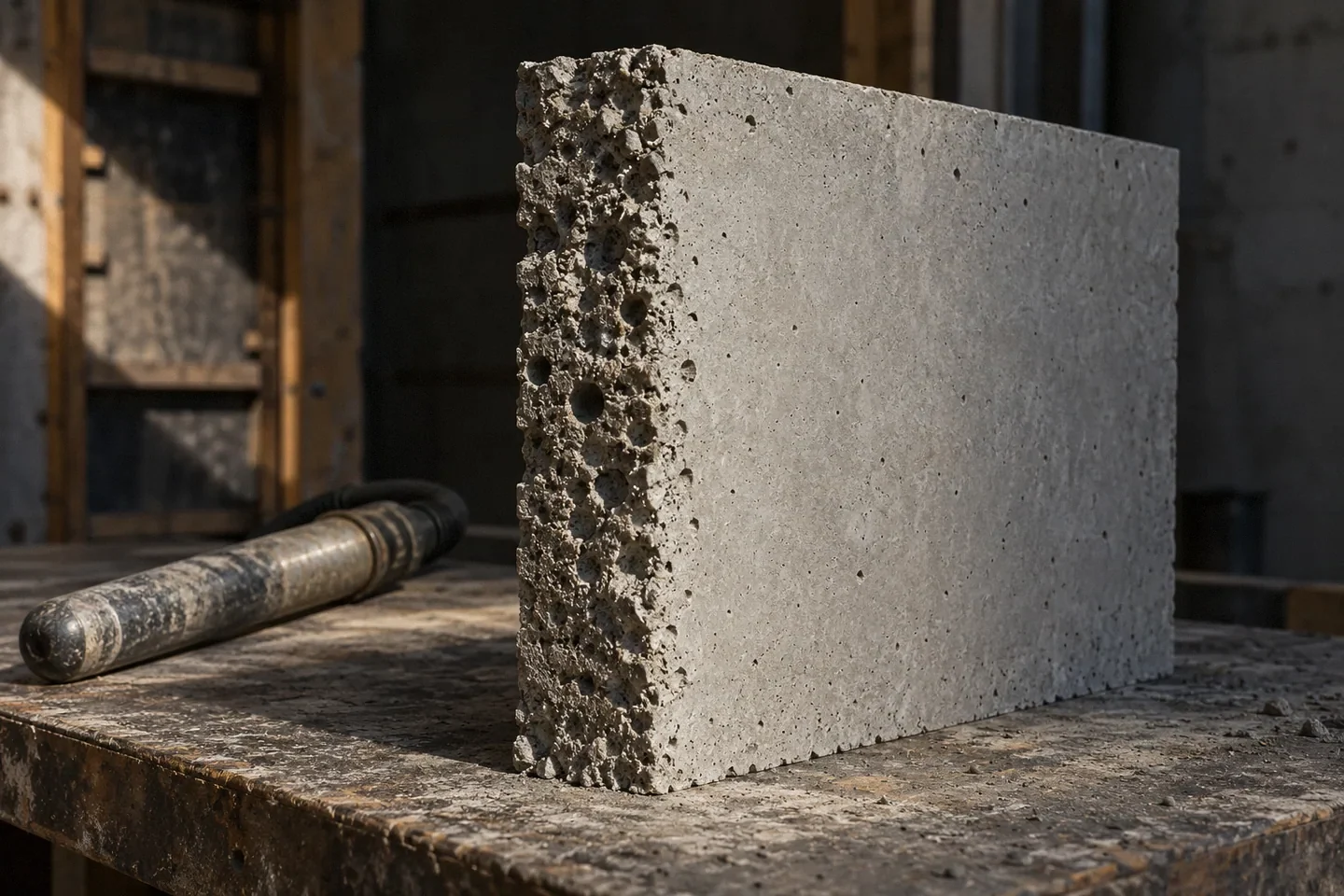
Consolidation is intended to help concrete occupy the form and reduce unwanted voids. The method depends on the element and mixture; it is not simply a contest to vibrate longer.
NRMCA's flatwork guidance discusses placement and consolidation within the finishing sequence. A small slab edge and a taller reinforced form may need different tools and procedures.
Choose the method with the installer and relevant product guidance. Do not copy a vibration duration from an unrelated video or use equipment as a substitute for a mixture that cannot pass through the available space.
A hypothetical formed planter
Imagine a homeowner building a narrow concrete planter wall with a neat board-form appearance. The forms are ready, but the selected bagged mix was chosen only because it was inexpensive.
Before placing, the homeowner checks the minimum space around reinforcement and discusses the intended section with the product manufacturer. They also make a small sample of the form surface and release method.
The sample reveals that a particular corner is difficult to fill and that one form joint leaves an unwanted line. Those are useful findings while the project can still be adjusted. Adding a shovel of cement to every bag would not directly solve the form joint or the restricted geometry.
This example does not provide a structural planter design. It shows how a trial can distinguish mixture, form, and placement questions.
Avoid changing too many variables at once
If a trial produces an unsatisfactory face, record the mixture, water measurement, form treatment, placement method, and consolidation process. Change one relevant variable at a time where practical.
Otherwise, a better second attempt may not reveal what actually helped. That makes it difficult to repeat the result on the full job.
For packaged materials, stay within documented instructions. If a change to aggregate or binder content is proposed, obtain appropriate mixture guidance rather than treating the original product data as still fully descriptive.
A useful preparation checklist
| Item | Decision before placement |
|---|---|
| Minimum clearance | Is the selected mixture suitable? |
| Form face | Does its texture match the desired appearance? |
| Release treatment | Is the product appropriate and consistently applied? |
| Placement route | Can all areas be filled without improvised access? |
| Consolidation equipment | Does it suit the element and mixture? |
| Crew roles | Who places and who consolidates? |
| Trial panel | Does it represent the actual process? |
A checklist is most valuable before the forms become crowded with reinforcement and services. Late discovery of an inaccessible corner can disrupt the entire pour.
Coordinate with finishing and curing
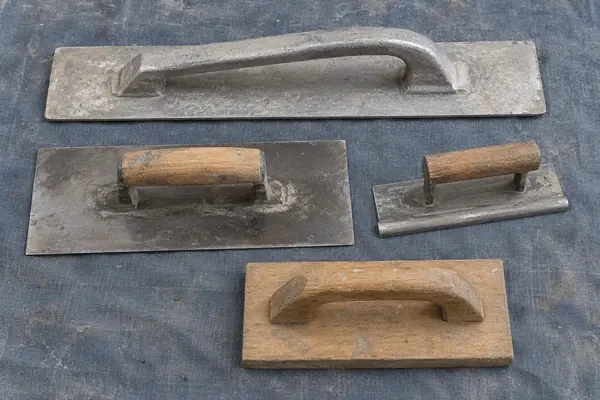
Consolidating near an edge is not the same operation as repeatedly working the top surface. The finisher needs a suitable sequence that responds to the concrete's condition.
Do not assume that a dense-looking surface means the interior has been properly filled. Conversely, do not continue working an area solely because you want a shinier appearance.
Have the curing and form-removal plan ready. The desired face can be damaged by an inappropriate stripping sequence even when placement was otherwise satisfactory. Use the relevant instructions and professional direction for the element.
Set realistic appearance expectations
A formed concrete face is not automatically uniform like a factory-painted panel. Define the desired result with a representative sample and agreed details rather than adjectives such as “perfectly smooth.”
If the project requires tight architectural appearance control, involve an installer experienced with that process. The equipment and quality-control effort may differ from ordinary flatwork.
The practical decision is to select a compatible mixture and method, prove the appearance on a sample where appropriate, and keep the process consistent. Smoothness should come from a controlled system, not an improvised richer mix.
Frequently asked questions
Does coarse aggregate rule out a smooth face?
No. Evaluate the mixture and section together, including forms, clearances, and consolidation.
Should I vibrate longer if I want a better finish?
Not automatically. Use a method suited to the element and mixture, and avoid substituting extra working for proper planning.
Research references
- primary · full
NRMCA CIP 31 Ordering Ready Mixed Concrete - primary · full
NRMCA CIP 14 Finishing Concrete Flatwork - reddit · search-excerpt
What kind of bag mix for this look?