- Approve a representative texture
- Confirm direction and edge details
- Coordinate mixture and finish timing
Reddit discussions identify questions; technical guidance comes from the linked primary sources. This article is not a site inspection or an engineered specification. How we research.
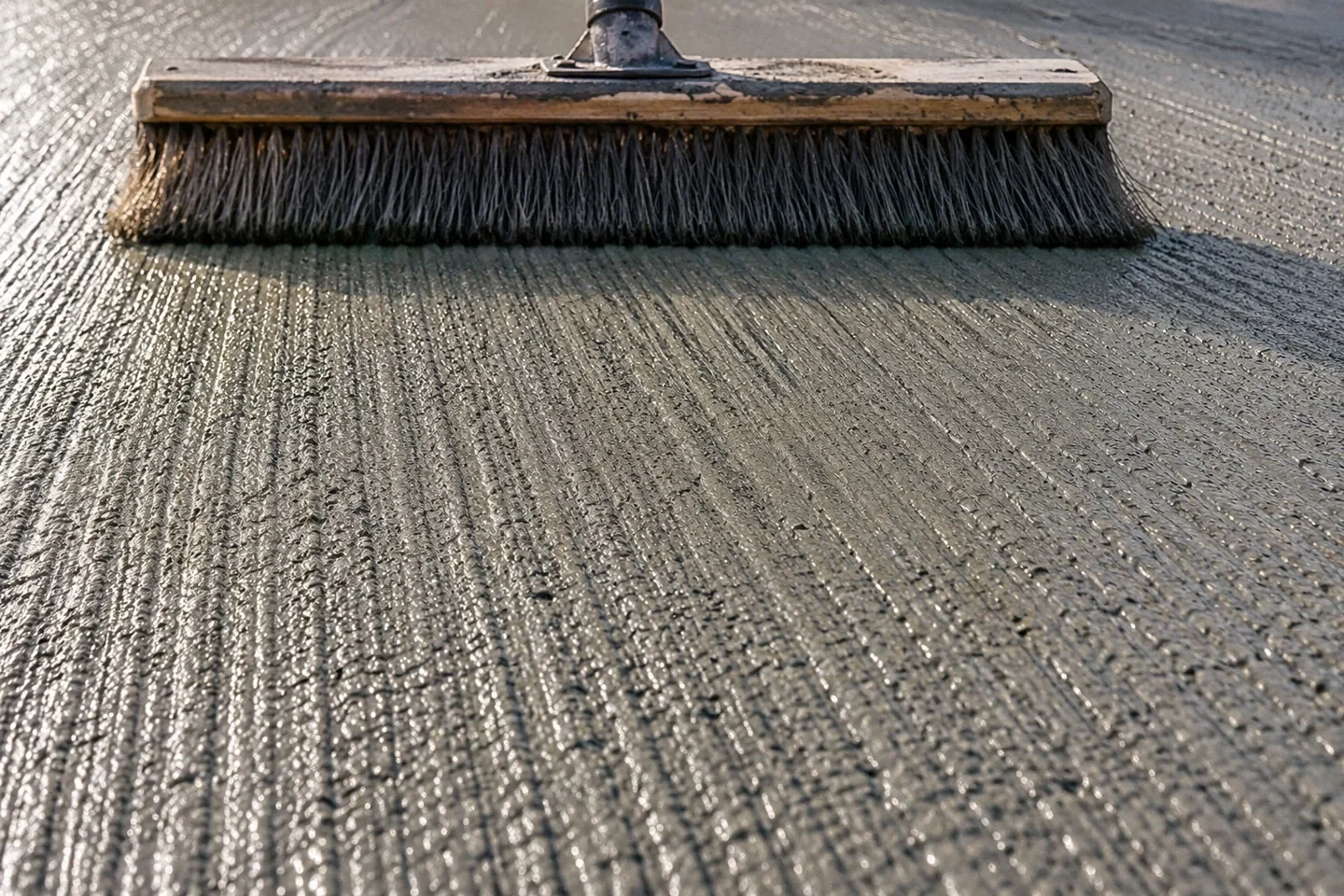
“Light broom finish” sounds precise until the owner and finisher imagine different surfaces. One person means barely visible lines. Another means a textured surface that feels distinctly rough under bare feet. A third is thinking mainly about the direction of the marks.
A Reddit patio owner who requested a light broom finish was disappointed by the result. This article focuses on avoiding that specification gap before the pour, rather than diagnosing or repairing a completed surface from photographs.
Define how the surface will be used
A patio used barefoot, a sloped walking route, and a utility pad do not present identical priorities. Identify footwear, cleaning expectations, exposure to water, and the appearance the owner values.
Do not convert those preferences into an unsupported slip-resistance guarantee. If a project has a specified performance requirement, use the relevant testing and design process.
The immediate goal is to make the owner's expectations intelligible to the installer. “Comfortable for this use” needs discussion and an example, not just an adjective on the quote.
Use a representative sample
A physical sample can communicate texture more clearly than a photograph. It should represent the intended mixture and finishing process closely enough to be meaningful.
If using an existing project as a reference, discuss differences in age, weathering, mixture, and maintenance. An old surface is not necessarily an exact preview of a new one.
NRMCA's flatwork finishing guidance explains the importance of appropriate surface operations. The sample should reflect a compatible process rather than force the crew to imitate an appearance with unsuitable methods.
Describe direction and boundaries
Specify which way the broom lines run in relation to the slab and travel path. Also discuss how the field texture meets edges, steps, drains, and joints.
A decorative border may look smooth in a photograph but needs its own defined treatment. Do not leave the border as an unexamined exception to the surface-use discussion.
If several pours or panels are involved, decide whether the direction stays constant or changes intentionally. A quick sketch can communicate this more reliably than separate verbal instructions given during placement.
A hypothetical family patio
Imagine a family choosing a finish for a patio used with outdoor dining furniture and frequent barefoot traffic. They show the contractor a distant photograph with subtle lines.
The contractor asks them to inspect a comparable physical sample. They discover that the texture they called “light” in the photograph feels rougher than expected. The discussion shifts from visual density to tactile character and intended use.
They agree on a sample, broom direction, edge treatment, and how much natural variation is expected. This does not guarantee an identical reproduction across every inch, but it establishes a clearer target than the original photograph.
Put the agreement in the scope
| Detail | What to record |
|---|---|
| Reference | Sample or identified completed surface |
| Texture | Agreed description linked to the reference |
| Direction | Sketch or written orientation |
| Edges | Border and edge-tool treatment |
| Joints | How the texture relates to joint layout |
| Transitions | Treatment at steps and adjacent surfaces |
| Curing | Method compatible with the intended result |
The record should be concise enough for the crew to use. A page of decorative adjectives is less effective than a labeled sketch and a representative sample.
Let the installer plan the method
The owner should define the desired result and relevant use conditions. The installer should propose a suitable sequence for the mixture and expected conditions.
Do not insist that every broom finish must receive a particular steel-troweling step. Floating and hard troweling are different operations, and mixture compatibility matters.
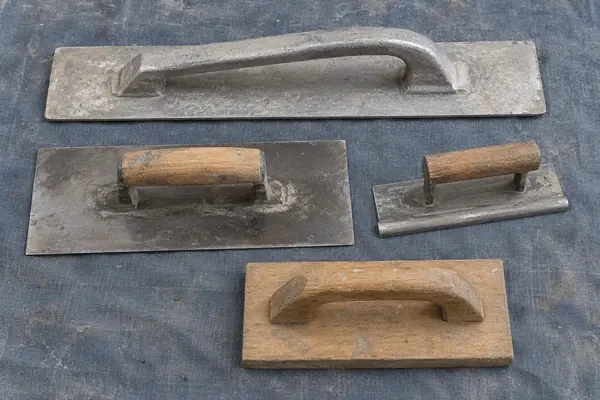
MARSHALLTOWN's tool guide provides a useful distinction among the tools. Ask the contractor what each proposed operation accomplishes rather than prescribing tools from a short online clip.
Timing changes the texture
The concrete's condition affects what the broom produces. A fixed number of minutes after discharge is not a reliable universal instruction because mixture, placement, and weather differ.
That is why the crew needs enough capacity to manage the area consistently. A texture specification cannot compensate for a pour that exceeds the available finishing labor.
Discuss the planned placement size and access. If the slab includes narrow corners or inaccessible edges, the installer should explain how those areas will receive coordinated treatment.
Keep water management in the broader plan
A broom texture does not establish the slab's drainage geometry. The forms and surface profile must reflect the intended design independently of the visible lines.
Likewise, a rougher texture is not a universal solution to every wet-use concern. Where a specific safety or accessibility requirement applies, obtain the appropriate project guidance rather than using “extra rough” as a substitute.
For ordinary owner preferences, a sample and clear use description can still prevent many misunderstandings. Keep performance claims proportionate to the evidence.
Review readiness before placement
Confirm that the crew has the agreed reference, the correct tools, and the layout details. Ensure that changes are communicated through one responsible person.
Avoid altering the finish request after a substantial area has already been worked. A late change can create inconsistent expectations even when the crew tries to accommodate it.
The practical next step is to approve a tangible texture and a short finish detail before the truck arrives. That gives both owner and installer something concrete to compare with the planned work.
Frequently asked questions
Is one photograph enough to specify the texture?
It helps with appearance and direction, but a physical reference is better for tactile roughness. Discuss both.
Must the slab be steel troweled before brooming?
Not universally. Have the installer choose a compatible sequence for the mixture, exposure, and agreed finish.
Research references
- primary · full
NRMCA CIP 14 Finishing Concrete Flatwork - primary · search-excerpt
MARSHALLTOWN Basic Concrete Finishing Tools - reddit · search-excerpt
Broomed concrete