- Preserve original records
- Map observations to evidence
- Separate facts from conclusions
Reddit discussions identify questions; technical guidance comes from the linked primary sources. This article is not a site inspection or an engineered specification. How we research.
Start with a one-page chronology
List the contract date, agreed scope, significant changes, payments, placement dates, first observation of the concern and attempts to resolve it. Use exact dates when known and label approximate dates honestly. Do not fill gaps with confident guesses because a form appears to expect an answer.
Keep the chronology short enough to read before opening the attachments. It is an index to evidence, not a place for every emotional exchange. A reviewer should be able to identify the central issue and the documents that support it within a few minutes.
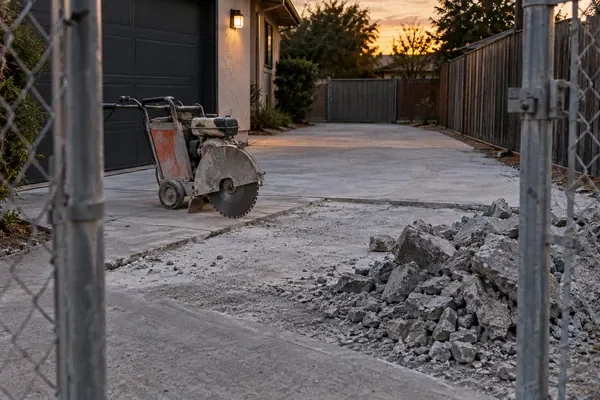
A Reddit homeowner asked about complaining while another contractor finished the project. That timing question matters because corrective work can change what is observable. The post is anecdotal, but the need to preserve a clear before-and-after record is practical.
Photograph location, scale and context
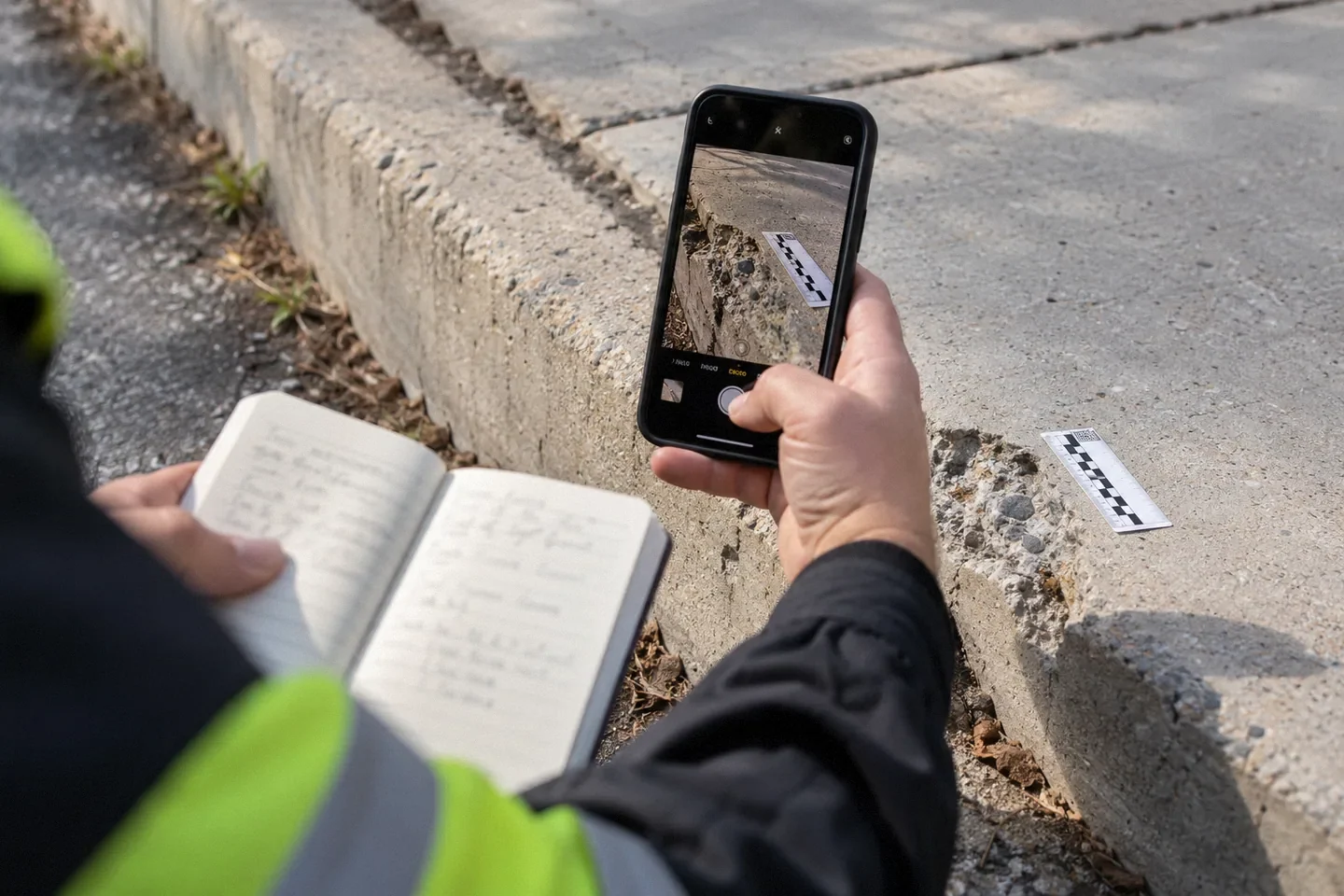
For each concern, take a wide view showing where it is, a closer view showing the condition and a detail view with a scale when useful and safe. Keep the original files and create annotated copies separately. A cropped image with arrows may explain an issue, but the original helps preserve context.
Use a consistent location label, such as “patio east edge, item 4.” Put that label on a simple plan and in the file name or index. Avoid relying on descriptions such as “the bad corner” when several photographs look similar.
Record relevant conditions without staging a misleading picture. If the surface was wet, say so. If a photograph was taken after cleaning or a repair attempt, record that sequence. Do not edit away contextual details or present a later condition as if it existed on placement day.
Preserve the complete agreement
Save the signed contract, all attachments, accepted drawings, revised proposals and change orders. Include pages that seem unimportant, such as definitions or notice provisions. A reviewer cannot assess a dispute reliably from a photograph of only the price page.
Keep original messages or exports where possible, not just selected screenshots. A screenshot can be useful for quick reference, but surrounding conversation may explain whether a statement was a proposal, approval or acknowledgment. Label any transcription of a call as your contemporaneous note rather than a recording or agreed transcript.
California's CSLB complaint page explains its regulatory role. Florida's DBPR package requests supporting records. An organized file helps either process, but the agencies and requirements are not interchangeable.
Use an evidence index
| Folder or item | Contents | Purpose |
|---|---|---|
| Agreement | Complete signed documents and revisions | Establish the promised work |
| Money | Invoices, receipts and reconciled ledger | Show actual payment history |
| Work record | Dated photographs and available delivery or inspection records | Describe what occurred |
| Communications | Requests, replies and call notes | Show notice and proposed resolution |
| Assessment | Independent reports and defined repair proposals | Separate observations from professional conclusions |
| Corrections | Before-and-after record of authorized work | Explain later changes to the site |
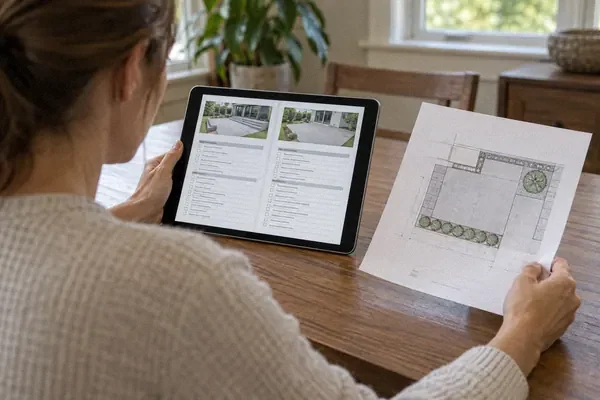
Give each attachment a simple identifier and refer to it in the chronology. You do not need elaborate software. A clearly named folder and a numbered PDF index can be more useful than hundreds of files scattered through a messaging app.
Record facts without overstating causation
Write “water remained in the marked area when photographed at this time” rather than “the contractor deliberately poured the slab wrong.” Write “the provided permit search returned no matching record” rather than “there was definitely no permit.” The second statements may require evidence you do not yet have.
The same discipline applies to professional opinions. Identify who inspected, when, what information they reviewed and what their report actually concludes. Do not paraphrase “further investigation recommended” as “engineer confirmed failure.” Preserve limitations and recommendations alongside the conclusions.
Avoid gathering evidence through unsafe demolition or unauthorized access. If sampling, opening a structure or examining concealed work is needed, have the appropriate professional plan it. Documentation should make the situation clearer without creating another problem.
Hypothetical example: a repair before the first assessment
Suppose an owner complains about a surface condition and the contractor offers to return with a repair product. Before the visit, the owner takes location photographs, saves the relevant messages and asks for the proposed repair description. A qualified assessment is arranged first if the condition requires it.
After the authorized repair, the owner records the treated area, date and product information supplied. Months later, another concern appears nearby. The file now distinguishes the original condition, the repair and the later observation instead of presenting all three as one undated photograph.
The example does not require delaying necessary safety measures. If immediate protection is needed, document why it was undertaken and by whom. Preservation and responsible mitigation should be coordinated rather than treated as opposing goals.
Submit a focused packet
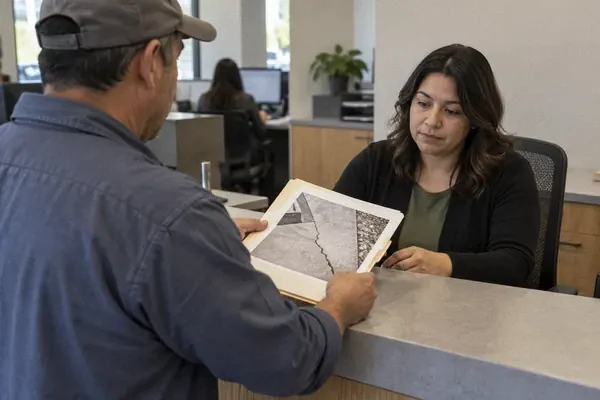
Send the records requested by the relevant recipient and retain your originals. A regulator, attorney, insurer and replacement contractor may need different parts of the file. Avoid broadcasting private financial details or unrelated personal messages when a targeted set of documents will answer the question.
The FTC recommends keeping dispute correspondence. Your own index should show the resolution requested, the contractor's response and the remaining disagreement so the recipient knows what assistance is being sought.
Should I include photographs that seem to support the contractor's explanation?
Yes, preserve the complete relevant record. Selective documentation can obscure the condition and weaken the usefulness of an independent review; identify why particular images matter rather than deleting inconvenient context.
Does a large file guarantee a successful complaint?
No. Relevance, accuracy and the governing requirements matter more than volume. A concise chronology with complete supporting records is usually easier to evaluate than an unorganized archive.
Create the index before the next repair or formal submission. A reliable record will help you explain the concern, assess proposed remedies and obtain advice without repeatedly reconstructing the project.
Research references
- primary · full
FTC: How To Avoid a Home Improvement Scam - primary · full
CSLB: Filing a Construction Complaint - primary · full
DBPR: Construction-Related Complaint Package - reddit · search-excerpt
Bad pour. - reddit · search-excerpt
Hired new contractor to finish project - CSLB?