- Define the complaint facts
- Complete the required submission
- Separate recovery from regulation
Reddit discussions identify questions; technical guidance comes from the linked primary sources. This article is not a site inspection or an engineered specification. How we research.
Decide what you want the complaint to explain
Describe the contracted concrete work, the observed problem and the effort made to resolve it. Identify whether the issue concerns incomplete work, a disputed change, workmanship, permitting or another specific matter. Avoid opening with a long accusation that leaves the actual project unclear.
A Reddit question about what a CSLB complaint achieves reflects a common expectation gap. A homeowner may want reimbursement while the board's role is regulatory. Neither the post nor its replies can predict what will happen in another case.
CSLB states that its investigation does not guarantee restitution. Review the board's official complaint overview before choosing a filing route or assuming that the board will act as your collection service. This article concerns California; Florida's DBPR process is separate.
Build a concise factual narrative
Use a chronological sequence: agreement, relevant work, first concern, notice and response. State what you personally observed and identify any professional report separately. If you do not know the concrete mix, reinforcement or cause of a crack, say that rather than presenting an assumption as a confirmed defect.
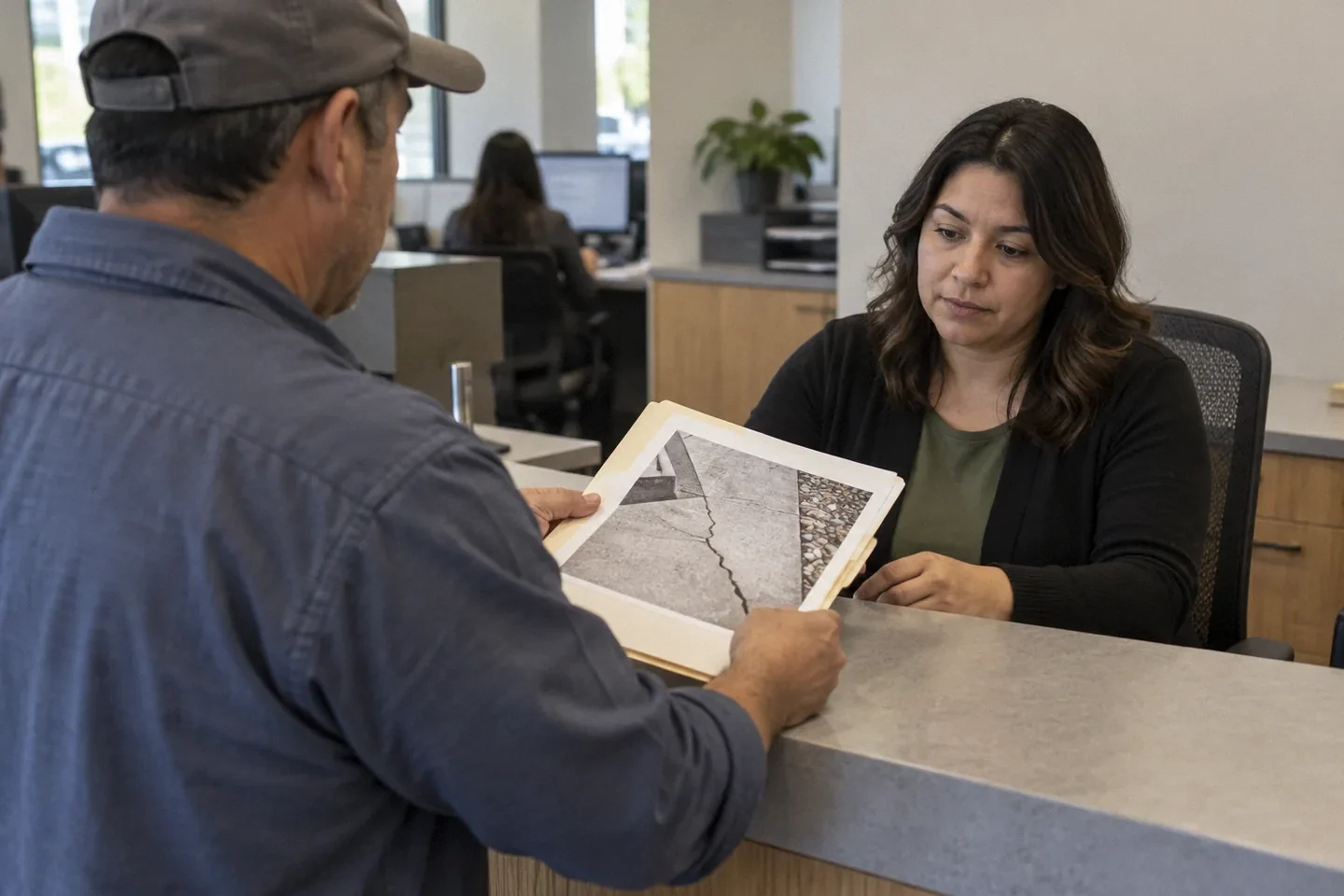
Tie each important assertion to a document. If the contractor promised removal, attach the scope showing removal. If you paid an amount, attach the corresponding receipt. If the contractor offered a repair, preserve the proposal and your response. The reviewer should not need to infer these facts from scattered screenshots.
Explain the resolution you requested. It might be completion of identified work, assessment of a particular condition or correction consistent with the agreement. A clear request does not guarantee the remedy, but it helps distinguish a live dispute from a general expression of dissatisfaction.
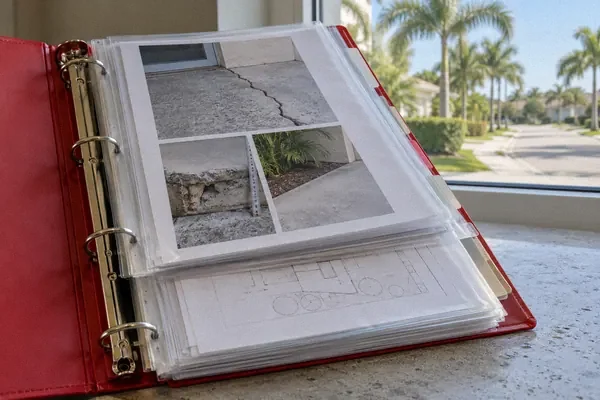
Assemble the supporting packet
| Record | What it contributes |
|---|---|
| Complete contract and attachments | Promised scope, terms and contracting identity |
| Approved changes | Evolution of price and work |
| Payment ledger and receipts | Amounts actually paid |
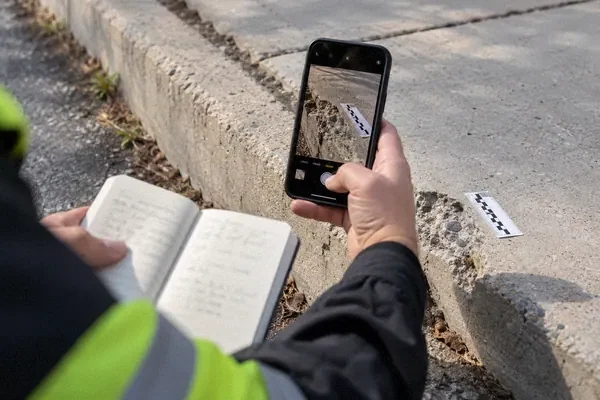
| Dated site photographs | Observable condition and location |
| Written notice and replies | Opportunity to understand and address the concern |
| Independent assessment, if obtained | Professional findings with their limitations |
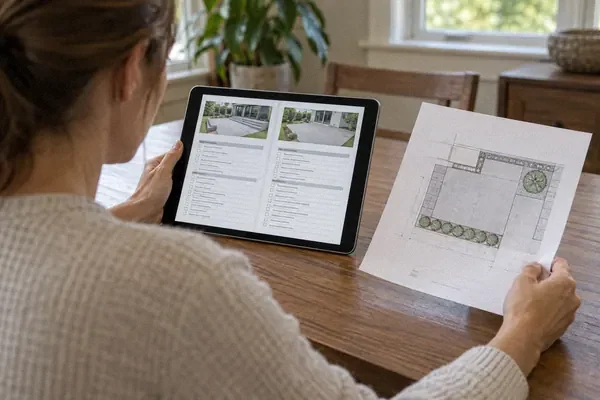
Keep originals in your own file. Follow the current submission instructions for copies and accepted formats. Do not assume a link to a private cloud folder will satisfy a request for documents. Make the packet readable without requiring the recipient to log into your personal account.
Use the current official filing instructions
CSLB offers an official complaint filing page. Read the instructions presented during your actual submission, including any signature or supporting-document steps. Starting an online form and completing the process are not necessarily the same event.
Keep the confirmation, reference number and a copy of what you submitted. If the submission status is unclear, use the board's guidance for checking it rather than repeatedly creating duplicates. A second incomplete filing can make the record harder to follow.
Do not rely on a general article for a deadline calculation. The age and nature of the conduct, possible legal claims and other circumstances can matter. If time may be an issue, contact the board and a California construction attorney promptly rather than waiting for the contractor to answer indefinitely.
Hypothetical example: a complaint with a separate money question
Suppose a homeowner contracted for removal and replacement of a marked patio. The owner believes part of the old slab remained and has photographs, the signed scope and a written request for explanation. The contractor disputes the owner's interpretation and offers no further work.
The owner prepares a concise complaint identifying that factual disagreement and attaches the evidence. Separately, the owner asks a California attorney whether and how to pursue the cost of a proposed correction. The owner does not assume that submitting the complaint automatically starts a lawsuit or pauses another deadline.
The example demonstrates two related but distinct tracks. The same organized records may support both, but the decision-maker, purpose and possible result are not identical.
Preserve evidence while protecting the property
If another contractor will complete or alter the work, document the existing condition first when practical. Obtain a qualified assessment where needed and retain the replacement scope, invoices and before-and-after photographs. Necessary protection should not be delayed simply to keep the site unchanged.
Tell the relevant reviewer about later repairs. Otherwise, a photograph taken after correction may be mistaken for the original work. If material or a feature no longer exists, explain when and why it was removed rather than leaving the investigator to discover the gap.
Avoid public statements that go beyond your evidence. A board complaint should report accurate facts and concerns, not use the process as a threat to force agreement with an unsupported demand. Strong documentation is more useful than dramatic wording.
Track the response without predicting an outcome
Maintain a log of requests from the board and the dates you responded. If additional information is requested, identify exactly which attachment answers it. Keep new correspondence with the contractor in the same project file and update the chronology as events occur.
Continue to distinguish an allegation, a proposed resolution and a final determination. The fact that a complaint exists does not mean the board has found misconduct. Likewise, a regulatory outcome does not automatically resolve every contract or financial issue between the parties.
Will CSLB order the contractor to refund my deposit?
Do not assume that result. CSLB expressly distinguishes its regulatory investigation from guaranteed restitution; obtain advice about the appropriate route for a money claim.
Should I wait until replacement work is finished before complaining?
The best timing depends on the facts and applicable requirements. Preserve the current evidence and seek guidance promptly rather than delaying solely because another contractor may later change the site.
Start with the official filing instructions and a focused packet. If recovering money is a primary goal, address that question separately with an appropriate California adviser while keeping the regulatory record accurate.
Research references
- primary · full
CSLB: Filing a Construction Complaint - primary · full
CSLB: File a Complaint - reddit · search-excerpt
CSLB complaint for licensed contractor? - reddit · search-excerpt
Hired new contractor to finish project - CSLB?