- List the promised return work
- Record current conditions
- Arrange the right assessment
Reddit discussions identify questions; technical guidance comes from the linked primary sources. This article is not a site inspection or an engineered specification. How we research.
Establish what the crew promised to return for
Read the scope and messages for specific remaining items: planned cuts, form removal, cleanup, restoration or another operation. Write each as a separate item with its location. A general statement that the contractor “never finished” is less useful than a list that can be checked.
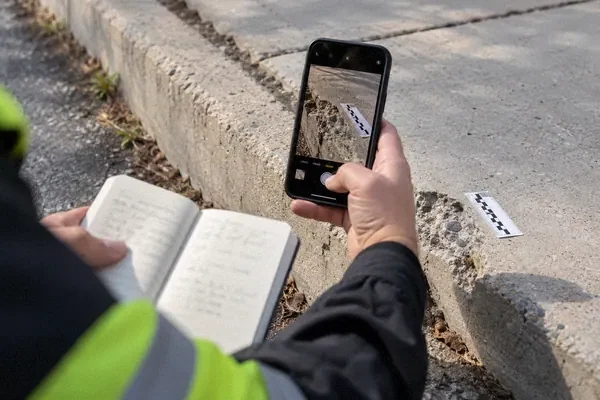
Record placement dates and the last communication. Keep photographs of the current condition and any earlier layout or preparation records. Do not assume that a joint visible in a photograph is the same type or purpose as another joint discussed online. Ask a qualified person to interpret the actual plan and work.
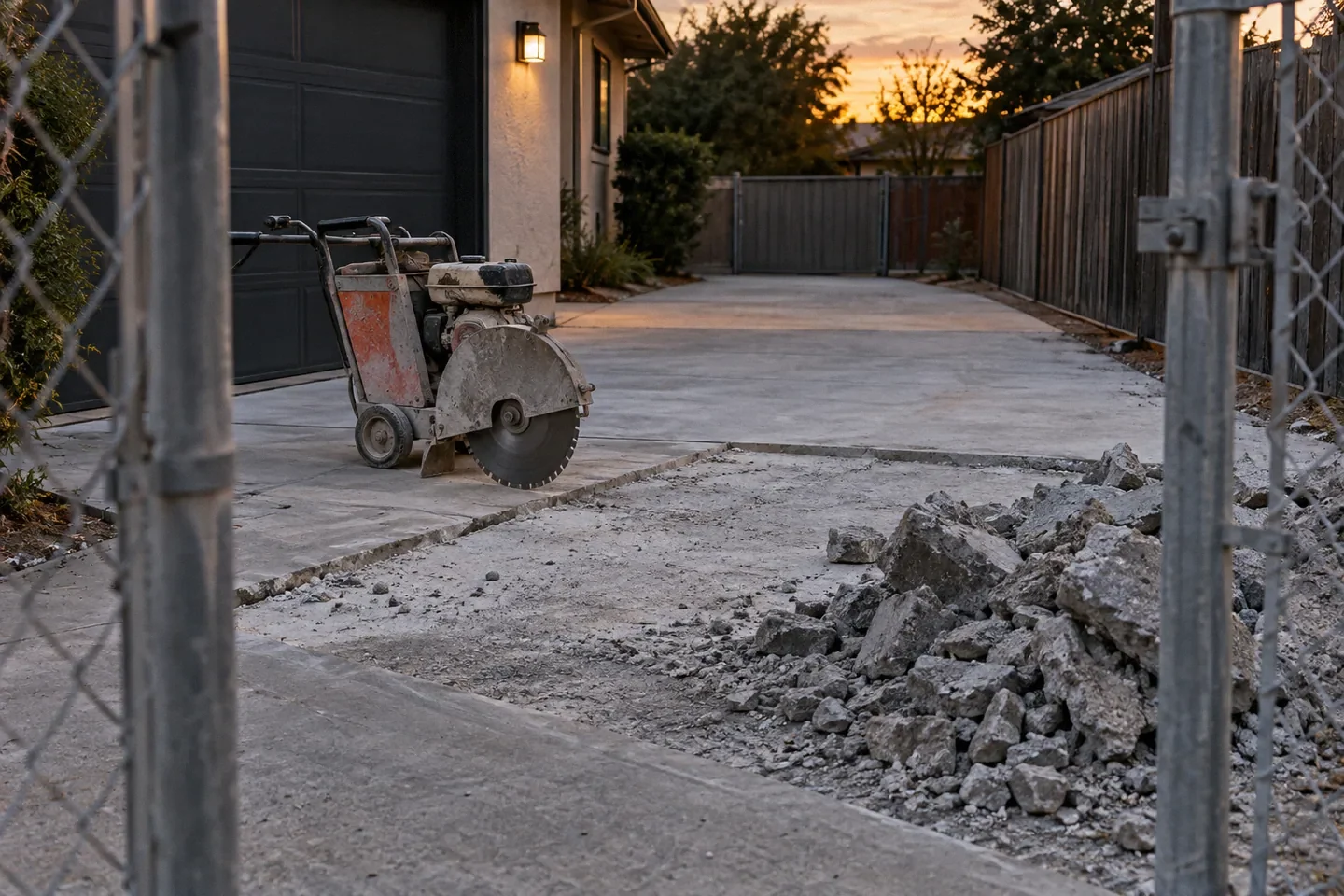
A Reddit homeowner reported a contractor failing to return for promised cuts and form removal. The responses conflict about consequences. The thread provides context for the communication problem, not a reliable diagnosis of another slab.
Avoid turning silence into a technical conclusion
The contractor's lack of response is a service and contract concern. It does not by itself establish whether the concrete is damaged, whether a planned operation is still appropriate or what remedy is needed. Those questions depend on the actual work and conditions.
Do not attempt cutting merely because an online commenter says it should have happened already. Structural slabs, post-tensioned work, concealed utilities and other conditions can make improvised work dangerous. The responsible qualified professional should determine what investigation or action is appropriate.
If you know the work follows an engineered design, contact the design professional through the project team. If you do not know the slab's construction, state that uncertainty when seeking help. A contractor asked to assess the unfinished work should receive the available plans and records before recommending a method.
Send a concise completion request
List the promised tasks, identify the contract or message where they appear and request a response with a return plan. Include photographs only as needed to locate the work. Ask the contractor to identify any task it believes is already complete or no longer proposed.
Use the notice method required by the agreement where applicable. A text may be useful for quick contact, but it may not be the only required channel. Keep a copy of the request and evidence of delivery rather than relying on your recollection of unanswered calls.
The FTC's dispute guidance supports written follow-up. The practical objective is to give the contractor a clear opportunity to respond and create a record if further action becomes necessary.
Triage the remaining items
| Remaining concern | Immediate question |
|---|---|
| Promised technical operation | Does a qualified professional need to assess timing or suitability now? |
| Temporary forms or barriers | What access or protection issue remains? |
| Debris and disturbed landscaping | What cleanup or restoration was included? |
| Missing instructions | Who is responsible for current protection and use restrictions? |
| No response | What contractual notice and escalation process applies? |
The table is a triage tool, not a repair specification. Keep urgent protection separate from the final remedy. For example, a temporary access hazard may need attention even while the parties disagree about whether the original contractor must perform other work.
Hypothetical example: an unreturned crew and two different needs
Suppose a garage-pad owner was told that the crew would return for specified work the next day. Several days pass without a response. The owner has both a question about the planned joint work and loose debris blocking access to another part of the property.
The owner documents the site, sends the written completion request and arranges a qualified assessment of the technical question. Any necessary temporary protection is recorded separately. The owner does not hire an unrelated person to make arbitrary cuts merely to create the appearance of completion.
When the original contractor responds, both parties have a defined list to discuss. If it does not respond, the same record helps a replacement contractor and a legal adviser understand what remains, what changed and why any immediate measures were taken.
Review replacement work before authorizing it
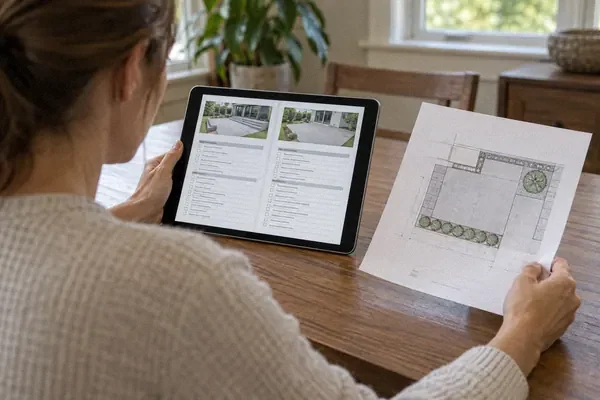
A second contractor needs a defined scope, not simply an instruction to “finish whatever the first crew missed.” Ask it to distinguish its observations from assumptions and identify whether it needs additional plans or professional direction. Obtain a written proposal for any authorized work.
Before treating the new cost as an automatic deduction from the original contract, review the agreement and applicable law. Notice provisions, repair opportunities and payment obligations can matter. Significant disputed amounts or a proposed termination deserve advice in the project state.
California owners can consult CSLB's complaint information; Florida owners have a separate DBPR construction complaint process. These routes should not be presented as guarantees of reimbursement or as substitutes for necessary technical assessment.
Close the record when work resumes
If the original crew returns, confirm what it will do before work begins. Photograph the completed items and keep any revised instructions. If the contractor says a promised operation is unnecessary, request the basis and appropriate professional confirmation where the question is technical.
Avoid allowing a verbal apology to replace the completion record. A simple dated acknowledgment of the finished tasks and remaining concerns gives both sides a clearer endpoint and reduces the chance that a later issue becomes another argument about memory.
Does missing a promised return date mean the whole slab must be replaced?
No. The consequence depends on the specific omitted work and actual condition. Obtain a qualified assessment rather than infer a replacement requirement from the delay alone.
Can I hire someone immediately to make the missing cuts?
Do not authorize cutting without establishing the slab's construction and the appropriate method. Address urgent assessment promptly, and review the original contract before assuming replacement costs can simply be charged back.
The next step is a factual completion request plus timely professional review of any technical uncertainty. Keep the communication failure, unfinished scope and physical condition distinct so each receives the right response.
Research references
- primary · full
FTC: How To Avoid a Home Improvement Scam - primary · full
CSLB: Filing a Construction Complaint - primary · full
DBPR: Construction-Related Complaint Package - reddit · search-excerpt
Relief Cut Question