- Identify the existing coating
- Compare powder with film behavior
- Test the proposed treatment
Reddit discussions identify questions; technical guidance comes from the linked primary sources. This article is not a site inspection or an engineered specification. How we research.
White is a description, not a diagnosis
A pale patio can have loose deposits, a cloudy film, residue from construction or a change in the concrete's own appearance. These conditions may look similar in a photograph but require different responses. The first useful question is whether a coating is present and what it is.
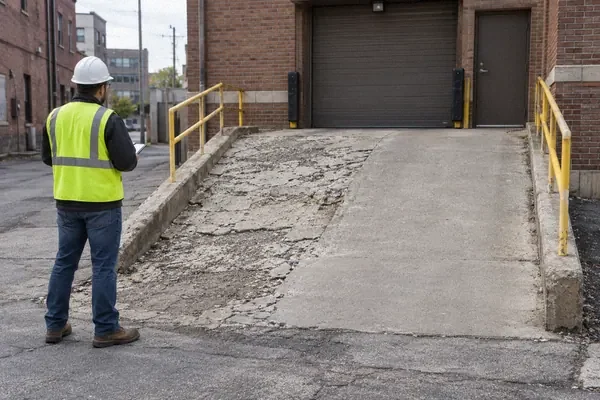
A Reddit discussion about deteriorating stamped concrete included disagreement over whether the white appearance was mineral staining or sealer failure. That disagreement is instructive: a confident visual label can lead directly to the wrong treatment. The thread provides homeowner concerns, not a diagnosis for the pictured slab or yours.
Before applying anything, photograph the area and collect the finish history. Ask the installer for the sealer name, application date and any later recoating record. If the product is unknown, make that uncertainty explicit in the repair request.
Understand the two different mechanisms
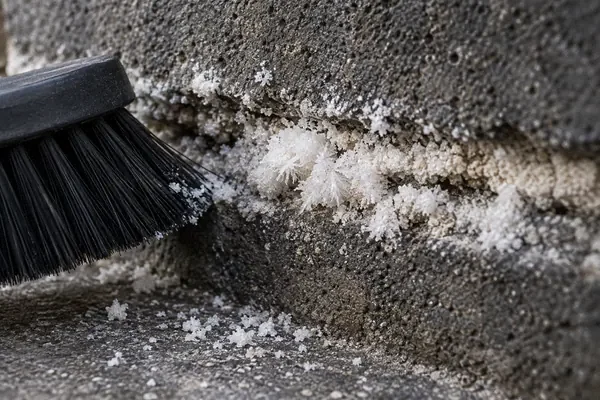
Efflorescence involves soluble material carried to the surface by water; Euclid describes it in its technical bulletin on efflorescence. A film-forming sealer can instead appear white when application or moisture conditions interfere with the film, as discussed in Euclid's sealer troubleshooting guidance.
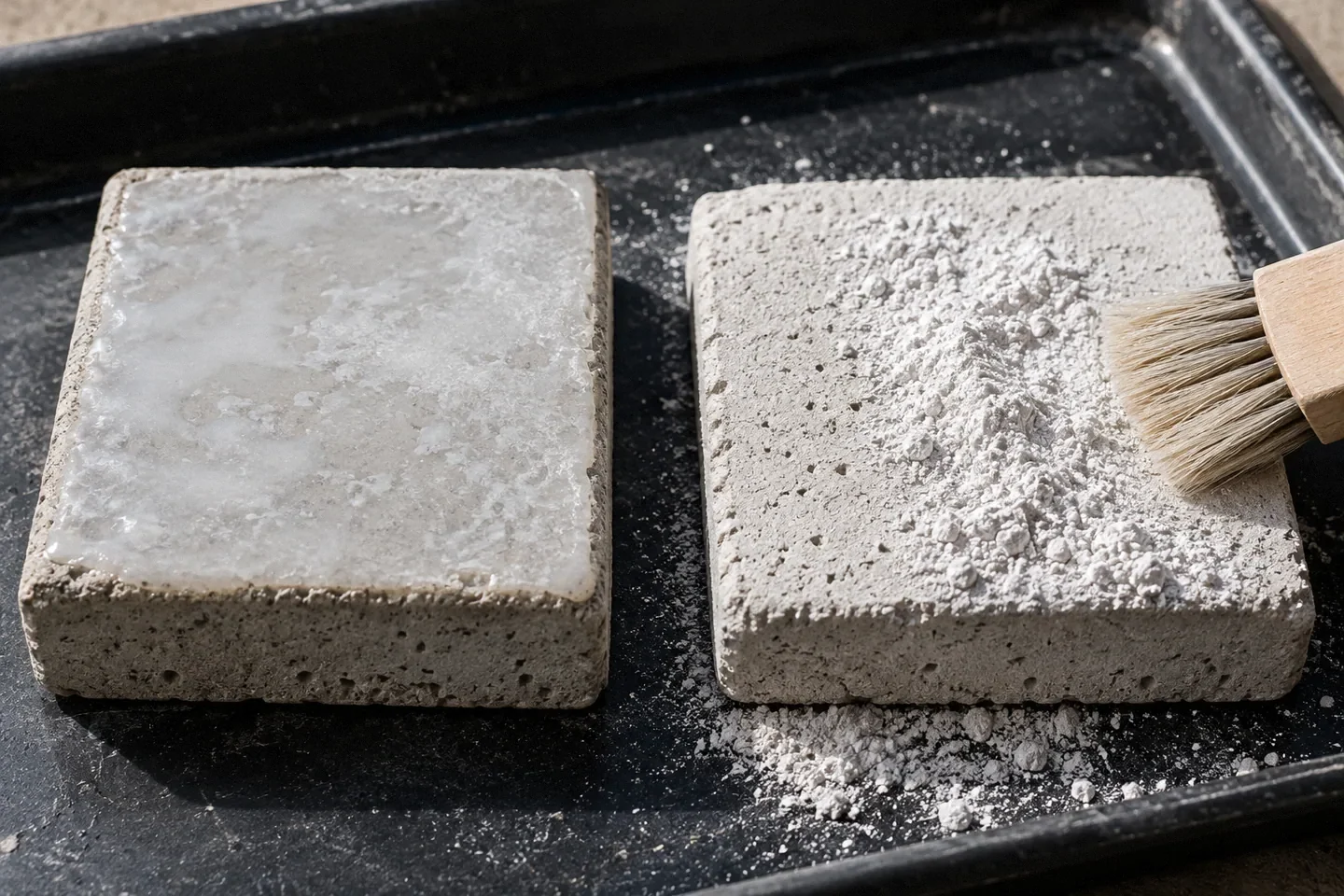
Those mechanisms can lead to overlapping observations, and more than one condition may exist. A powdery area beside a peeling film should not be forced into one convenient explanation. Ask the evaluator to describe each visible condition and the evidence supporting its identification.
Do not use the word breathable as a substitute for product information. Different protective treatments behave differently, and the suitability of a replacement depends on the actual substrate and exposure. A generic promise that a new sealer lets moisture escape is not a complete repair scope.
Collect observations without damaging the evidence
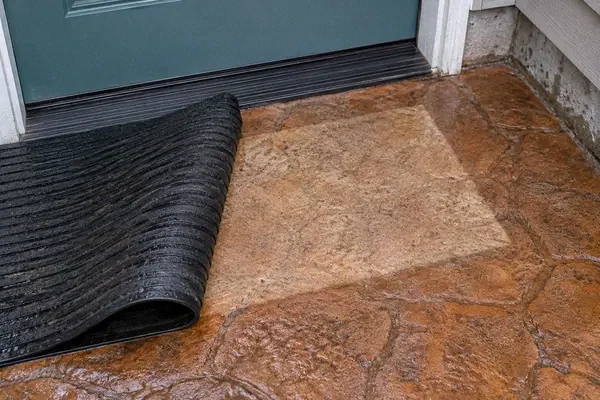
Record whether the material looks loose, crusted, smooth, blistered or peeling. Note whether the white area follows puddles, mat outlines, thick application zones or shaded locations. These patterns can help direct a review, but they do not prove the mechanism.
Photograph the surface dry and under ordinary wet conditions if available. A temporary change when wet can be useful information, yet it should not be treated as a definitive home test. Do not start scraping large areas, applying acid or wiping with solvents solely to see what happens.
Also document the surrounding surface. If the whitened area is near a low spot that holds water, the water-management issue may deserve attention regardless of which material has turned white. A coating repair that leaves the exposure unchanged may have an important limitation.
Why the wrong cleaner creates a second problem
A cleaner intended for mineral deposits may affect an existing decorative finish or coating. A solvent treatment appropriate to one sealer may be unsuitable for another. The contractor should identify the product and method rather than recommending a universal chemical based on the color white.
For an identified deposit, a manufacturer such as PROSOCO provides substrate-specific product information. For a coating problem, consult the original sealer manufacturer's troubleshooting guidance and data sheet. These are separate paths, and both require a test before broad treatment.
Ask what the test is expected to demonstrate. If it merely makes the area look better while wet, that may not establish a durable result. Evaluate it after the appropriate drying period and under the conditions that made the defect objectionable.
A comparison that keeps the investigation honest
| Observation | Useful next question |
|---|---|
| Loose white material | What is the deposit, and why is it recurring? |
| Cloudy continuous film | What coating is present, and is it bonded? |
| Peeling or blisters | Is the film failing, and what preparation is needed? |
| White area beneath a mat | What moisture and finish conditions existed there? |
| Repeated whitening after recoating | Is added film part of the problem? |
| No reliable product history | How will the unknown system be evaluated? |
The table deliberately asks questions rather than assigning diagnoses. A contractor should be able to explain how the proposed test answers them.
A hypothetical stamped-concrete review
Imagine a hypothetical stamped patio that developed white patches after several rounds of resealing. The owner wants another coat because the surface looks richer when wet. A review identifies the existing system and tests the proposed repair. The test shows that simply adding material does not produce an acceptable dry appearance.
The next scope may require removal or another manufacturer-supported treatment, with a discussion of color preservation and texture. If the original decorative finish cannot be retained perfectly, the owner should know that before full work begins. An honest sample can prevent a much larger disappointment.
Now consider a separate area with confirmed mineral deposits and no failed film. Its cleaning scope may be different even though both areas initially appeared white. One patio can need more than one explanation.
The repair boundary also deserves a trial. A small cleared spot may look acceptable by itself yet leave a noticeable ring against the surrounding film. Ask whether the method can be extended to a natural panel boundary and whether adjacent areas need treatment for visual continuity. That is an appearance and scope decision to make before the test expands into an entire patio.
Keep restoration and future protection separate
The first task is to restore a suitable surface. The second is to decide whether a protective treatment is appropriate afterward. Ask for the readiness criteria between those stages. A contractor should not apply the next coat automatically because the old appearance has been temporarily improved.
Keep the final product information and maintenance instructions so the same uncertainty does not recur. The key decision is identifying which layer is responsible for the appearance and treating that layer with a compatible method. White concrete, white deposits and white sealer are not interchangeable problems, even when a phone photograph makes them look alike.
Related questions
Should I reseal a white patch to make it clear again?
Not without identifying the cause and existing product. Another coat can be unsuitable when the original film has an adhesion or moisture problem.
Can a photograph distinguish every white deposit from sealer haze?
No. The product history, surface examination and a suitable test may be needed before choosing a treatment.
Research references
- primary · search-excerpt
Euclid Chemical Technical Bulletin CP-30: Efflorescence Causes, Prevention, and Removal - primary · search-excerpt
Euclid Chemical: Diagnosing 5 Common Concrete Sealer Problems - primary · search-excerpt
PROSOCO Light Duty Concrete Cleaner - reddit · search-excerpt
Yikes - Remedy