- List the required operations
- Check reach and crew capacity
- Stage tools before delivery
Reddit discussions identify questions; technical guidance comes from the linked primary sources. This article is not a site inspection or an engineered specification. How we research.
A first concrete project can lead to buying every tool on the rental counter. That is not necessarily a good plan. Start by listing the operations your slab needs and identifying who will perform them while the concrete changes.
A Reddit discussion about finishing floats shows that even experienced workers have preferences. A beginner needs a more basic distinction first: what does each tool do, and when does that operation belong in the sequence?
Separate the operations
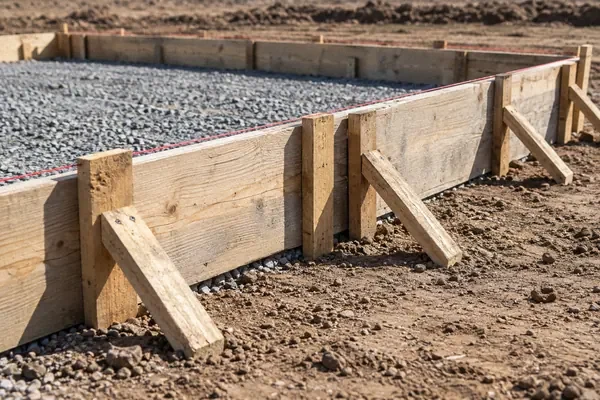
Screeding establishes the surface profile. Floating, edging, jointing, and texturing address different aspects of the work. Curing follows the finish and needs its own supplies.
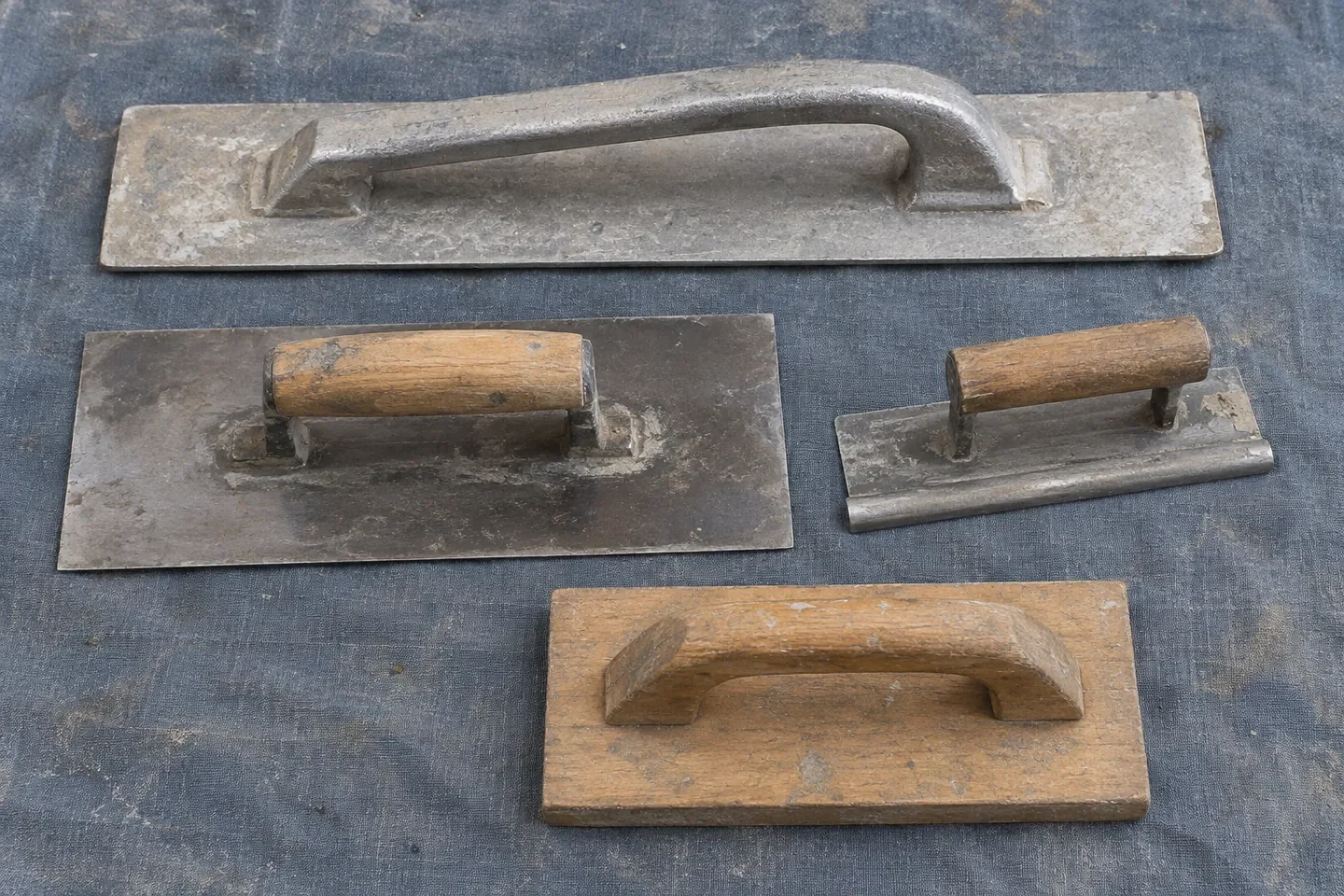
MARSHALLTOWN's guide to basic finishing tools describes the principal tools and their roles. Use it as an introduction to function, then select the actual equipment for the slab and mixture.
Do not expect one tool to compensate for an earlier missed operation. A broom does not correct an incorrectly established surface, and an edger does not create a complete joint layout.
Plan reach before choosing tool size
Measure the slab width and identify where workers can stand or move. A tool that works along an accessible perimeter may not reach the center of a broad area.
Check handle connections, available overhead space, and obstructions such as walls or fences. A long handle is useful only if the operator has room to maneuver it.
For a small project, compact equipment may be easier to control. For a larger project, the same tools may create an unreasonable workload. Match the equipment to the crew's actual capacity rather than the product's maximum advertised reach.
Make a task-and-tool sheet
| Operation | Typical tool category | Planning question |
|---|---|---|
| Establish profile | Screed or strikeoff equipment | What references establish grade? |
| Initial floating | Bull float or darby as appropriate | Can the operator reach the area? |
| Local floating | Hand float | Where will detail work occur? |
| Edge treatment | Edger where specified | What edge profile is wanted? |
| Joint formation | Groover or planned saw process | Is the joint layout already decided? |
| Surface texture | Appropriate broom or other tool | What sample or texture is approved? |
| Curing | Selected curing system | Is it ready immediately after finishing? |
The table is not a mandatory tool list for every slab. It is a way to discover missing operations and unnecessary purchases.
A hypothetical small patio
Suppose two people plan to place a patio using a rented mixer. They buy a screed board, hand float, and broom, assuming they can finish after all the batches are mixed.
A rehearsal reveals that one person must continuously mix while the other transports material. Nobody remains available to establish the surface and manage the earlier concrete. The tool list was not the main problem; the role assignment was.
The plan changes to provide adequate help and a clear sequence. The crew then checks that the tools can reach the entire slab without improvising access. This exercise is more useful than adding another finishing tool to the cart.
Timing is a condition, not a fixed schedule
Different operations occur at different concrete conditions. A clock can help record the work, but it does not replace observing the material.
NRMCA CIP 14 emphasizes appropriate finishing practices, including the relationship to surface moisture. A beginner should avoid assuming that the surface needs continuous attention simply because tools are available.
Discuss the expected sequence with an experienced installer or instructor before a consequential pour. Practicing on a manageable sample can teach tool handling without putting the full project at risk.
Do not confuse floating with polishing
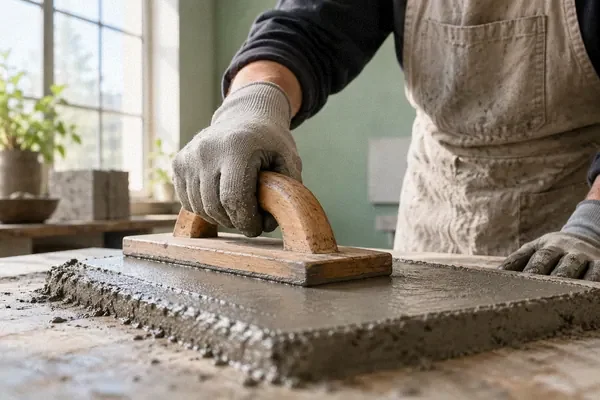
A magnesium float and a steel finishing trowel are different tools. A shiny surface is not the universal goal for exterior flatwork.
Choose the intended finish first, considering the mixture and use. Then identify the appropriate operations. Copying an interior floor sequence onto a wet outdoor walking surface can create an unsuitable specification.
If a contractor proposes a machine, ask whether it will float with a pan or perform another operation. “Power trowel” describes equipment, but it does not fully describe how the surface will be worked.
Prepare tools as a system
Inspect handles, brackets, blades, and fasteners before placement. Check that rental equipment comes with the appropriate operating information and that the operator can use it competently.
Stage tools where they can be reached without crossing fresh work unnecessarily. Provide an organized cleaning area and keep unrelated debris out of the working path.
Make sure the curing materials are not still at the store when finishing ends. A complete tool plan extends beyond the last broom pass.
Rent selectively and practice deliberately
Rental can make sense for equipment that will be used once, but unfamiliar machinery can also complicate the job. Allow time to understand setup, operation, and limitations before the concrete arrives.
A trial should test the actual task: screeding to references, reaching edges, and producing the desired texture. Merely holding a tool does not establish that the crew can perform the operation at production pace.
If the slab is too large or complex for the available experience, hiring an appropriate crew is a concrete planning decision, not a failure to buy enough tools.
Finish with a sequence you can execute
Write the operations in order, assign each one, and identify the required condition for proceeding. Check reach, access, and readiness.
The right collection of tools is the one that supports that sequence. Buying more equipment without resolving labor and timing usually makes the plan heavier rather than better.
Frequently asked questions
Must a broom-finished patio be steel troweled?
Not automatically. Select the sequence for the actual mixture and desired finish rather than assuming every tool belongs in every project.
Can one long board do everything?
No. It can serve a particular strikeoff function, but edges, joints, floating, texture, and curing remain separate tasks.
Research references
- primary · search-excerpt
MARSHALLTOWN Basic Concrete Finishing Tools - primary · full
NRMCA CIP 14 Finishing Concrete Flatwork - reddit · search-excerpt
Floats