- Draw the inside-corner layout
- Locate nearby joints and restraints
- Review movement before repair
Reddit discussions identify questions; technical guidance comes from the linked primary sources. This article is not a site inspection or an engineered specification. How we research.
Draw the shape before studying the line
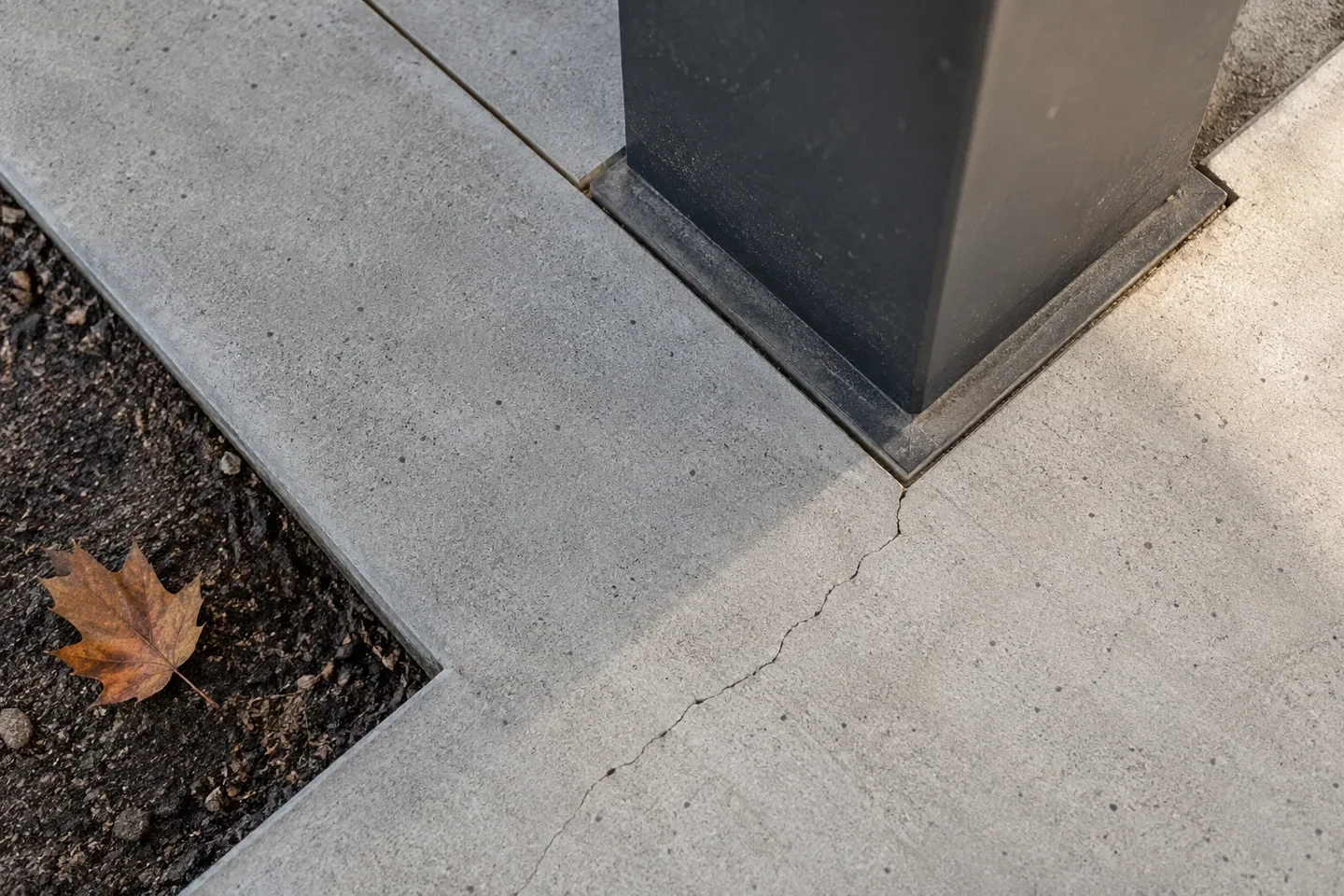
An inside, or reentrant, corner occurs where the outline of a slab turns inward. A patio wrapping around a building projection is an easy example. The corner is not the same as the outside point of a rectangular panel. If a crack starts there, a photograph that shows only the line misses the geometry that makes the location important.
Sketch the slab outline and mark the crack, nearby joints, walls, posts and steps. Exact survey dimensions are not required for an initial conversation, but approximate panel sizes and a clear orientation help. Include additions poured on different dates. A long patio assembled from several placements may contain boundaries that are hard to recognize after finishing.
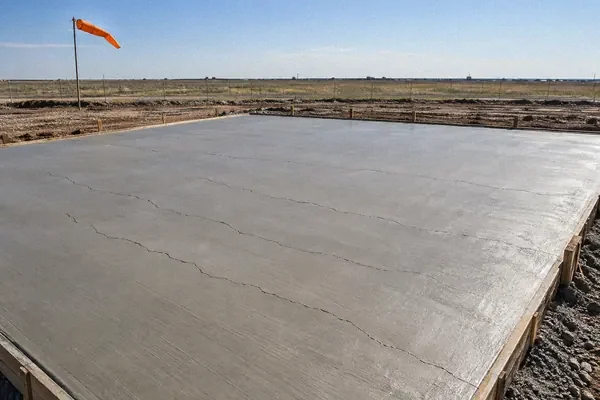
In a Reddit question about a crack in a new workshop slab, the owner considered drilling at the crack's endpoint. The useful issue raised by that thread is how to respond when the crack appears tied to geometry. The comments cannot establish the appropriate repair for the actual slab.
Why the corner matters to the review
A slab's shape, restraint and joints influence how movement is accommodated. NRMCA discusses joint layout and advises against awkward panel geometry in CIP 6, Joints in Concrete Slabs on Grade. The practical lesson for an existing crack is to examine the whole panel rather than treating the line as an isolated defect.
Do not turn this into a rule that every corner crack is expected and therefore irrelevant. Location helps form a hypothesis; it does not establish depth, stability or consequences. A crack at a corner can coexist with poor drainage, vertical displacement or surface deterioration. Those observations still need to be addressed.
Likewise, a drawing that shows a joint nearby does not prove the joint functioned as intended. The evaluator may need to consider where it terminates, how the adjacent panels are shaped, and whether the crack formed before the joint was created. Ask which of these facts are known and which are being inferred.
Identify restraint without making design assumptions
Look at how the slab meets a wall, a column, a footing or another placement. Some boundaries are intended to allow independent movement; others may have an engineered connection. A homeowner should not assume that every contact should be disconnected or that every adjacent slab should be tied together. The original design and intended use determine the right arrangement.
Request drawings or construction photographs if they exist. They may show boundaries hidden by the finished surface. If the slab supports a building, contains post-tensioning or has an unfamiliar structural role, the review must account for that before any cutting or drilling is considered. This article is about organizing an investigation, not prescribing a retrofit joint design.
The broader list of cracking mechanisms in NRMCA CIP 4 is a reminder that geometry is only one part of the explanation. It is possible to notice a suggestive corner and still miss a separate support or movement issue.
Why the drill-hole idea does not answer the problem
A small hole may sound like a way to interrupt a visible line, especially if someone has seen that technique used in another material. Concrete slabs present different questions. You may not know the crack depth, the stress state, the location of reinforcement or embedded services, or whether movement will continue. A hole also creates a new visible feature that will require its own treatment.
Before accepting any physical intervention, ask what mechanism it is intended to change and what evidence supports that approach. If the answer is only that it might stop the line, the scope is not sufficiently developed. A proposed repair should explain the objective, the limits and the consequences for appearance and future maintenance.
The same caution applies to adding a saw cut after a crack has formed. A later cut is not a time machine. Whether it serves a useful purpose is a project-specific question that should be reviewed with the layout and the existing damage in view.
Make the site conversation concrete
Bring a brief checklist to the review:
- Mark the inside corner and the full visible crack path.
- Identify nearby joints and where they end.
- Record any height difference or change over time.
- Note water collection and ordinary loading in the area.
- Ask whether the original joint plan anticipated this geometry.
- Ask what the proposed repair accomplishes besides changing appearance.
- Request a description of the finished repair and its maintenance needs.
These questions keep the discussion from becoming a debate over whether all concrete cracks. The useful issue is whether the installed layout and current condition satisfy the intended function and what response is appropriate now.
A hypothetical patio example
Imagine a hypothetical L-shaped patio around a small building projection. A line extends from the inside corner into one panel. The owner has no early photographs and does not know when it formed. The first task is therefore to map the layout and establish a baseline, not assign an exact construction error.
Suppose the contractor's review finds no observed displacement but identifies an appearance concern and a need to monitor the line. The owner can evaluate a visible sealing treatment against leaving the line documented. If later observations show displacement or water collecting along it, that is new evidence requiring another review. The original corner explanation should not prevent the decision from changing when the facts change.
Choose an explained response
A worthwhile assessment connects the crack's location to the slab's design and actual behavior. Ask for that explanation in plain language. Avoid approving a hole, cut or decorative cover merely because it sounds small and reversible. Once the surface has been altered, some evidence is lost and a new maintenance detail may remain. Establish the purpose of the work first, then choose a method that is suited to that purpose and to the particular slab.
Related questions
Can drilling a hole stop an inside-corner crack?
Do not treat that as a standard homeowner repair. The proposed hole does not answer questions about restraint, movement, embedded items or the slab's function.
Would more reinforcing steel guarantee no corner crack?
No such guarantee follows from the presence of reinforcement. Joint layout, support, restraint and the intended design still need consideration.
Research references
- primary · full
NRMCA CIP 6 - Joints in Concrete Slabs on Grade - primary · full
NRMCA CIP 4 - Cracking Concrete Surfaces - reddit · search-excerpt
Crack in newly poured concrete