- Establish when cracks appeared
- Document finishing and protection
- Review the hardened condition
Reddit discussions identify questions; technical guidance comes from the linked primary sources. This article is not a site inspection or an engineered specification. How we research.
The timing is part of the evidence
A line noticed while crews are still finishing a slab raises different questions from a line discovered months later. Unfortunately, homeowners often know only when they first saw it. Write that distinction down. If the first photograph was taken the evening of the pour, say so; do not assume the crack formed at the exact moment the photograph was taken.
Record what work was happening immediately before the observation. Was the crew placing concrete, finishing the surface, cutting joints or applying a curing treatment? These details help the contractor reconstruct the sequence without guessing. Keep photographs that show more than the crack, including shade, coverings and the area being worked.
A Reddit discussion about early patio cracks and watering shows how quickly this becomes a debate about whether the homeowner followed instructions. The sensible starting point is the actual installation timeline and written care plan. Advice in the comments is not a substitute for those records.
Understand the plastic stage without overdiagnosing it
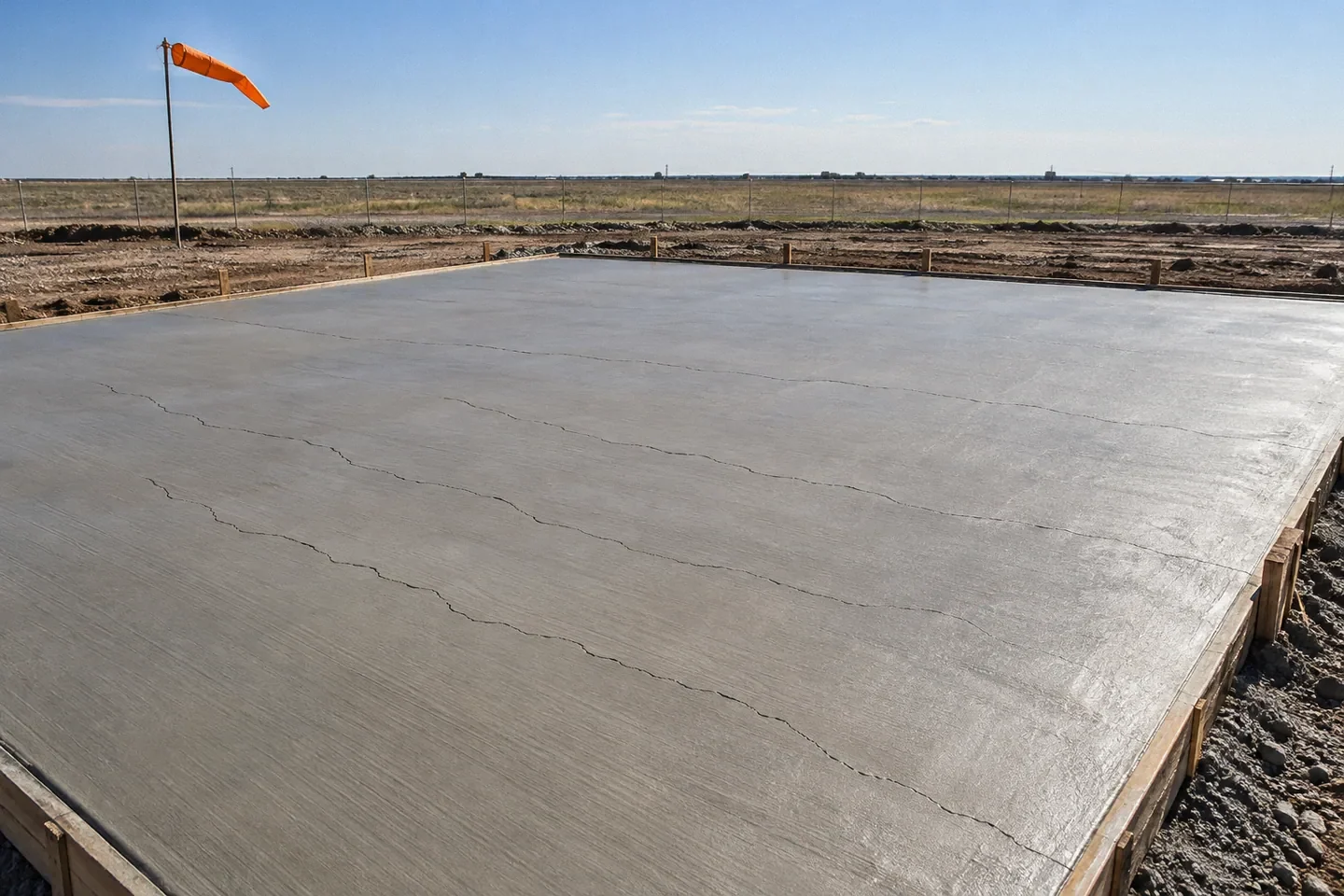
Plastic shrinkage concerns concrete before it has developed the hardened behavior people usually associate with a finished slab. NRMCA explains that surface moisture loss can contribute to cracking during this stage in CIP 5, Plastic Shrinkage Cracking. That mechanism is different from later drying movement in hardened concrete. Both involve moisture, but their timing and prevention are not interchangeable.
This distinction prevents two common mistakes. One is assuming that a saw cut made later can reverse a crack that already formed. The other is assuming that a homeowner's watering schedule the next day necessarily explains an earlier line. Neither conclusion follows from timing alone. A placement-day concern should be reviewed with the people who know the mix, sequence and site conditions.
Do not identify the mechanism solely by the shape of a line in a phone photograph. A pattern can suggest useful questions, but other conditions must be considered. The assessment should say whether plastic shrinkage is suspected or confirmed and explain what supports that view.
Protection before finishing and curing afterward are different tasks
The period when the surface is being worked has different practical constraints from the period after finishing. A product or method intended to slow evaporation during placement is not automatically the final curing system. NRMCA makes that distinction in CIP 11, Curing In-Place Concrete. Ask the installer to describe both stages rather than accepting a general statement that the slab was kept wet.
For a future pour, the written plan should identify who makes weather-related decisions, what protection is available, and who takes over after the crew leaves. Those are planning responsibilities. For a slab that has already cracked, the immediate need is to document what occurred and review the hardened condition, not improvise a new finishing operation after the fact.
A homeowner should not add water, dust dry cement over a line or attempt to rework a surface while a crew is managing the placement. Changes to the process should come through the responsible contractor. Your useful contribution is to raise the observation promptly and keep a record of the response.
Questions that help reconstruct the day
Use the following as a request for information, not as a list of accusations:
- What time was the affected area placed and when was its final finish completed?
- When were the lines first observed by the crew?
- What measures protected the unfinished surface from drying?
- What final curing method was used, and when did it begin?
- Were the affected and unaffected areas placed or finished at different times?
- What was the agreed handoff to the homeowner after the crew left?
- What review or corrective action does the contractor propose now?
If some answers are unavailable, label them unknown. A missing photograph does not prove a step was omitted. Conversely, a general description of normal company practice does not establish exactly what happened on this project. Keeping those distinctions explicit makes the resulting discussion more credible.
What changes once the concrete has hardened?
Afterward, the decision concerns the actual crack, the slab's intended use and the repair objective. Ask whether the line is stable, whether there is a height difference, whether the surrounding surface is sound and whether drainage is affected. The evaluator may need information beyond a surface inspection. Do not assume that calling the crack early-age answers every question about its consequences.
Repair appearance also deserves attention. A treatment that limits water entry may remain visible. A decorative overlay may require additional preparation and may not prevent a moving crack from returning. Discuss these tradeoffs before approving an approach, particularly on integrally colored or stamped concrete where a local repair can be visually prominent.
Keep the agreed curing measures in place unless the contractor gives a reason to change them. The existence of a crack does not make the remainder of the care plan irrelevant. At the same time, do not accept a promise that more watering will necessarily make an established line vanish.
A hypothetical timeline comparison
Consider a hypothetical driveway placed in two sections. The first section shows lines in a photograph taken before the crew leaves; the second is first photographed the following morning. An observer might blame the overnight care for both. The photographs show why that explanation needs refinement: at least some lines were already present before the handoff.
Now suppose a third line is first documented several weeks later near a corner. It belongs in the same project record, but it should not automatically receive the same diagnosis. Different timing, location and behavior can require different explanations even within one slab.
Turn the concern into a specific request
Ask the contractor for a written account of the likely mechanism, the evidence still needed and the proposed response. Include a clear map of the lines and the best available timeline. The goal is not to win an online argument about whether concrete should crack. It is to establish which condition occurred, what it means for this installation and what action is justified by the evidence.
Related questions
Does hot weather automatically cause plastic shrinkage cracks?
Temperature is only part of the exposure picture. Wind, humidity and the concrete's behavior also matter, so the calendar alone cannot establish a cause.
Can watering tomorrow undo a crack formed today?
Later care cannot be assumed to erase an existing crack. Continue the agreed curing plan while asking the installer to evaluate the crack and its significance.
Research references
- primary · full
NRMCA CIP 5 - Plastic Shrinkage Cracking - primary · full
NRMCA CIP 11 - Curing In-Place Concrete - reddit · search-excerpt
Was this crazing due to curing method?