- Identify the floating operation
- Compare tool shape and handling
- Test on the actual mixture
Reddit discussions identify questions; technical guidance comes from the linked primary sources. This article is not a site inspection or an engineered specification. How we research.
Tool discussions often turn into brand or material loyalties. One finisher likes magnesium, another resin, and another keeps a wood float for particular work. Those preferences can be useful experience, but they do not establish a universal shopping rule.
A Reddit exchange about which floats finishers use illustrates that range of preference. For a buyer, the first step is to identify the operation rather than select a material from the most confident comment.
Name the job the float must do
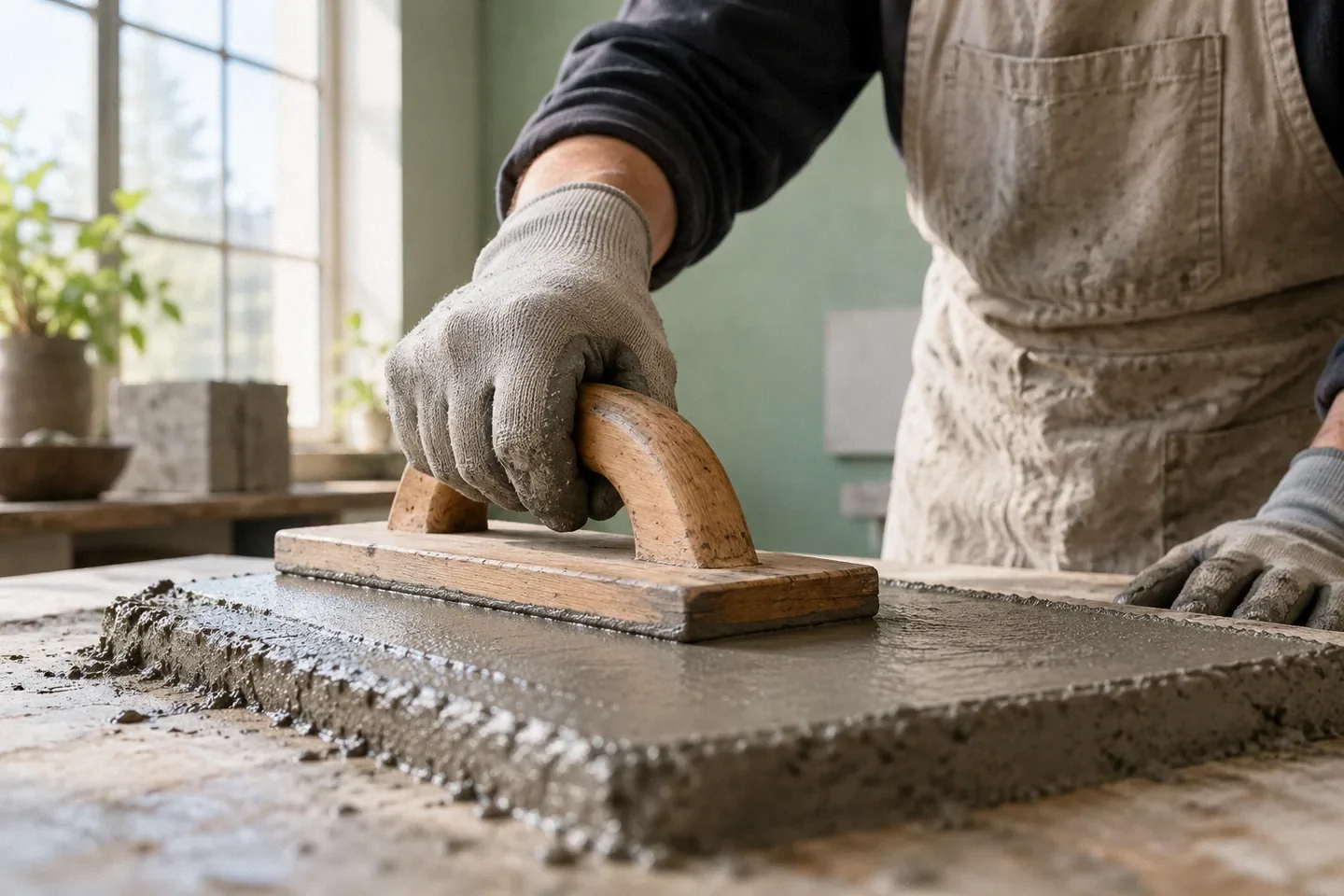
Are you performing an initial operation over a broad area, working a perimeter, or handling a localized detail? A long-handled bull float and a hand float are not interchangeable simply because their blades use the same material.
MARSHALLTOWN's finishing-tool overview describes floating within the broader sequence. That sequence should guide the purchase.
Do not choose a tool solely to create the final appearance. The float prepares the surface for subsequent operations, and the correct next step depends on the mixture and intended finish.
Compare more than blade material
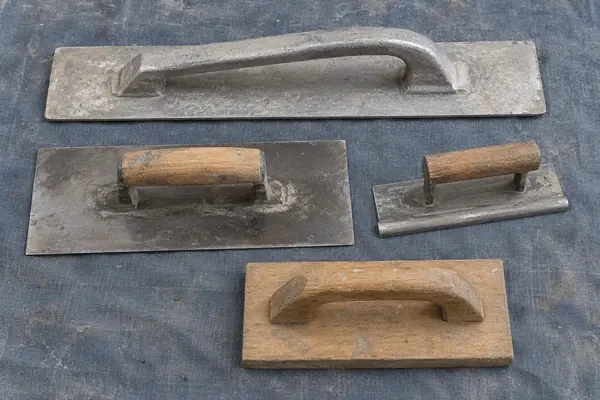
Length, width, stiffness, edge profile, handle position, and weight affect how a float handles. A familiar material in an unfamiliar geometry may behave differently from the tool you expected.
Examine the blade condition as well. A worn or damaged tool is not a fair comparison with a new one. Rental and borrowed equipment should be checked before the pour rather than discovered during use.
For a beginner, controllability matters. The longest available float is not automatically the easiest way to produce consistent work around obstructions or along a narrow slab.
Consider the mixture and surface condition
Different mixtures and environmental conditions can change the feel of the operation. Avoid interpreting every drag mark as proof that the tool material is wrong.
The NRMCA flatwork guide provides context for appropriate finishing and surface conditions. Read the operation, mixture, and timing together.
If the surface is not ready for the intended step, buying a different float may not resolve the problem. An experienced operator should evaluate what the concrete is doing before changing the process.
A hypothetical tool purchase
Suppose a homeowner borrows a magnesium hand float and reads that resin is “better for bringing up cream.” They consider buying a second tool immediately.
Before spending money, they identify their project: a small broom-finished pad with accessible edges. They arrange a representative practice placement and compare how the borrowed tool handles during the appropriate operation.
The trial may show that the existing float is entirely adequate. Alternatively, it may reveal a reach or handle problem better solved by a different size or configuration. Either finding is more useful than choosing by material alone.
This example does not declare one float best. It demonstrates how a practical trial can separate handling problems from internet preference.
A comparison framework
| Factor | What to compare |
|---|---|
| Operation | Broad-area floating versus localized work |
| Blade geometry | Length, width, profile, and stiffness |
| Weight and balance | Whether the operator can control it consistently |
| Handle | Grip, clearance, and comfortable working angle |
| Mixture response | Behavior during a representative trial |
| Tool condition | Flatness, wear, and damage |
| Following step | Compatibility with the planned finishing sequence |
Keep notes on the operation and mixture when testing. “Tool A felt easier” is more useful if you know what it was doing and under what conditions.
Avoid overworking to justify the purchase
A new tool can tempt an inexperienced user to keep making passes until the surface looks increasingly uniform. More work is not automatically better.
Observe the concrete and follow the appropriate sequence. Do not use repeated floating as a substitute for correct grade, proper placement, or a suitable mixture.
The objective is a surface ready for its intended next operation, not proof that every square foot received the maximum possible number of passes. That distinction is especially important where the final surface will be textured rather than polished.
Keep floating and troweling terminology clear
People sometimes call every handheld finishing tool a trowel. That makes advice difficult to interpret. Ask for the tool's actual type and the operation being described.
A steel finishing trowel should not be selected merely because a float did not produce a glossy result. Gloss may not be the required outcome, particularly on an exterior walking surface.
Likewise, do not assume a resin or magnesium tool eliminates every later operation. The finish specification and mixture determine the sequence, not the owner's desire to use only one tool.
Practice the edges and transitions
The middle of a small sample may be easy while edges, corners, and obstructions expose control problems. Include those conditions in a trial.
Check how the tool passes near form stakes and adjacent walls. A handle that works in open space may be awkward beside a fence. These are practical reasons to change configuration without making claims about one material being technically superior.
Plan where tools will be cleaned and stored between operations. Keeping the blade in suitable condition helps make the work repeatable.
Buy for a repeatable operation
If you routinely do similar work, record which tool configuration performs well with the mixtures and finishes you actually use. That creates a more useful purchasing guide than a universal ranking.
For a one-time project, choose a manageable tool, understand its role, and obtain enough practical guidance to execute the sequence. The most expensive float cannot supply missing timing judgment.
Frequently asked questions
Is magnesium always preferable to wood?
No. Evaluate the operation, geometry, condition, and mixture response. Material is one part of the choice.
Does a float replace a finishing trowel?
Not as a universal substitution. Identify the required finish and the appropriate operations before deciding which tools belong in the plan.
Research references
- primary · search-excerpt
MARSHALLTOWN Basic Concrete Finishing Tools - primary · full
NRMCA CIP 14 Finishing Concrete Flatwork - reddit · search-excerpt
Floats