- Record the sheet-contact pattern
- Check the curing history
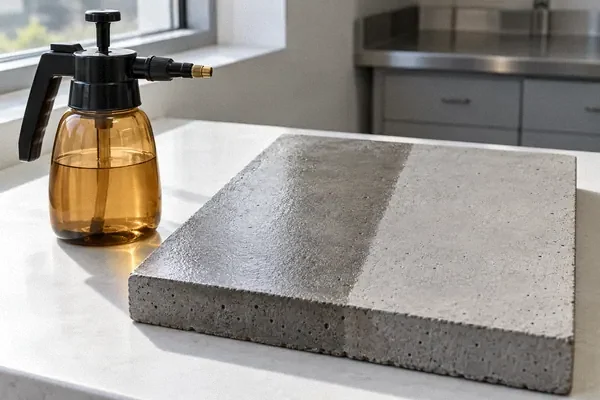
- Evaluate a dry test area
Reddit discussions identify questions; technical guidance comes from the linked primary sources. This article is not a site inspection or an engineered specification. How we research.
A protective covering can become an appearance concern
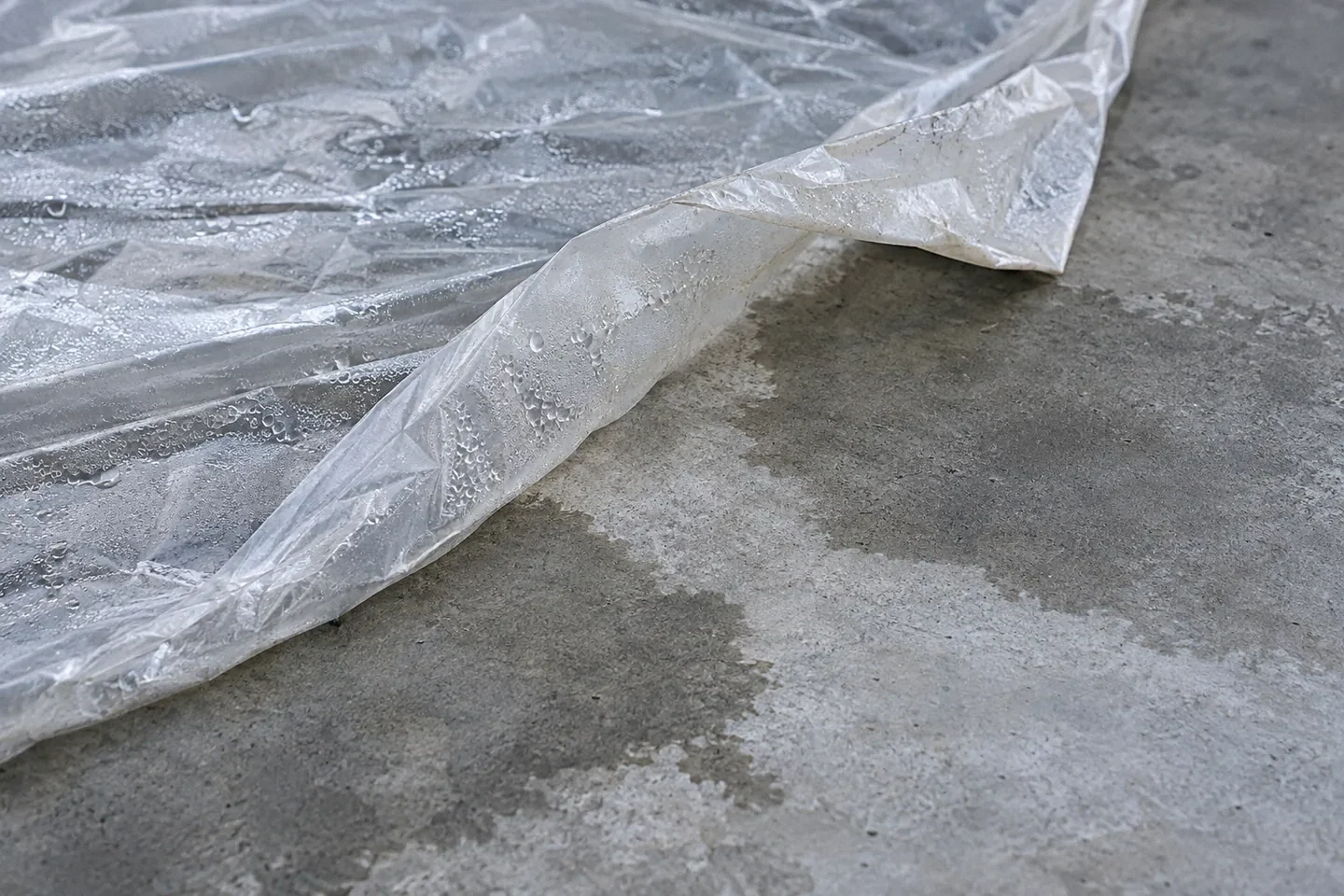
Plastic sheets are easy to recognize, but the condition beneath them is not always easy to interpret. A homeowner removes a covering and sees dark patches, wrinkles or bands that seem to follow the sheet. The immediate question is whether the slab has been permanently stained. Before deciding, record when the covering was removed and whether the concrete was still damp.
A Reddit discussion about white patches on new concrete includes repeated questions from other owners and one report that marks became less apparent as the surface dried. That is an anecdote about one installation, not a guarantee for another. It demonstrates why comparable observations over time are more useful than an immediate verdict from a wet photograph.
Why the covering history matters
NRMCA notes that plastic curing sheets can produce mottling and that appearance-sensitive surfaces require particular consideration in CIP 11. The practical lesson is to ask how the curing method was chosen for the intended finish. It is not to conclude that every mark beneath plastic proves defective work.
Ask whether the sheets were in direct contact with the concrete, whether another material was underneath, and when the covering was applied and removed. Construction photographs may show the arrangement better than memory. Keep information about the sheet or curing product if available.
Do not assume the color pattern is the only condition present. Residue, differences in moisture, finishing variation and other causes can affect appearance. A contractor reviewing the slab should explain which observations support a particular explanation and whether any additional testing or cleaning trial is needed.
Photograph the pattern at useful scales
Take one view of the entire slab and several closer views. Mark where sheet overlaps or wrinkles were located if known. Photograph unaffected areas under the same light. A single close image of a dark patch provides little basis for comparing it with the rest of the installation.
If the surface is still drying, repeat photographs once conditions are comparable. Record whether the marks change in outline, intensity or texture. Do not create a misleading before-and-after comparison by photographing the first view wet and shaded and the second dry in direct sun.
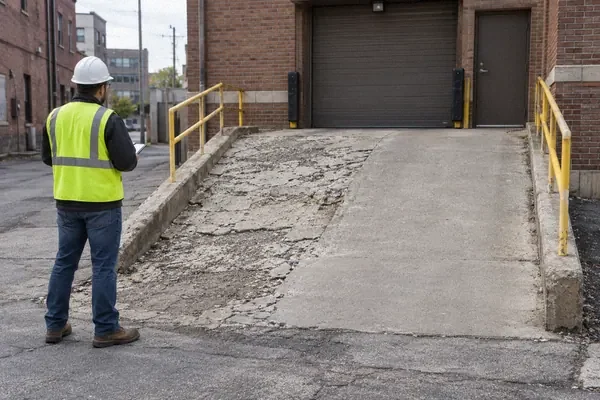
Also note whether the surface itself is sound. A color difference is not the same observation as flaking, soft material or an altered texture. If those symptoms are present, list them separately. An appearance explanation should not be used to dismiss physical deterioration.
Do not trade curing for a premature cosmetic experiment
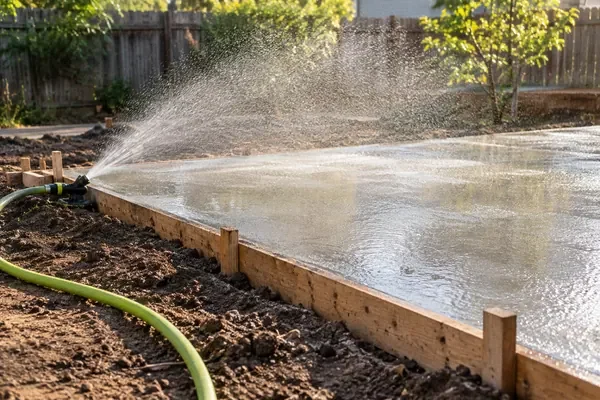
If the slab is still within its planned curing period, ask the installer before removing or changing the protection. The need to develop the intended concrete properties and the desire for uniform appearance must be managed together. Improvised removal, washing or chemical application can complicate both objectives.
Ask for a written explanation of the next step: continue the method, change it under supervision, allow an observation period or arrange a site review. A defined plan is more useful than “it will be fine” because it tells you when the condition will be reassessed and what information will matter.
Do not apply a sealer simply to see whether it evens out the color. A finish can change how the surface looks and make later cleaning or treatment more complicated. Establish whether the surface is ready and whether the proposed product is compatible with the intended next work.
Separate investigation from remediation
NRMCA CIP 23, Discoloration discusses multiple contributors to concrete color variation and remedial considerations. Use it to frame a cautious review, not as a menu of chemicals to try in sequence. The appropriate treatment depends on the actual condition and surface.
Before a trial, agree on a small representative area, the method and how it will be evaluated. The contractor should identify any existing finish that may be affected. Record the area before treatment and after it has reached a suitable dry condition for comparison.
A useful trial answers a specific question: does this method improve the unwanted pattern without an unacceptable change in texture, color or finish? If it does not, stop and reassess rather than increasing the strength or repeating it across the entire slab.
A review checklist
- What curing materials were used, and when?
- Does the pattern correspond to documented contact or overlap areas?
- Is the concern only color, or is texture changing too?
- Has the slab been compared under similar dry conditions?
- What outcome would count as an acceptable improvement?
- Is the proposed test compatible with the existing finish?
- Who decides whether the test justifies full treatment?
These questions keep the conversation tied to the actual installation. They also make it easier to compare a cleaning proposal with a recoloring or resurfacing proposal, which may have very different maintenance implications.
A hypothetical stamped-patio decision
Imagine a hypothetical stamped patio where mottled bands become visible after plastic is removed. The owner wants an immediate dark sealer to hide them. The installer first documents the pattern, confirms the curing status and arranges a dry-condition review. A small later test shows that the proposed finish darkens both the light and dark areas without making them uniform.
That result prevents a full application that would not meet the owner's objective. The parties can then consider other suitable options or accept some variation with a clear understanding of its appearance. The test does not need to erase the pattern to be valuable; it needs to inform the decision honestly.
Ask for a defined appearance review
Keep the original photographs and request a review date and proposed evaluation conditions. Avoid both an immediate demand for replacement based only on damp color and an unsupported promise that every mark will disappear. The appropriate next step is a documented assessment that respects the curing requirements and tests any cosmetic remedy before changing the whole surface.
Related questions
Should I remove plastic as soon as marks appear?
Do not interrupt the curing plan without the installer's direction. Photograph the condition and ask how curing and appearance will be managed together.
Will all plastic marks disappear with time?
No fixed disappearance promise is justified for every slab. The material, finish and conditions need review, and any treatment should be tested.
Research references
- primary · full
NRMCA CIP 11 - Curing In-Place Concrete - primary · full
NRMCA CIP 23 - Discoloration - reddit · search-excerpt
White patches on brand new concrete?