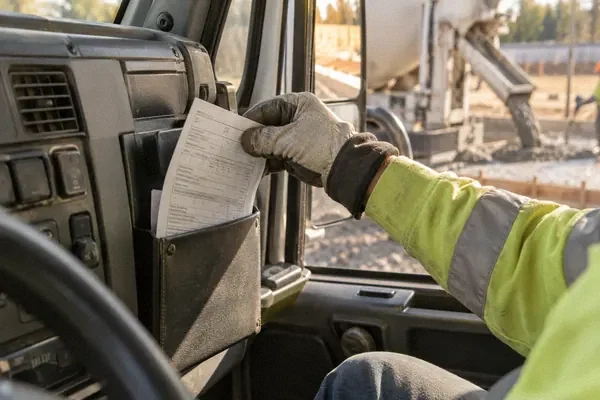
- Identify the specimen
- Check age and curing
- Use the project criteria
Reddit discussions identify questions; technical guidance comes from the linked primary sources. This article is not a site inspection or an engineered specification. How we research.
Start with the question the test was meant to answer
Ask whether the test supports mixture acceptance, evaluation of in-place concrete, construction timing or another defined purpose. The answer determines what specimen and interpretation are appropriate. A report created for one purpose should not silently be used to answer a different question.
A Reddit question about conflicting concrete specimen results shows how quickly discussion can jump to “pass” or “fail” without the specification. The post concerns cube results, which also reinforces the need to identify the specimen rather than assume every reported strength uses the same basis.
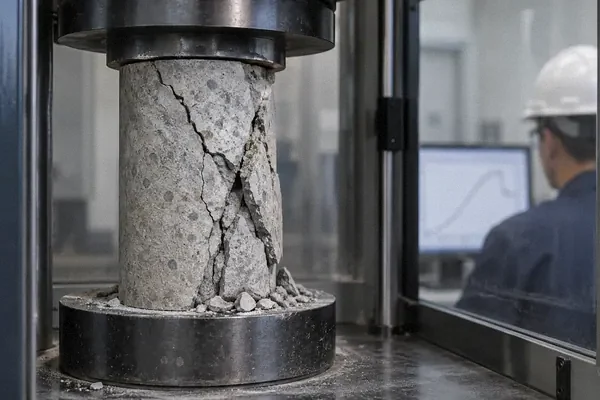
The FHWA guide to cylinder and core testing explains that the two approaches produce different results. Its pavement context is useful technical background, not a universal set of limits for residential work.
Cylinders are samples with a history
A molded specimen must be connected to the concrete from which it was sampled. Ask for the sample identifier, placement or load reference, molding date, curing description and laboratory report. Without that connection, even a precise-looking number may not answer the question about your project.
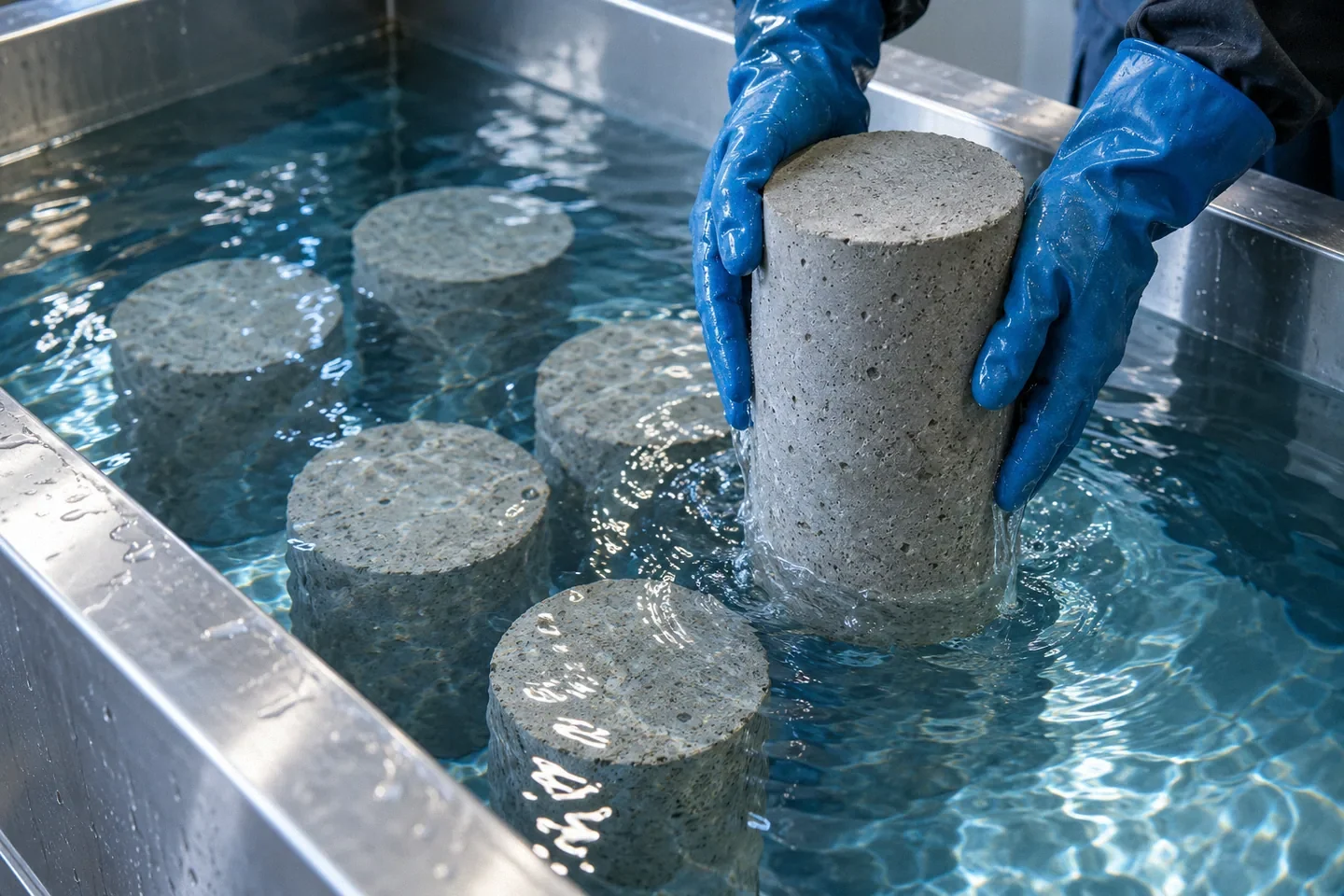
Do not assume every cylinder was cured under the same conditions. The FHWA materials manual distinguishes standard-cured and field-cured specimens and their uses. The relevant professional should explain which type appears in your report and why it was selected.
An owner does not need to audit a laboratory procedure independently. The practical task is to obtain a complete report and ask a qualified reviewer to identify any missing information or limitation that affects interpretation.
Cores require a planned investigation
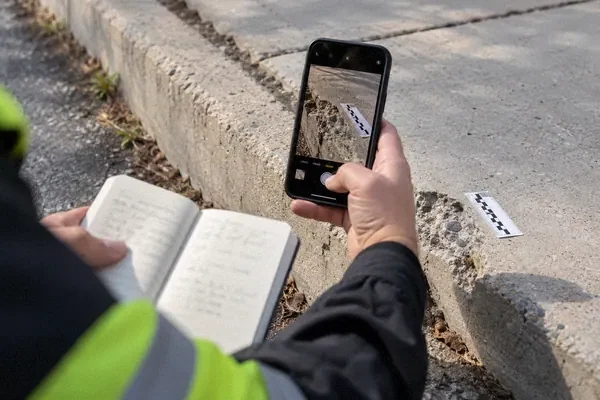
A core is taken from the placed concrete. Choosing where and how to obtain it is not an owner trial-and-error exercise. The investigation must account for the structure, concealed elements, intended evidence and repair of the sampling location.
Never drill a structural or potentially post-tensioned slab because a forum suggests taking a sample. The responsible professionals should plan any sampling and associated precautions. A core taken without a defined question may damage the work while producing a result that is difficult to interpret.
Ask the reviewer what uncertainty a proposed core program would resolve and what decision would follow different possible results. That makes testing purposeful rather than an expensive search for a reassuring number.
Read the report in a consistent order
| Report element | Question for the reviewer |
|---|---|
| Project and sample identity | Does this result belong to the relevant placement? |
| Specimen type and dimensions | What was actually tested? |
| Age at testing | Is this the specified age for the intended decision? |
| Curing and handling | Are there documented limitations? |
| Individual and combined results | How does the applicable criterion use them? |
| Specification reference | Which project requirement controls acceptance? |
Do not remove an inconvenient result from a set yourself. If a specimen appears questionable, the laboratory and responsible professional should determine how the applicable procedure treats it. The same caution applies to averaging numbers without knowing the required method.
Avoid converting strength into a simple vehicle allowance
Owners sometimes ask whether a reported strength means a slab can hold a particular truck. Material strength is only one piece of a structural or pavement question. Geometry, support, reinforcement, loads and other project conditions may also matter.
The report should therefore be interpreted within the design and intended use. A high number does not prove every aspect of the slab is adequate, and a low preliminary number does not by itself explain the final remedy. Ask the design professional what conclusion the evidence actually supports.
A Reddit question about how concrete strength is measured captures this confusion. Use it as a starting question, not as a design method or a table of allowable loads.
Hypothetical example: two reports that should not be compared directly
Suppose an owner receives an early-age cylinder report and later a report from cores taken during an investigation. The numbers differ. The owner initially assumes the higher number proves one laboratory is wrong.
The reviewer explains that the specimens, conditions and purposes differ and identifies the criteria applicable to each report. The owner then asks what additional information is needed to decide the actual project question. The comparison becomes meaningful only after the reports are placed in context.
This example does not imply that every discrepancy is harmless. It shows why the next step is a structured review of the evidence rather than choosing whichever number supports a preferred outcome.
Arrange testing before it is needed
Where the project requires fresh-concrete sampling, establish the testing agency, scheduling, reporting recipients and specimen identification before placement. A later dispute cannot recreate an uncollected sample. Agree who receives reports promptly and who interprets results requiring attention.
If testing was not required or arranged, say so clearly. A qualified professional can determine whether another assessment method is appropriate. Do not fabricate a missing testing history or treat a supplier's general product information as a report from your placement.
Keep the full reports with the specification, delivery records and location map. A screenshot showing only the strength column removes the context needed for a reliable interpretation.
Can I compare a cube result directly with a cylinder requirement?
Do not assume equivalence. The specimen basis and applicable specification need to be identified by the laboratory or responsible professional before interpreting the result.
Does one passing test prove every part of the slab is sound?
No. Ask what material and locations the sampling represents and what the test can establish. Other aspects of the work may require separate records or assessment.
Begin with the test's purpose and complete report. Let the project criteria and qualified interpretation determine the next decision rather than treating an isolated strength number as a universal verdict.
Research references
- primary · full
FHWA: Field Materials Manual - primary · full
FHWA: Concrete Strength Testing Practices for Acceptance - reddit · search-excerpt
New to concrete testing, has this cube passed or failed? - reddit · search-excerpt
How strong is concrete? And how do we measure concrete strength?