- Verify the report context
- Assess the project consequence
- Authorize a focused investigation
Reddit discussions identify questions; technical guidance comes from the linked primary sources. This article is not a site inspection or an engineered specification. How we research.
Confirm that everyone is discussing the same result
Obtain the full laboratory report rather than a text message summarizing it as “failed.” Check the project, sample identifier, placement date, specimen type and test age. Ask which requirement the person reporting failure used for comparison.
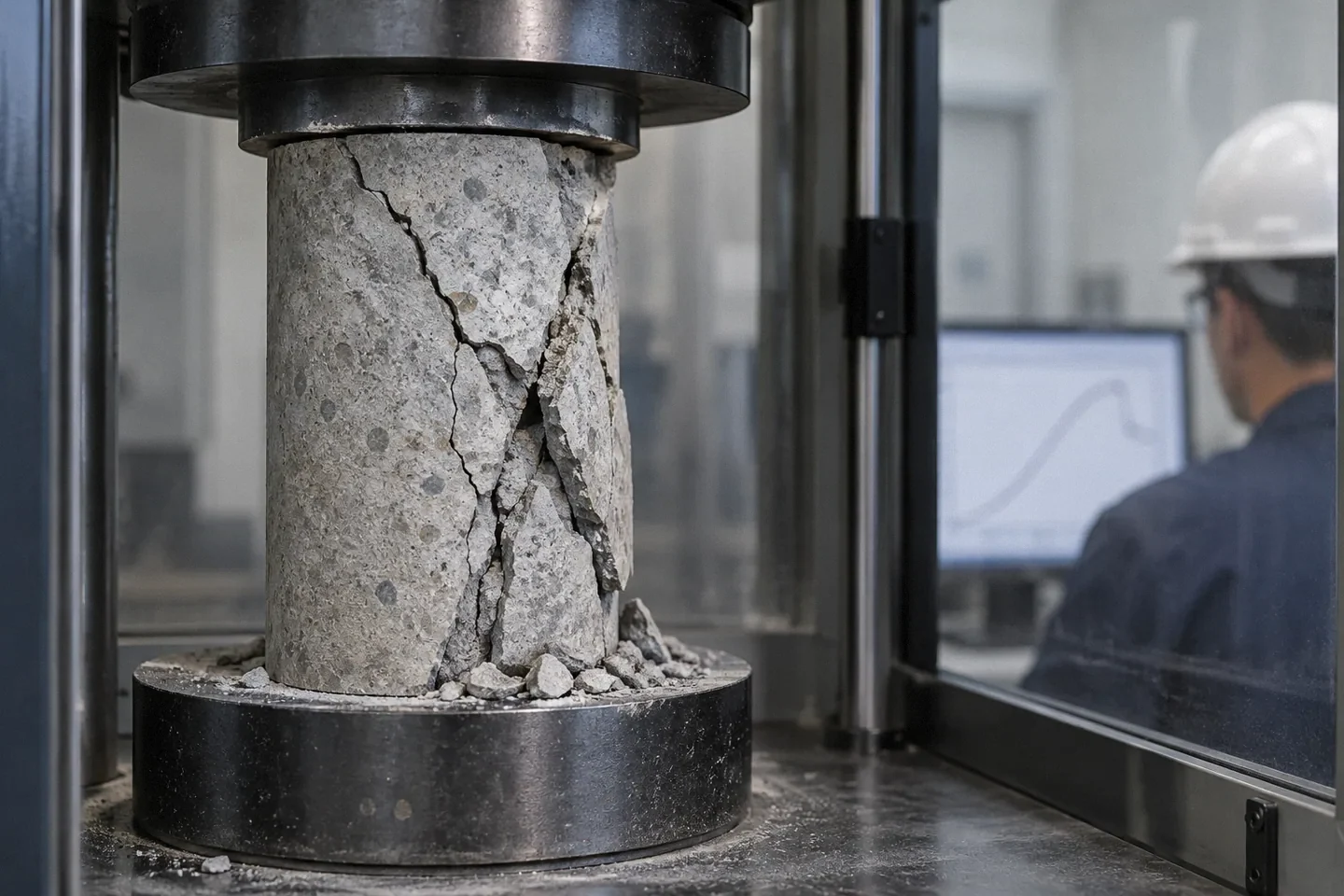
A number below an expectation may be an early informational result, part of a set or an acceptance result under a specific criterion. These distinctions do not make a concerning number disappear; they determine what question needs to be answered next.
A Reddit account of a slab with a failed strength test illustrates the stakes when construction has already continued. The comments cannot determine another project's adequacy or responsibility. The useful response is to identify the test and design context immediately.
Notify the people responsible for the decision
The owner, contractor, testing agency and design professional may each hold different parts of the record. Establish who coordinates the review and who can direct construction restrictions or further work. Do not let several parties give conflicting instructions based on an incomplete screenshot.
If the result may affect structural safety or continued loading, obtain prompt direction from the responsible design professional. An owner should not decide independently that work can continue because the surface looks normal. Likewise, a general article cannot determine whether temporary support or another measure is needed.
The FHWA materials manual discusses professional evaluation and possible further investigation of low results. Its public-project procedures are technical context, not universal acceptance thresholds for your building.
Review the evidence before selecting another test
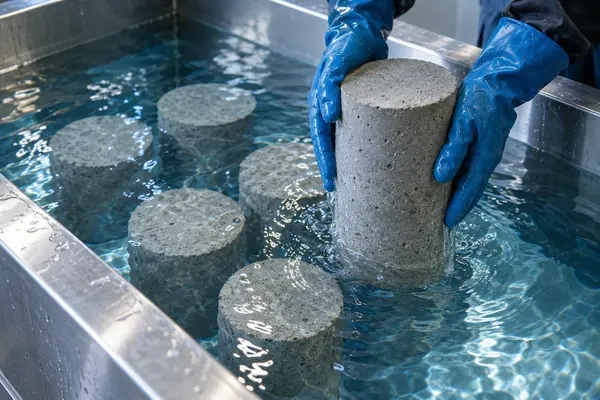
Ask the laboratory to identify any documented issue with sampling, specimen handling, curing or testing. Ask the project team to connect the sample with the actual placement area. Preserve those questions as a review process, not an attempt to dismiss an unfavorable result without evidence.
A possible specimen issue does not automatically prove that the placed concrete is satisfactory. Conversely, a result should not be interpreted beyond what its identification and procedure support. The responsible professional should state what remains uncertain after the report review.
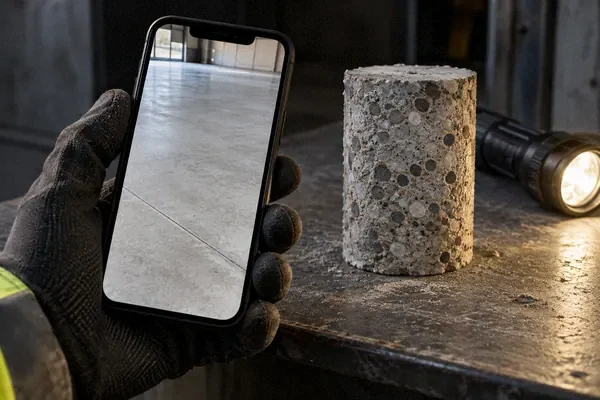
The FHWA cylinder-and-core guidance explains that different specimen approaches capture different conditions. A proposed core program should therefore have a defined purpose, not simply be a search for a higher number.
Questions for the review meeting
| Question | Decision it supports |
|---|---|
| Which placement does the result represent? | Defines the area requiring evaluation |
| What is the test's purpose and age? | Establishes the relevant comparison |
| Which project criterion applies? | Avoids unrelated internet thresholds |
| Are there documented specimen limitations? | Guides interpretation of the existing evidence |
| What construction or use should pause? | Addresses immediate project consequences |
| What would further testing resolve? | Makes the investigation purposeful |
Ask for a written summary of the review and next actions. It need not be an elaborate report at every stage, but it should identify the responsible person, unresolved question and authorized next step. That prevents a later disagreement about whether an informal conversation constituted approval to proceed.
Hypothetical example: low early data and a pending decision
Suppose a project receives an early test result below what the contractor expected. A later specified-age result is still pending. The owner wants to know whether to begin the next construction phase immediately.
The design professional reviews the test purpose and available data, then provides project-specific direction about the next phase and any additional information needed. The owner does not assume that waiting automatically solves the issue or that the early number alone requires demolition.
If the later evidence remains concerning, the professional develops a further evaluation plan. The example demonstrates a sequence of decisions based on evidence, not a promise that later results will improve or that a low result is merely a laboratory error.
Keep technical adequacy separate from payment responsibility
Determining whether the work is suitable and determining who pays for an investigation or remedy are related but different questions. A technical report may describe a condition without deciding contractual liability. Do not ask a laboratory number to answer a legal dispute it was not designed to address.
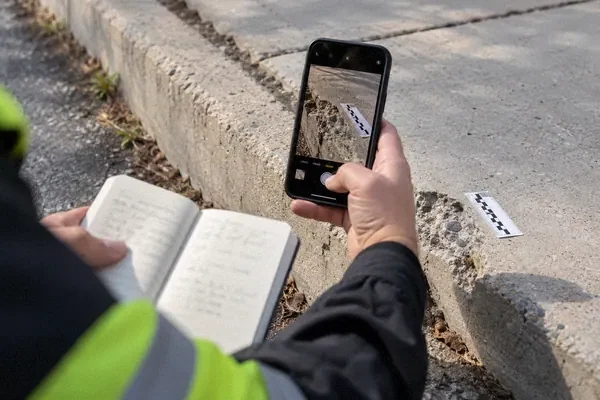
Preserve the original specification, approved changes, delivery information, placement records and testing agreement. These documents help the relevant advisers evaluate responsibility. Avoid agreeing to a broad settlement before understanding the technical consequence and scope of the proposed remedy.
If further sampling is proposed, clarify authorization, access, protection of concealed elements, restoration and reporting. The owner should not independently drill or direct destructive testing on structural or potentially post-tensioned work. A planned investigation protects both safety and the usefulness of the evidence.
Evaluate the final recommendation as a complete scope
A recommendation may involve additional analysis, restricted use, repair, replacement or another project-specific response. Ask what evidence supports it and what conditions or limitations remain. Do not reduce a nuanced professional conclusion to a single label such as “fine” or “failed.”
If corrective work is required, identify the boundaries, affected adjoining work, approvals and verification of completion. A vague promise to strengthen the slab is not a complete remedy. The design and contract records should be updated as necessary so the final condition is traceable.
Retain both the original report and later findings. A final acceptable resolution does not make the earlier record irrelevant; the history may explain what was investigated and why the accepted outcome differs from the first concern.
Does a low cylinder result always mean the installed slab has the same strength?
Do not assume that direct equivalence. The result must be interpreted with specimen conditions, sampling and the project criteria by the responsible professionals.
Should I demand immediate replacement before further review?
Request prompt assessment and appropriate direction for any safety concern. The remedy should follow the evidence and applicable requirements rather than an automatic response to one unexplained number.
Get the complete report to the responsible reviewer and obtain a documented next decision. That is more useful than debating a bare strength number while construction continues without clear direction.
Research references
- primary · full
FHWA: Field Materials Manual - primary · full
FHWA: Concrete Strength Testing Practices for Acceptance - reddit · search-excerpt
New to concrete testing, has this cube passed or failed? - reddit · search-excerpt
Concrete slab failed strength test