- Stop the uncontrolled spread
- Request the task-control plan
- Define cleanup and verification
Reddit discussions identify questions; technical guidance comes from the linked primary sources. This article is not a site inspection or an engineered specification. How we research.
Separate the immediate situation from the later dispute
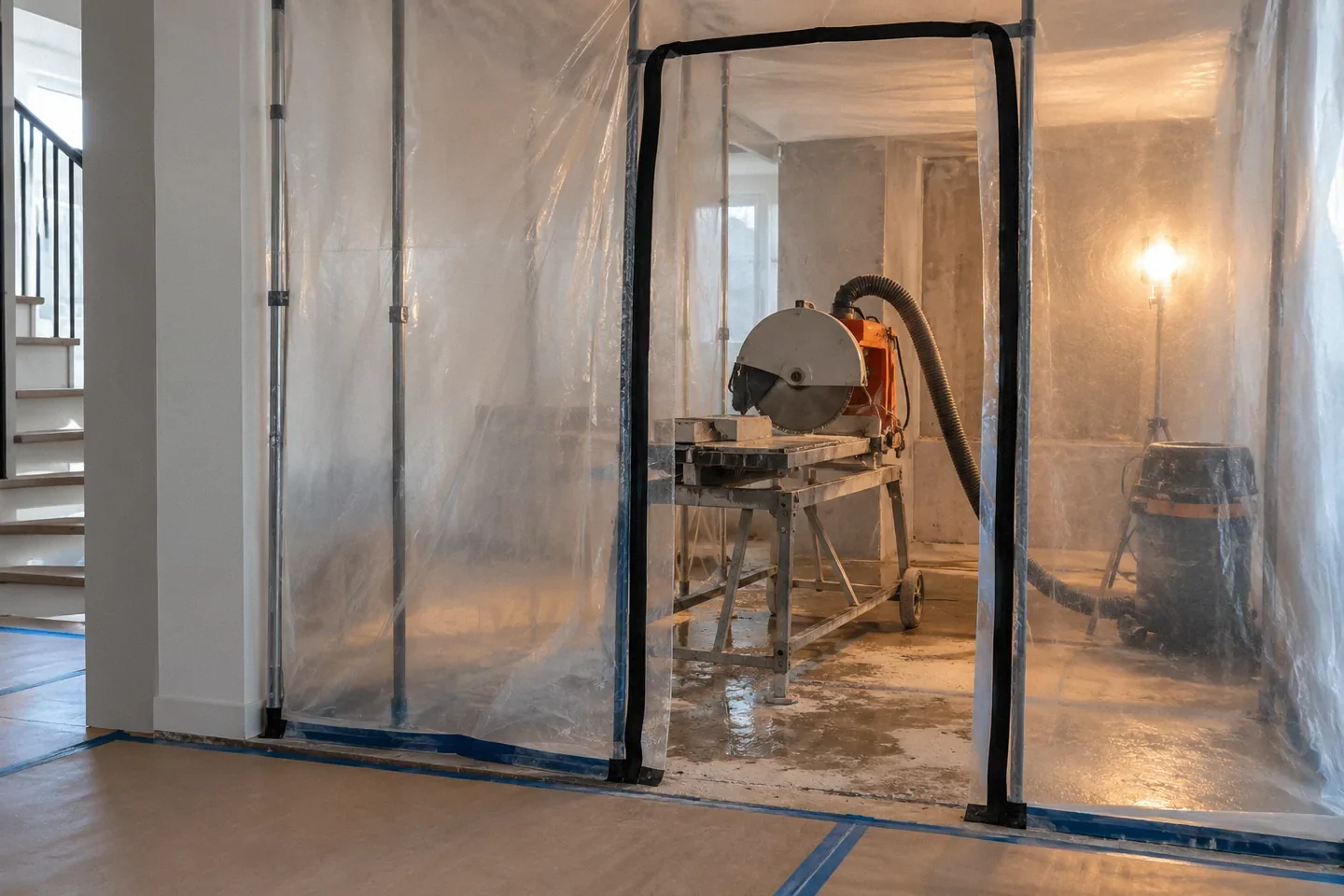
Keep occupants away from the affected work while the responsible parties establish a plan. Do not begin dry sweeping, blow dust around or improvise cleanup with an ordinary household vacuum. Ask the contractor's responsible safety contact to address ongoing generation and prevent additional spread.
If someone has breathing difficulty or another urgent medical concern, seek immediate medical help. For individual exposure questions, provide a healthcare professional with the task, material, duration and circumstances rather than relying on a photograph or online reassurance. This article cannot calculate a dose or diagnose an illness.
A Reddit homeowner described dust throughout a house after basement concrete cutting. The account illustrates how difficult it can be to compare cleanup proposals. It does not establish the severity of a different household's exposure.
Ask what task controls were planned
Identify the work performed, tools used, location, duration and whether the area was enclosed. Ask what dust-control method was selected and who was responsible for implementing it. A generic statement that the crew wore masks does not describe the complete control approach.
OSHA's construction silica guidance explains task-specific controls and alternative compliance methods. It is an occupational framework for employers, not a residential clearance standard or a formula for diagnosing occupants after an incident.
Avoid the opposite oversimplification that every concrete task must use exactly the same equipment. The applicable method depends on the task and conditions. The contractor should be able to identify its approach and explain the basis rather than dismiss the question as a homeowner preference.
Document where the dust traveled
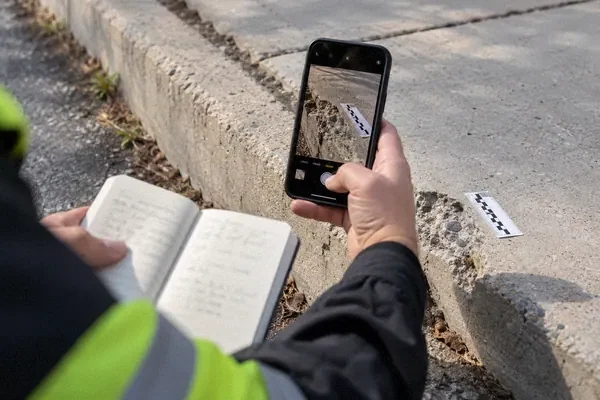
From a safe location, record the work area, nearby rooms and observed deposits. Note open doors, operating systems and any other relevant circumstances without experimenting with air movement. Do not turn on fans or disturb deposits to see where dust might go.
Preserve photographs, the work description and communications about the event. Distinguish what you observed from what you infer. “Dust was visible at this vent” is a factual observation; “the entire HVAC system is contaminated to a specific concentration” requires assessment.
Ask the assessor whether the concern includes occupied rooms, furnishings, mechanical systems or another area. Different proposals can have very different boundaries. Comparing only the final price may conceal that one contractor plans to clean a room while another includes a broader investigation.
Compare cleanup proposals by their scope
| Proposal element | Question to ask |
|---|---|
| Assessment boundary | Which areas and systems will be evaluated? |
| Control of spread | How will the work avoid redistributing dust? |
| Cleaning method | What equipment and procedures are proposed for the materials involved? |
| Worker protection | Who is responsible for the cleanup crew's safety plan? |
| Completion criteria | How will the provider determine that its defined scope is complete? |
| Documentation | What written record will the owner receive? |
Ask about the provider's relevant qualifications and experience with the actual task. A general house-cleaning quote may not answer a specialized contamination question. Conversely, a broad proposal should explain why each component is needed rather than rely on alarming language to justify an undefined package.
Understand what testing would answer
If someone proposes air or surface sampling, ask what question it is intended to resolve, when it will occur and how the results will be interpreted. A number without a defined method and decision criterion can create more confusion rather than settle whether the cleanup achieved its purpose.
Do not assume an occupational exposure limit is a universal pass/fail threshold for reoccupying a home. The assessor should identify an appropriate basis for the specific decision. Ask for limitations, including whether a later measurement can reconstruct an earlier exposure.
A qualified industrial hygienist or other appropriate environmental professional can help define an assessment when the scope is uncertain. The selection should be based on the problem, not on a promise to provide a predetermined reassuring or alarming answer.
Hypothetical example: two very different cleanup prices
Suppose a homeowner receives two proposals after indoor cutting. One covers visible dust on the basement floor. The other includes assessment of adjacent rooms and the mechanical system, with a written completion record. The owner initially believes the higher proposal is simply overpriced.
After comparing the boundaries, the owner asks an appropriate independent professional which areas actually need evaluation. The cleanup scope is then defined consistently, and bidders can price the same task. Neither the cheaper nor the more expensive proposal was automatically correct based on price alone.
The example demonstrates why the first decision is the assessment scope. An owner should not purchase an undefined “whole-house decontamination” package or accept a quick wipe-down without understanding what evidence supports it.
Keep responsibility and health questions distinct
The contractor may agree to arrange cleanup while disputing other costs. Record the proposed work and financial arrangement separately from any medical evaluation. Do not delay necessary care while waiting for someone to admit fault.
If responsibility remains disputed, preserve the agreement, site record and proposals for a local legal or insurance adviser. Avoid making an unsupported public claim about a diagnosed disease or precise exposure. The available evidence may establish an uncontrolled dust event without answering every health or liability question.
Does wet cutting guarantee there is no silica concern?
No blanket guarantee should be assumed. The complete task controls, equipment operation and conditions matter, and OSHA's guidance includes more than a single label such as wet or dry.
Can I use a normal vacuum and decide the room is safe when it looks clean?
Do not improvise that response. Ask for an appropriate cleanup and completion plan; appearance alone does not establish the exposure history or resolve every assessment question.
First stop further uncontrolled spread, then define the affected scope and suitable response. A documented assessment and cleanup plan are more useful than either panic or reassurance based solely on visible dust.
Research references
- primary · full
OSHA: Construction Silica Standard - reddit · search-excerpt
Contractor cut concrete in my basement and now silica dust is throughout my house - reddit · search-excerpt
Silica exposure on our job sites