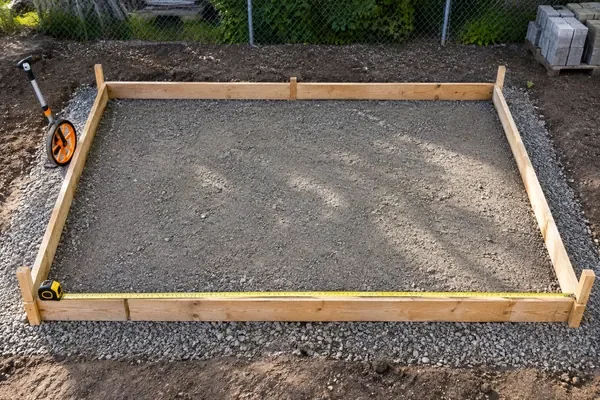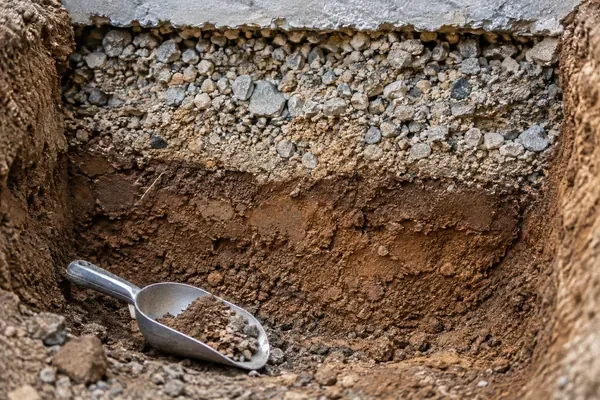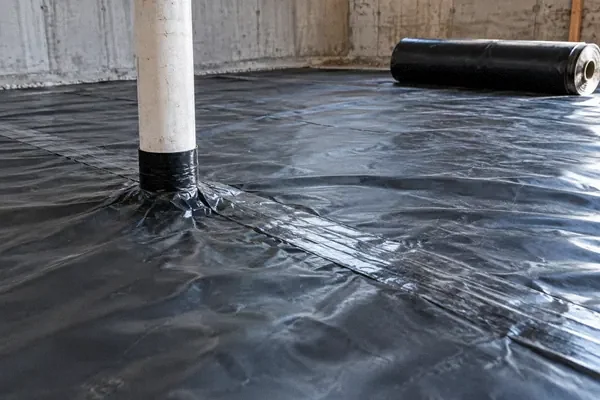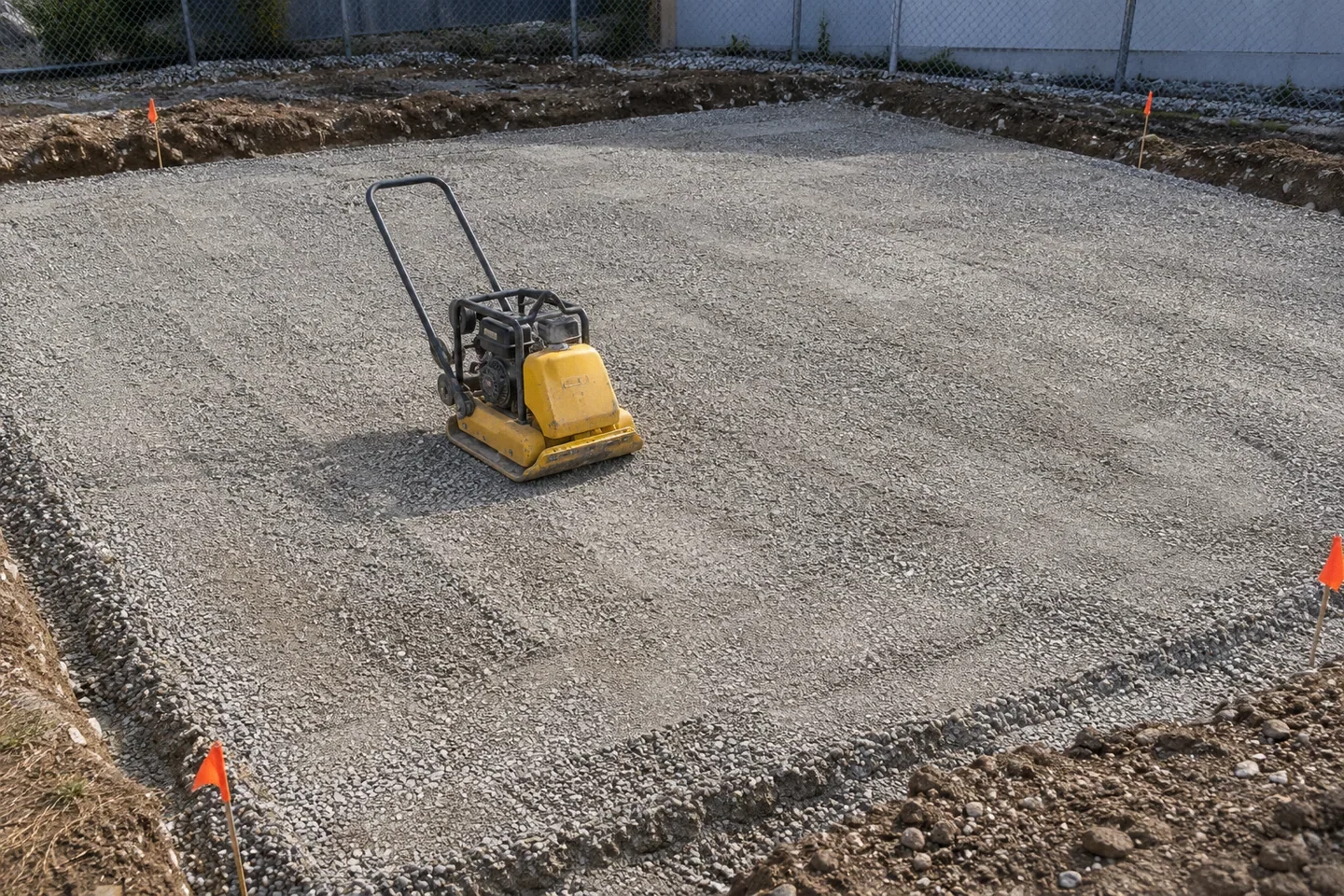
- Identify material and lift depth
- Match moisture and equipment
- Verify the specified result
Reddit discussions identify questions; technical guidance comes from the linked primary sources. This article is not a site inspection or an engineered specification. How we research.
“How many passes?” sounds like a practical question, but it leaves out most of the variables that determine compaction. A fixed answer can be misleading when one site contains cohesive soil, another granular fill, and a third a different stone product placed in a much thicker layer.
A Reddit discussion about compacting soil and gravel produced conflicting rules about passes and equipment behavior. Those comments reveal a real planning gap: owners need to know what result the contractor is trying to achieve and how that result will be checked.
Identify the material before choosing the method
Ask what material is being compacted. Existing soil and imported aggregate may require different methods. A broad trade name may not identify the particle distribution or moisture behavior precisely enough.
Request the supplier's material designation and the project's preparation requirements. If the contractor changes the material, revisit the method instead of assuming the same equipment and sequence remain appropriate.
The FHWA geotechnical pavement guidance treats compaction as a material- and process-dependent operation. Its engineering context should not be reduced to a universal backyard pass count.
Layer thickness affects what the machine can accomplish
A large pile spread across an excavation is not automatically one suitable compacted layer. Ask how the material will be placed in lifts and what thickness the equipment and project specification support.
The machine working the surface does not prove that the full depth has received the required treatment. That is especially important where deeper fill has been added to correct grade or replace unsuitable material.
Do not invent a lift thickness from a generic video. The actual equipment, material, and specified method should establish the plan. Ask the contractor to explain those together.
Moisture is a process variable
Water content can affect how material responds to compaction. “Dry is best” and “soak it thoroughly” are both poor universal instructions.
Discuss how the contractor determines and manages the appropriate condition. The answer should be tied to the material and required result, not to how dark the surface looks.
If rain changes the site condition, reassess before proceeding. A schedule commitment does not establish that the support is ready, and running a machine over unsuitable conditions does not automatically correct them.
A hypothetical thick fill area
Suppose a patio contractor imports material to raise one side of a sloping yard. The fill is much deeper at that side than near the house. A plate compactor is run across the finished surface, and the owner is told that several passes make everything ready.
The useful questions are how the deeper material was placed, what equipment was used at each stage, and what verification applies. A final surface pass cannot answer those historical questions by itself.
If records or observations reveal that the fill was placed without the specified process, the next step is to resolve that condition before the pour. The owner should not attempt to prescribe a remedy solely from this example; the depth, material, and support design require appropriate evaluation.
Define verification before work begins
| Item | Useful documentation |
|---|---|
| Material | Supplier designation or approved description |
| Placement | Planned lift sequence and thickness |
| Moisture control | Method appropriate to the material |
| Equipment | Machine type and relevant operating guidance |
| Acceptance | Specified testing or field assessment |
| Exceptions | Soft areas and how they are resolved |
| Finished elevation | Checks against intended slab geometry |
Not every small project needs the same testing program. The key is that the required result and evidence are agreed before the base is concealed.
Avoid saying “95% compacted” without identifying what that percentage refers to and how it will be established. A percentage detached from a reference method is an incomplete specification.
Know what simple observations can and cannot tell you
Visible rutting, pumping, loose areas, or unexpected movement are reasons to stop and ask questions. The absence of those signs is useful but does not automatically prove every specified property.
A plate bouncing, a boot leaving no print, or a vehicle crossing the site are observations within a broader process. They should not be promoted into universal acceptance criteria.
Photographs can show the sequence, equipment, and visible conditions. They cannot independently establish a density result. Keep the difference clear when recording the work.
Do not let the last layer hide the earlier work
The support system includes what lies beneath the imported material. Ask whether the underlying soil was evaluated and prepared before aggregate was added.
An attractive stone surface can conceal organic material, uncontrolled fill, or unresolved wet areas. The time to examine those conditions is before covering them.
If the project involves utility trenches, discuss how their backfill relates to the rest of the slab area. A narrow disturbed zone can be easy to overlook when reviewing the final surface from the perimeter.
Connect compaction with grade and scheduling
After preparation, check the elevation and intended concrete thickness. Material movement during compaction can change the quantity and grade relationship. Recheck rather than relying only on measurements made before the machine was used.
Protect the prepared area from unnecessary disturbance. If trucks, equipment, or rain alter it before placement, determine what review or rework is required.
The most useful owner question is: “What material and process are specified, and how will you confirm the result?” That question produces more reliable information than demanding an arbitrary number of passes.
Frequently asked questions
Is gravel self-compacting?
The phrase does not define a complete preparation method. Identify the product and the project's requirements.
Does a bouncing plate prove adequate compaction?
No single equipment behavior establishes every required property. Use the agreed verification method and evaluate the whole support system.
Research references
- primary · search-excerpt
FHWA geotechnical pavement guidance Chapter 7 - reddit · search-excerpt
Do you need to compact dirt before adding gravel. If so why. How many times do you need to compact gravel.