- Assess loose and sound areas
- Define protection versus repair
- Confirm product compatibility
Reddit discussions identify questions; technical guidance comes from the linked primary sources. This article is not a site inspection or an engineered specification. How we research.
Why the inexpensive option is appealing
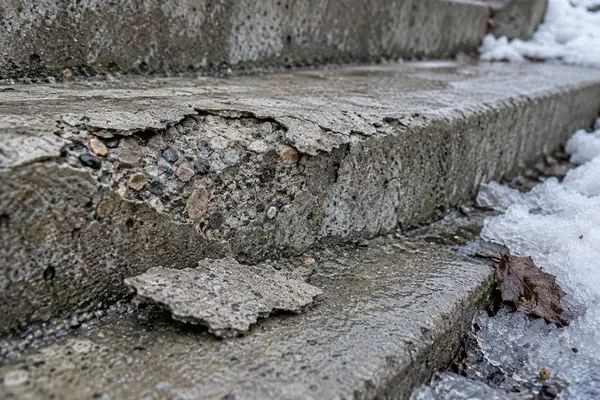
A deteriorating driveway presents an uncomfortable choice: live with the damage, pay for repair, or consider replacement. A relatively affordable sealer can sound like a way to postpone the expensive decision. That can be a reasonable question, but only if the proposed benefit is stated accurately.
A Reddit homeowner asked whether sealing could extend the life of a spalling driveway and whether larger damaged areas should be filled first. The budget concern is understandable. The technical question is whether the current surface can receive the treatment and what deterioration mechanism it is expected to influence.
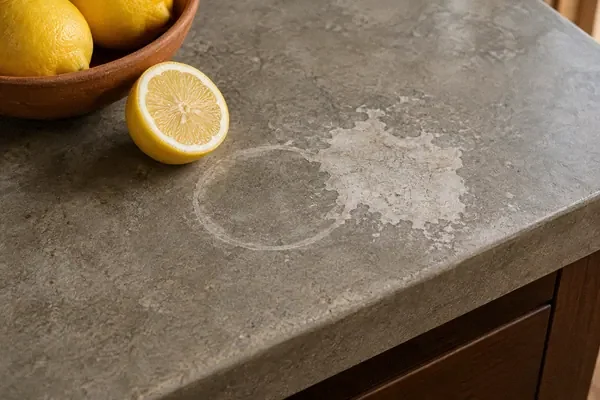
Do not equate a darker, more uniform wet look with repaired concrete. Appearance can improve while loose material, missing depth or an underlying problem remains. Ask what physical condition will change, not only how the surface will look after application.
Protection and repair are separate tasks
A protective treatment may be intended to reduce exposure to water or contaminants under specified conditions. A repair restores a damaged area using a suitable method. Replacement addresses a different scope again. A complete proposal should identify which of these it includes.
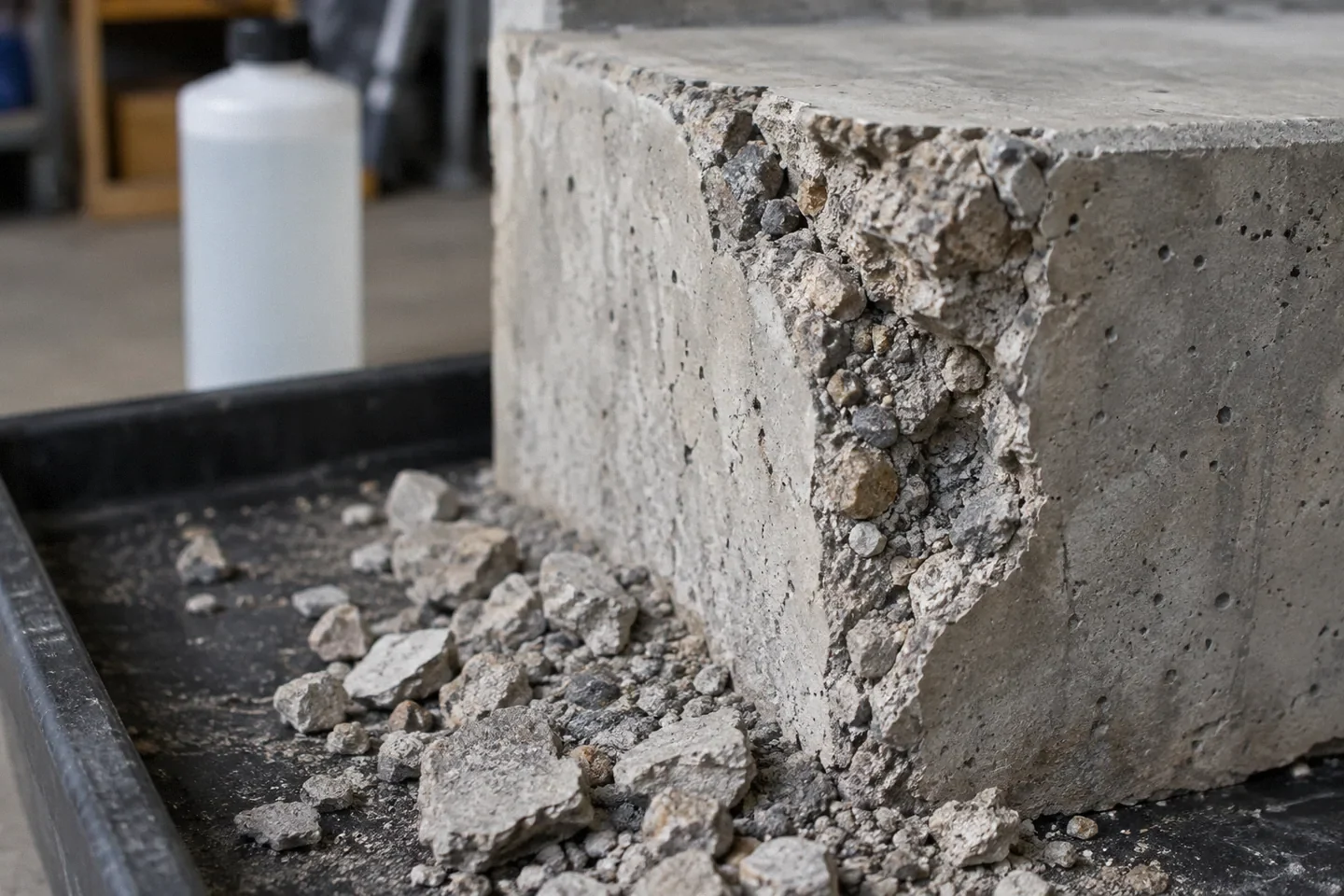
NRMCA CIP 2 discusses scaling and the need for a sound receiving surface when bonded repairs are used. A sealer applied over a failing layer does not remove that requirement. The evaluator needs to determine whether the surface is intact enough for the proposed treatment.
Manufacturers also distinguish penetrating protection from film-forming finishes. For example, PROSOCO Saltguard WB describes a water-repellent treatment with particular uses. That does not establish suitability for every damaged driveway. Use the exact data sheet and site assessment rather than treating the word sealer as one universal product category.
Establish what is still changing
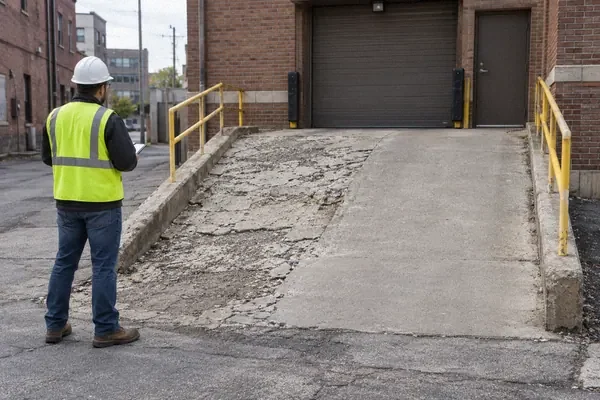
Document the affected area with a sketch and dated photographs. Note whether new patches appear between observations or whether the same damaged area simply looks more obvious when wet. Record loose fragments found during normal cleaning without aggressively attacking the surface to create a test.
Ask the contractor whether apparently intact areas also need assessment. A repair based only on visible pits may miss surrounding unsound material. If the extent cannot be established until preparation begins, the quotation should include a clear process for handling that uncertainty.
Also record drainage and exposure. A persistent puddle, repeated chemical spill or other ongoing condition may need a separate response. A coating proposal that ignores the continuing exposure should explain why it is still expected to perform.
Decide what buying time would mean
A temporary measure needs a measurable objective. Does the owner want to reduce debris, improve cleaning, limit water absorption or maintain use until replacement? These are different goals. Ask which one the proposed work can reasonably serve and what it cannot accomplish.
Avoid accepting a fixed extension of service life without an evidence basis for the particular condition. Weather, traffic, preparation and remaining substrate vary. A contractor can describe the intended benefit and maintenance needs without promising a certain number of extra years.
If the work is explicitly temporary, keep its cost in perspective. A treatment that must later be removed before resurfacing may affect the next project's preparation. Ask whether the proposed interim product is compatible with likely future options, and keep the record so the next contractor knows what is present.
Compare the options in complete scopes
| Option | What needs to be established |
|---|---|
| Observe and maintain | The current condition and changes that trigger reassessment. |
| Protective treatment | Suitable substrate, exposure and product limitations. |
| Local repair | Extent of unsound material and sound repair boundaries. |
| Resurfacing | Whole-area suitability, preparation and treatment of joints. |
| Replacement | Why existing concrete or support makes lesser work unsuitable. |
This comparison prevents a low price for sealing from being mistaken for an equivalent alternative to a fully developed repair scope. The options may solve different problems.
Ask about preparation before product selection
What will be removed? How will the surface be cleaned? How will existing sealer, oil or weak paste be handled? What condition must be reached before application? These questions are more important than choosing among attractive labels at a store.
If a cementitious dressing is proposed, review its requirements with the installer. ARDEX CD technical data provides one example of the need for a suitable prepared substrate and the limits of a thin restoration system. A product's advertised strength is not a substitute for bond and substrate suitability.
Request a sample where appearance matters. A repaired patch and the surrounding concrete may remain visibly different. A sealer can also alter the contrast, so the sample should represent the complete proposed system rather than a bare patch alone.
A hypothetical budget decision
Imagine a hypothetical homeowner with a limited repair budget and a driveway showing scattered surface loss. The owner asks for sealer only. A contractor reviews the condition and separates loose areas needing repair from sound areas that may be suitable for protection. The proposal states its limits and explains what future preparation could be required.
The owner can then decide whether that staged approach is worthwhile. If the evaluation instead finds widespread progressing damage, the same budget may be better reserved for a more comprehensive solution. The appropriate decision follows the condition, not the hope that a protective liquid can rebuild missing concrete.
Request a realistic maintenance plan
Keep photographs, products and the stated objective of the work. Agree on what changes should lead to another review. Sealing may have a role in a broader strategy, but it should be described as protection where suitable, not as a cure for every form of spalling. A useful plan tells you what it accomplishes now and what remains unresolved.
Related questions
Can sealer glue loose concrete back together?
Do not assume it can. A surface protection product should not be treated as a substitute for removing or repairing unsound material.
Is sealing ever useful after surface damage?
It may be part of a suitable plan for an assessed surface and exposure. The exact product, preparation and limitations need to be specified.
Research references
- primary · full
NRMCA CIP 2 - Scaling Concrete Surfaces - primary · search-excerpt
PROSOCO Saltguard WB: Product Information - primary · search-excerpt
ARDEX CD Technical Data - reddit · search-excerpt
How to stop spalling driveway