- Identify the required hold point
- Confirm approval status
- Coordinate the delivery decision
Reddit discussions identify questions; technical guidance comes from the linked primary sources. This article is not a site inspection or an engineered specification. How we research.
Identify which inspection is actually missing
People use “concrete inspection” to describe different activities. The missing visit may involve forms and reinforcement, a required local inspection, a special inspection or sampling during placement. Those tasks are not interchangeable, and their timing may differ.
Read the permit conditions, approved plans and project inspection requirements. Ask the responsible project contact to identify the exact inspection, who performs it and what result allows the next operation. A testing technician's presence does not automatically satisfy a separate approval requirement.
A Reddit discussion about an inspector arriving late before a pour contains conflicting suggestions, including proceeding with photographs. Treat those replies as anecdotal. They do not establish permission for another jurisdiction or project.
Separate a scheduled visit from an approval
A booking confirmation means a visit was requested or scheduled. It is not the same as a passed inspection. Likewise, an inspector saying they are on the way does not mean the work has been reviewed. Ask how the official result will be recorded and communicated.
If corrections are required, determine who verifies them and whether another visit is necessary. Do not assume that sending a photograph to a familiar inspector always closes the issue. Any alternative process must be accepted by the responsible authority for that project.
The City of Orlando's permit process and residential requirements are local reference points for Orlando projects. They do not authorize a universal photo substitute or define every project's inspection sequence.
Make the delay decision before it becomes a crisis
Assign one person to communicate with the inspector and one to coordinate delivery, or explicitly assign both roles to the same project manager. The owner should know who makes the operational decision, but should not independently tell a supplier to alter delivery while the contractor is issuing different instructions.
Ask the contractor to explain the latest practical decision point for delaying or canceling delivery under its supplier arrangement. Do not invent a universal truck waiting time or concrete acceptance limit. Those questions depend on the order, specification, conditions and responsible technical judgment.
Where an inspection can be scheduled with a reasonable buffer before placement, discuss that during planning. A buffer is a scheduling strategy, not a guarantee that the work will pass. Corrections may still be needed, and the contractor should account for that possibility.
A placement-readiness checklist
| Item | Confirmation needed |
|---|---|
| Required inspection | Exact type and responsible authority identified |
| Current documents | Approved revision available to the crew |
| Inspection result | Passed or otherwise formally released as applicable |
| Corrections | Required follow-up completed and accepted |
| Delivery coordination | Supplier informed through the designated contact |
| Record | Approval and schedule decision retained in the project file |
If a row remains unresolved, identify the person who can answer it. A general statement that “we always do it this way” is not the same as project-specific confirmation. The crew's experience can help navigate the process, but it does not replace the approving party's decision.
Hypothetical example: two inspections with different timing
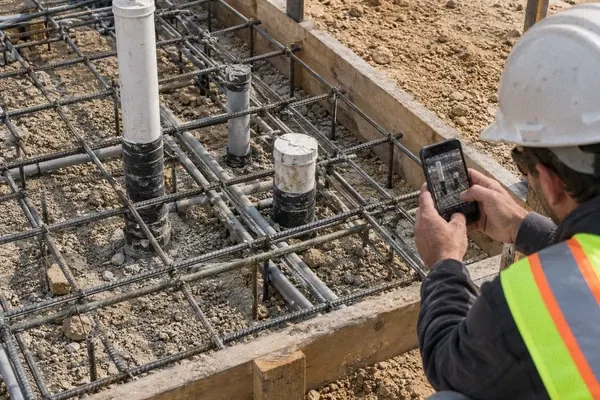
Suppose a foundation project requires a review before placement and also has a technician scheduled to sample fresh concrete. The pre-placement review is delayed. Someone suggests that the sampling technician can simply take photographs of the reinforcement and the pour can proceed.
The project manager checks the actual requirements and learns that the technician's assignment does not include releasing the earlier hold point. Delivery is coordinated while the correct approval is obtained. The sampling visit remains part of the later placement process.
The example illustrates why the word “inspector” can create false confidence. The relevant question is not whether a knowledgeable person is present, but whether the required review has occurred and the authorized person has released the next step.
Document costs without making unsupported liability claims
A delay may create supplier, equipment or labor costs. Record the timing, communications and contractual basis for any proposed charge. Do not assume that the owner, contractor or inspector automatically owes every cost simply because one event occurred late.
If the contractor requests a price revision, separate the schedule decision from the payment dispute. Required approval should not be bypassed to avoid discussing cost. The parties can preserve the facts and review financial responsibility under the agreement afterward.
Likewise, an owner should not order unsafe or unapproved continuation because a delivery charge seems wasteful. The cost of a delay is visible immediately; the consequences of covering unreviewed work may be harder to assess. Obtain the proper direction rather than making the decision through pressure alone.
Plan the next attempt
After a postponed pour, confirm what remains valid and what needs to be rechecked. Site conditions, protection and the approved configuration may have changed while the project waited. The responsible professionals should identify any necessary follow-up before the new placement date.
Send a concise revised schedule to the affected parties. Include the inspection dependency, delivery coordination and owner access arrangements. Keep the final approval record with the project documents so there is no later uncertainty about which inspection preceded the placement.
Can photographs replace a pre-pour inspection?
Only if the responsible authority accepts a suitable alternative for that project. An online example or a contractor's prior experience elsewhere does not establish that permission.
Should the homeowner decide whether the concrete truck waits?
Coordinate through the designated contractor contact and supplier arrangement. The owner should understand the decision and costs, but technical acceptance and delivery operations should not be improvised through conflicting instructions.
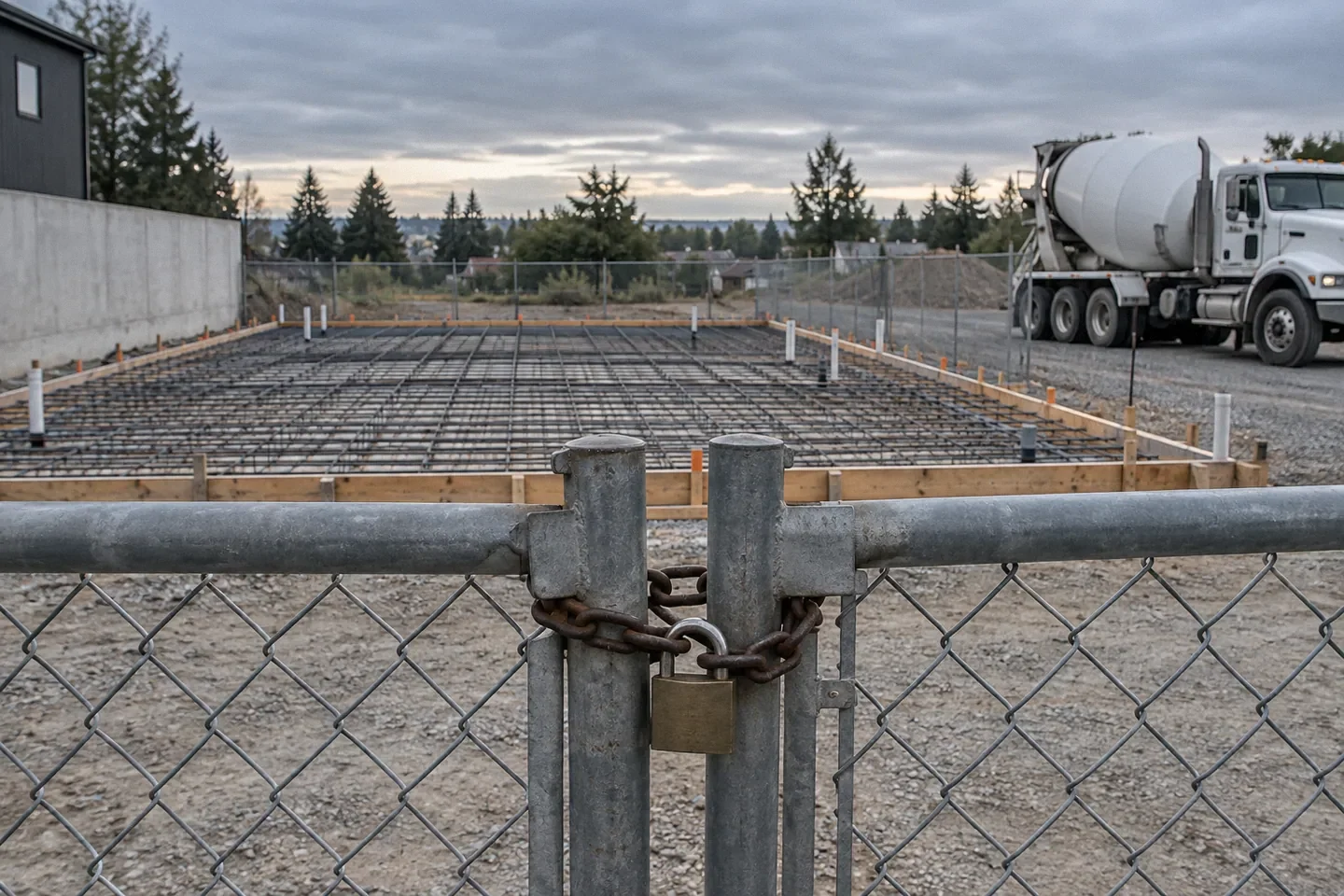
Resolve the approval status first, then coordinate placement. A truck on site is a scheduling event; it is not evidence that a required hold point has been released.
Research references
- primary · full
Orlando: Apply for an Engineering Permit - primary · full
Orlando: Residential Permitting Requirements - reddit · search-excerpt
Inspector is already 1.5 hours late. Pour starts in 15 minutes