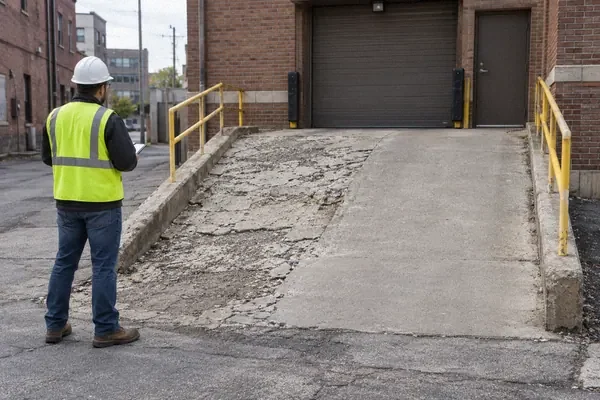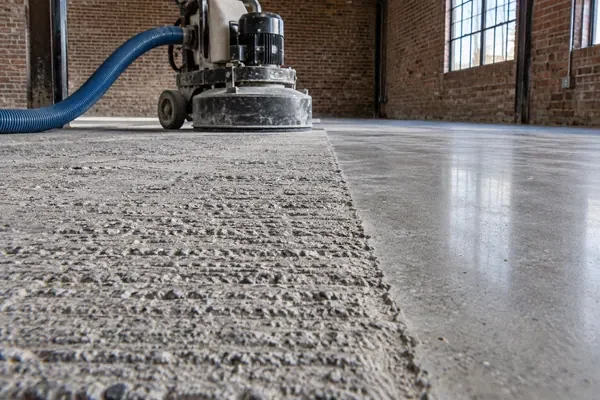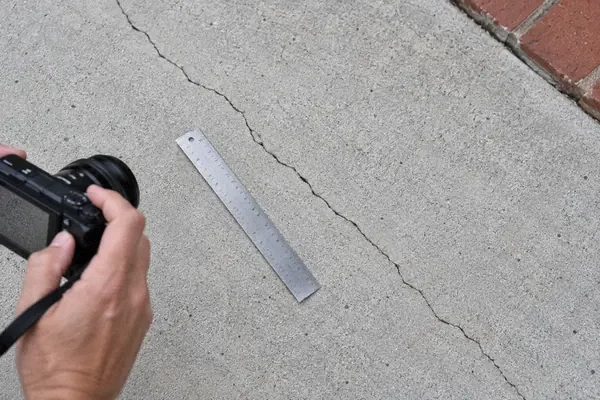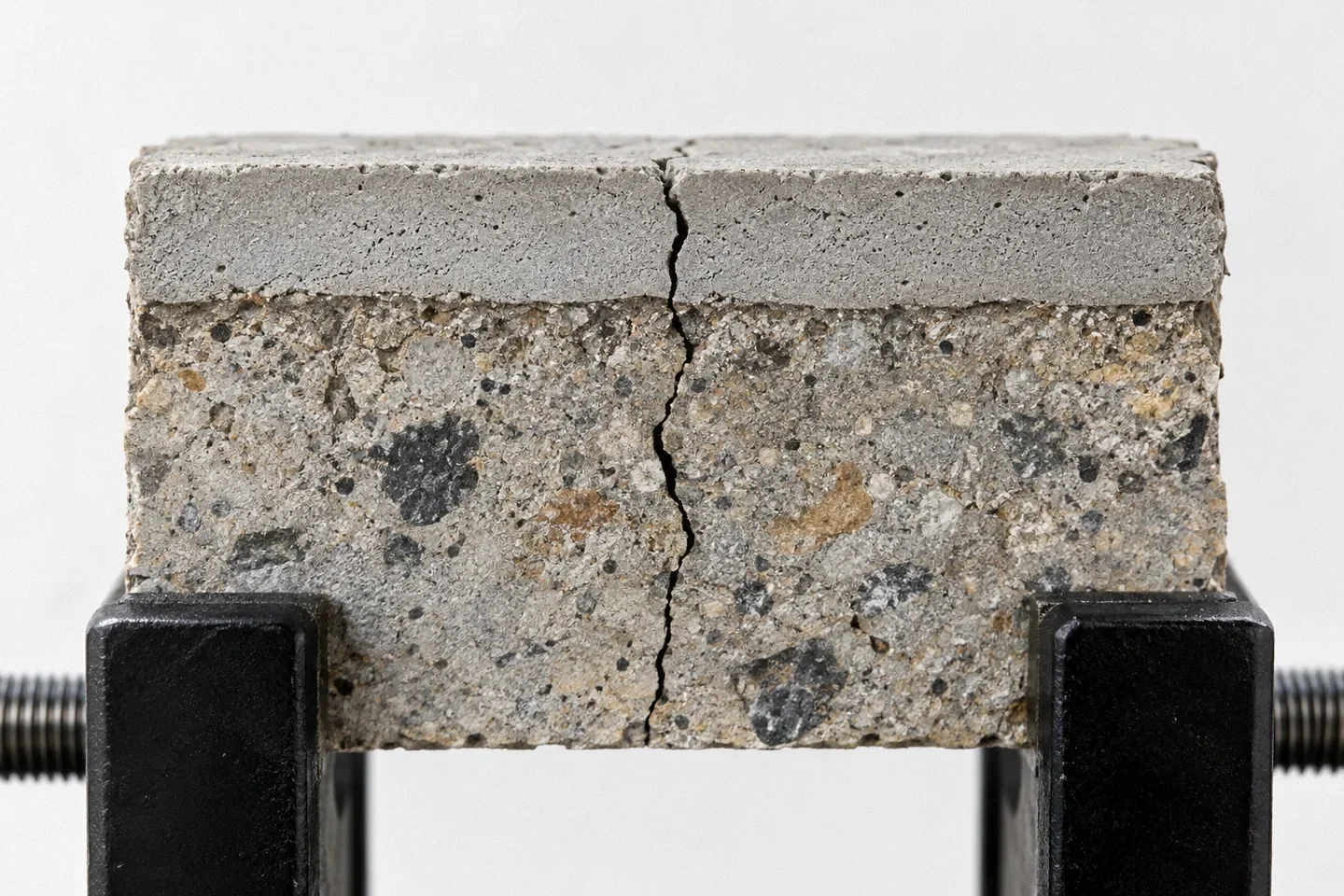
- Map existing cracks and joints
- Assess movement and substrate
- Agree on visible-line expectations
Reddit discussions identify questions; technical guidance comes from the linked primary sources. This article is not a site inspection or an engineered specification. How we research.
A fresh finish does not erase the slab's history
An overlay can make worn concrete look renewed, but it remains connected to an existing substrate. If the owner expects every old crack and joint to disappear permanently, that expectation needs careful review before work begins. The relevant question is how the selected system handles the existing condition, not how smooth a sample looks on installation day.
A Reddit homeowner asked whether a sinking, cracking patio could be repaired. That short question captures a common situation: the owner wants a renewed surface while movement may still be part of the problem. A forum cannot determine whether an overlay is suitable or whether the movement has stopped.
Understand what a reflected line means
When movement in the underlying concrete is expressed through a new surface, the owner may see a line in approximately the old location. The ARDEX CD technical data explicitly acknowledges that movement can cause cracks to reappear in its dressing. That is an important product limitation to discuss, not a reason to assume every overlay will fail.
A line can also occur for other reasons, so its location and timing should be documented rather than immediately diagnosed. Compare it with the preinstallation crack map and joint plan. Ask the installer to explain which mechanism is supported by the evidence.
The distinction matters when evaluating responsibility. A known limitation disclosed and handled in the scope is different from an unsupported promise that no crack can ever return. Keep the original documents so the discussion can refer to what was actually proposed.
Map the old surface before it disappears
Take wide photographs and mark every visible crack, joint, patch and area of deterioration. Record any measured change or displacement. Include the limits of separate pours and existing repairs if known. This map should be part of the project record before preparation covers or alters the evidence.
Ask the installer which cracks are considered stable and on what basis. A brief inspection may leave uncertainty about seasonal movement. The proposal should acknowledge that uncertainty instead of silently treating all lines as dormant.
Where the slab's role or movement is unclear, obtain the appropriate assessment before cosmetic work. An overlay is not a method for proving structural adequacy or restoring missing support. A neat finish can make the uncertainty less visible without making it less important.
Joints need an explicit detail
Existing joints are not merely blemishes. NRMCA CIP 6 explains their movement-related purposes. Ask how each joint will be carried through, treated or otherwise addressed under the selected system and project requirements.
Do not accept a blanket instruction to fill every groove rigidly because the owner wants a continuous appearance. The method must be suitable for the actual joint. Conversely, do not prescribe a joint detail yourself from a generic diagram. The contractor or designer should connect the repair to the original slab and the finish manufacturer's requirements.
The finished joint may remain visible. Discuss its width, color and layout as part of the appearance sample. A deliberate, well-explained line is preferable to discovering after installation that the promised seamless result was incompatible with the required detail.
Crack repair and overlay selection must work together
A repair material beneath an overlay needs compatibility with the entire system. Ask whether the manufacturer's guidance supports the proposed filler, preparation and waiting period. A strong-sounding repair material is not enough if it does not suit the movement or bond requirements.
The substrate around the crack also matters. Weak edges, delamination, old coatings or contamination can require additional preparation. A narrow line filled neatly does not establish that the surrounding area can support the overlay.
Request a clear sequence: assessment, preparation, repairs, readiness review and finish application. If findings during preparation change the condition, the sequence should pause for a revised scope rather than automatically proceeding to cover it.
Questions that prevent a misleading appearance promise
- Which existing cracks are expected to remain visible or potentially return?
- What evidence supports treating a crack as stable?
- How will each joint be handled?
- Which repair products are approved within the overlay system?
- What happens if preparation exposes additional damage?
- What appearance is represented by the approved sample?
- How will a later line be evaluated and maintained?
These questions do not demand a guarantee that concrete cannot move. They ask for a realistic description of how the system is intended to perform on the actual slab.
A hypothetical resurfacing dispute avoided
Imagine a hypothetical patio with an old crack crossing the seating area. The owner asks for a seamless overlay. Before the work, the installer documents the line and explains that the selected dressing cannot promise to hide future movement. A sample shows the proposed joint and repair appearance.
The owner can now decide whether the improvement is worthwhile despite that limitation. If the owner requires a different result, the project can be reconsidered before the overlay is installed. Without the conversation, the same visible line months later might feel like an unexpected failure even though the risk was present from the start.
If a line has already returned
Photograph it and compare it with the original map. Record when it appeared, whether it is changing and whether there is any height difference or loose material. Contact the installer before applying another filler or coating that could obscure the condition.
Ask whether the response is cosmetic maintenance, localized repair or further investigation of movement. The answer should follow the evidence. Repeating the same covering operation without understanding why the line returned can create a cycle of increasingly visible repairs.
Approve the system with its limits visible
A useful overlay proposal states what it improves and what existing behavior it cannot guarantee to suppress. Preserve the crack map, joint detail and sample approval. The aim is an informed restoration decision: suitable substrate, compatible repairs, maintained joint function and appearance expectations that remain realistic after the first attractive photograph.
Related questions
Does a crack through an overlay always prove bad application?
Not necessarily. Existing movement and the system's limitations must be considered alongside preparation and installation evidence.
Can every control joint be covered for a seamless look?
Do not assume that is suitable. The joint treatment must follow the selected system and the slab's intended movement detail.
Research references
- primary · search-excerpt
ARDEX CD Technical Data - primary · full
NRMCA CIP 6 - Joints in Concrete Slabs on Grade - reddit · search-excerpt
Concrete Patio Sinking - Repair?