- Check joint orientation
- Read the exact product limits
- Confirm preparation and containment
Reddit discussions identify questions; technical guidance comes from the linked primary sources. This article is not a site inspection or an engineered specification. How we research.
Start with the shape of the joint
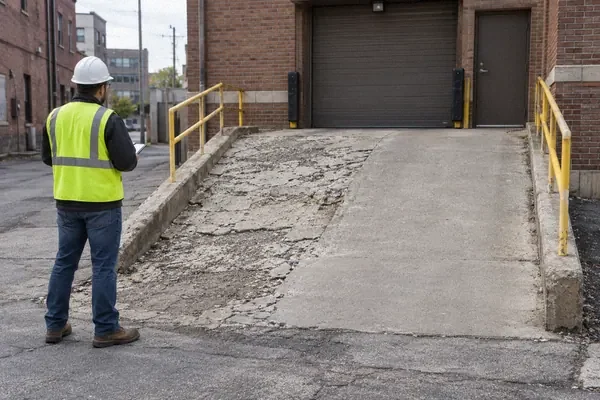
Driveways are rarely perfectly level. A joint may run across the slope, down the slope, around an edge or into a vertical face. These distinctions affect whether a flowing sealant can remain where it belongs and form the intended profile. Before buying material, sketch the joint route and note changes in orientation.
A Reddit homeowner asking about a sloped driveway joint received recommendations for several sealants. The useful issue is not which brand wins the discussion. It is whether the exact product and installation detail fit the slope, movement and substrate. A recommendation made without those facts is incomplete.
Also establish whether the line is actually a joint or an irregular crack. A product suitable for one defined joint geometry may not suit a narrow, branching opening. If the crack is associated with displacement or suspected support loss, that concern needs evaluation beyond choosing a sealant.
Understand the two descriptions
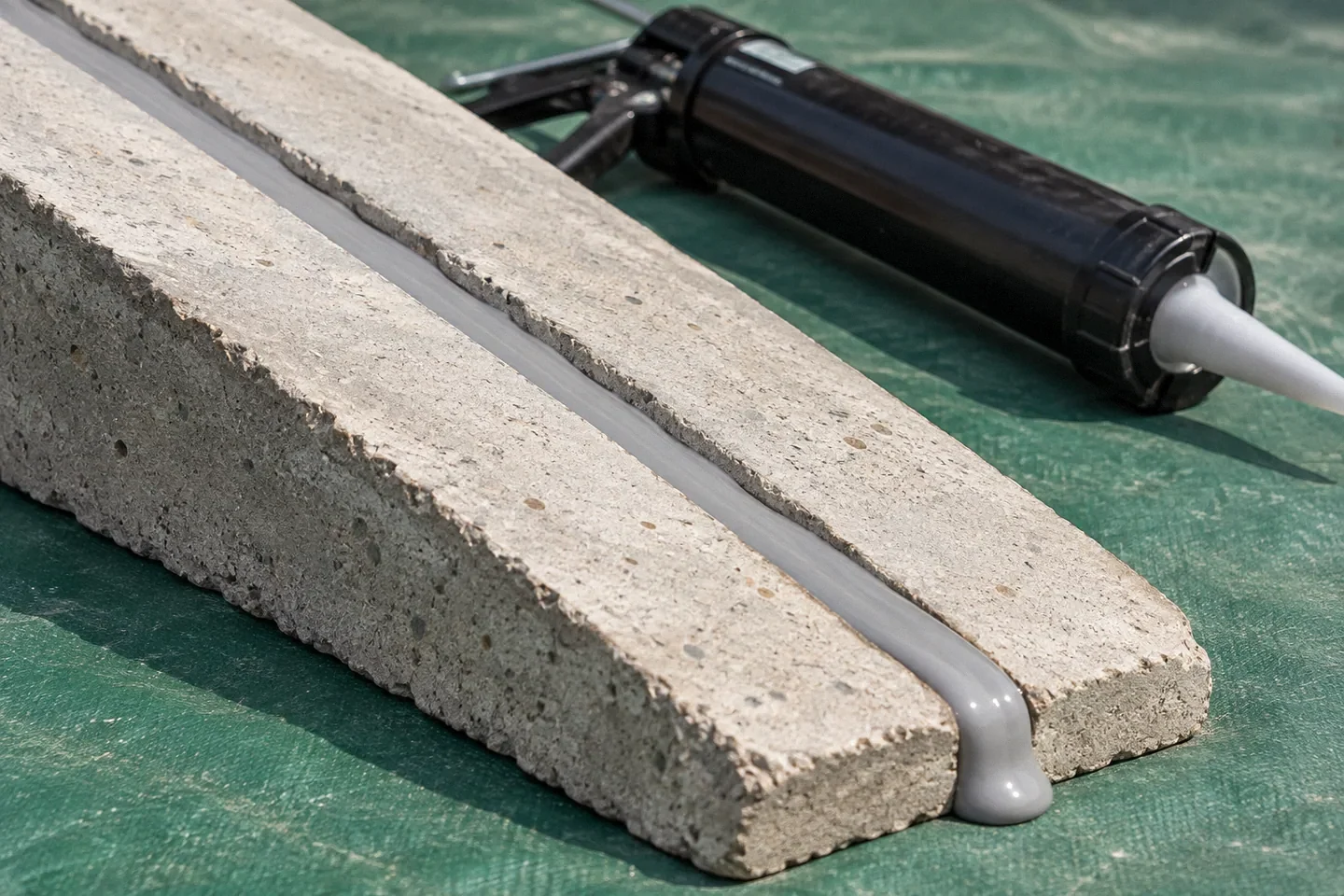
Self-leveling describes a material intended to flow into a relatively level surface profile within its application limits. Non-sag describes a material formulated to stay in place rather than flow in the same way. These terms help narrow the options, but neither is a complete specification.
Sika's Self Leveling Sealant page identifies horizontal expansion joints as its use. Sikaflex-1A is described as a non-sag elastomeric sealant. These are examples of why the full product name matters. Similar packaging or a shared brand does not make their application behavior identical.
Ask the supplier or installer to confirm suitability for the actual geometry. Provide photographs, the approximate slope, dimensions and exposure. If the instructions do not address your situation clearly, obtain technical guidance rather than improvising an installation detail.
Geometry affects more than neatness
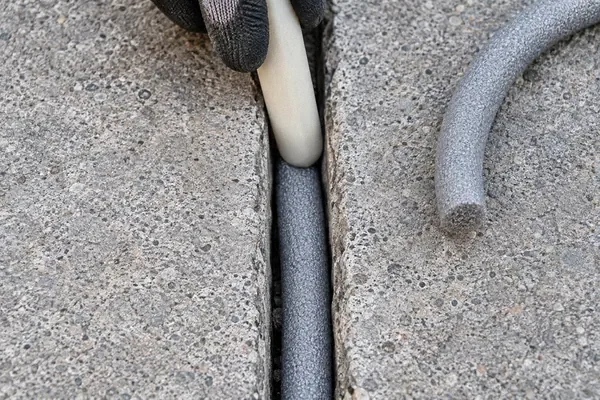
A joint can be much deeper than the intended sealant section. Material poured into an unprepared opening may disappear into voids or bond in unintended locations. Sika's self-leveling guidance includes using backer rod or bond-breaker tape to control bonding at the base. That is a designed joint detail, not simply a way to save material.
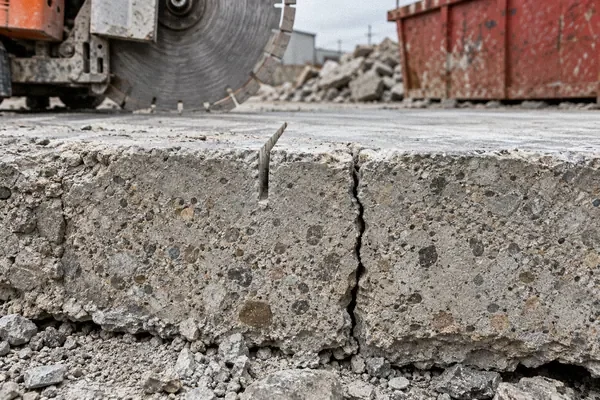
The concrete faces also need to meet the product's condition requirements. Loose edges, residue, old sealant or contamination may prevent the intended bond. Ask whether removal and repair of unsuitable material are included in the price. A quotation based only on linear feet can conceal substantial preparation differences.
Do not assume that filling the full visible gap is the correct approach. Ask for the required width and depth relationship for the selected product and the actual joint. Those dimensions should come from the manufacturer's instructions and the project conditions, not from a generic article.
Slopes and terminations need an installation plan
A flowing material can require special attention at ends, intersections and changes in elevation. The installer should explain how the chosen system is intended to remain contained and produce a suitable finished profile. If the solution involves improvised barriers or a product outside its stated use, ask for manufacturer confirmation.
For non-sag material, ask how the finished bead will be shaped and how that shape affects appearance and use. A proud bead across a walking or rolling surface may be objectionable even if its color is acceptable. The scope should describe the intended finish rather than leaving it to chance.
Weather and curing conditions also belong in the plan. Use the current instructions for the exact product to establish application conditions and return to use. Do not assume that a skin on the surface means the material is ready for all traffic or water exposure.
Questions to resolve before opening a cartridge
| Detail | Question for the installer |
|---|---|
| Orientation | Does the product suit this slope and any vertical section? |
| Movement | Is its movement capability appropriate to the joint? |
| Joint faces | What preparation and edge repair are required? |
| Depth | How will the intended sealant section be formed? |
| Terminations | How will material be controlled at ends and intersections? |
| Appearance | Will the finished profile be recessed, flush or otherwise specified? |
| Return to use | What curing conditions and protection are required? |
A complete answer may identify a different product for different sections. Convenience is not a reason to force one consistency into every orientation.
A hypothetical sloped driveway
Imagine a hypothetical driveway with one joint running across the slope and another descending toward the street. The owner assumes both can receive the same self-leveling material because both are on the ground. The installer reviews the geometry and determines that the descending section needs a different approach under the selected product's guidance.
The important result is not that one sealant type is universally better. It is that the site condition was checked before material was applied. A small trial can help evaluate finish and containment when the manufacturer allows the application, but it should not be used to justify ignoring a stated limitation.
Before ordering, ask whether the joint will be treated in one continuous operation or in separate sections. Record where different materials meet and whether the manufacturer permits that connection. A neat-looking transition between products can conceal an unresolved compatibility detail. Include the exact material names in the completion record so future replacement does not repeat the selection process from scratch.
Keep sealing separate from movement repair
If one slab is higher than the other, record that condition and ask how it will be handled. Sealant may address part of a maintenance objective while leaving the displacement unchanged. It cannot be assumed to restore the missing support or correct the elevations. Approve a product only after its role is clear, and retain its data sheet with the repair record so future maintenance can use a compatible system.
Related questions
Can self-leveling sealant run downhill?
Its flow is part of how it works, so slope and containment need review. Use the exact manufacturer's guidance rather than assuming every horizontal-looking joint is suitable.
Is non-sag sealant a repair for uneven slabs?
No. It is a material characteristic, not a correction for slab displacement. Address the height difference and the sealing objective separately.
Research references
- primary · search-excerpt
Sikaflex Self Leveling Sealant - primary · search-excerpt
Sikaflex-1A - reddit · search-excerpt
Crack opened in concrete driveway: best sealant [Colorado]