- Map hollow and loose areas
- Review removal and patch limits
- Verify readiness before epoxy
Reddit discussions identify questions; technical guidance comes from the linked primary sources. This article is not a site inspection or an engineered specification. How we research.
Preparation can reveal a larger job
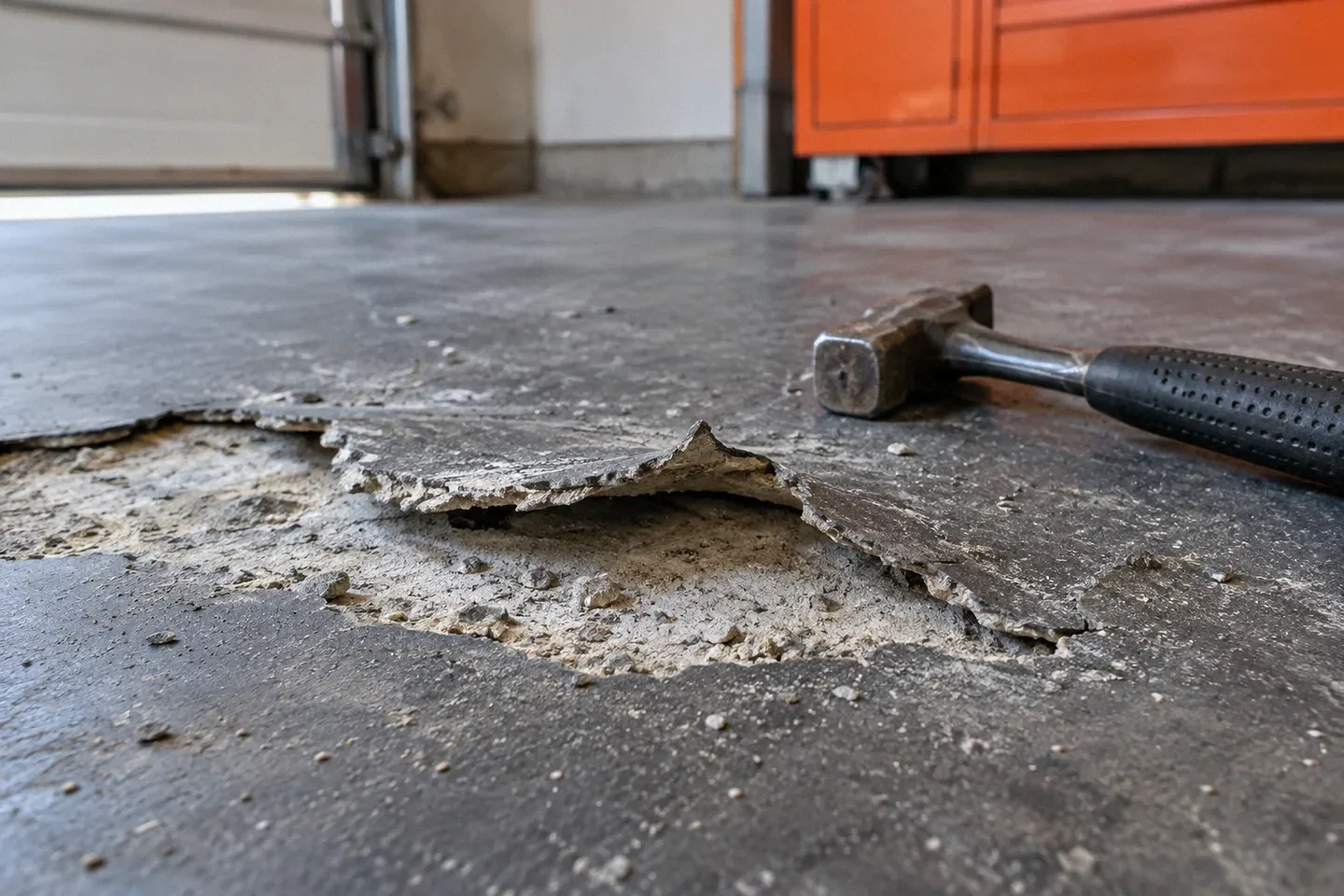
A garage floor may look serviceable until cleaning or grinding exposes flakes, weak patches or areas with a different sound. At that point, the task is no longer simply applying the quoted coating. The installer needs to determine what material is unsound and what surface will remain after suitable preparation.
A Reddit homeowner preparing a garage for epoxy found delaminated areas and asked whether deeper grinding, shot blasting or patching was appropriate. The useful issue is the sequence: define the condition before choosing how much material to remove or which filler to buy. The comments cannot establish the depth or extent of that floor's damage.
Understand what delamination describes
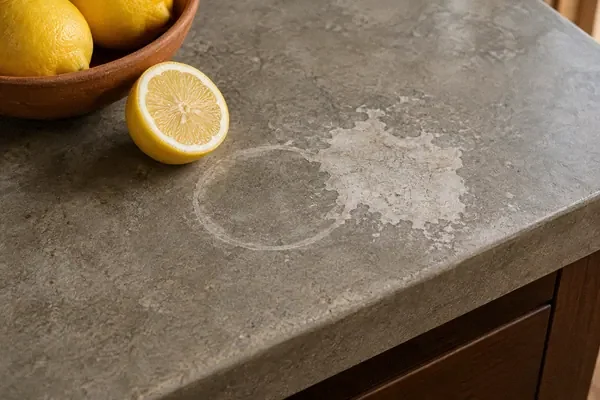
NRMCA CIP 20 describes delamination as separation of a surface layer and discusses ways it may be detected and repaired. That condition is different from a simple color mark. A finish bonded to a detached layer has not thereby made the layer integral with the underlying concrete.
The term should still be used carefully. A hollow response can require interpretation, and the assessment must distinguish surface separation from other conditions. If there is deeper deterioration, reinforcement-related damage or a structural slab, the scope of evaluation changes. Do not apply a shallow garage-floor repair assumption to every hollow-sounding slab.
Ask the contractor to identify what is observed, what is suspected and what additional examination is needed. This helps prevent a tentative label from becoming a fixed repair plan before the extent is known.
Map the damage before broad removal
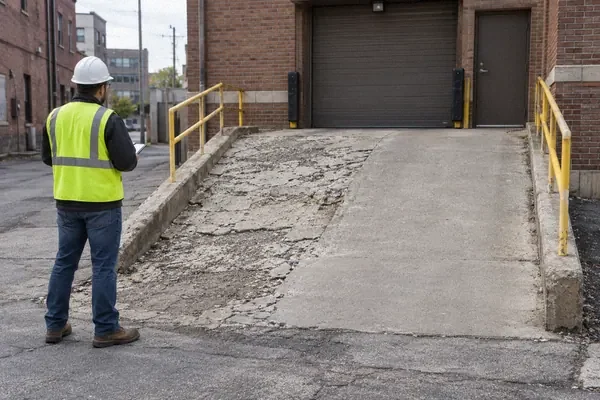
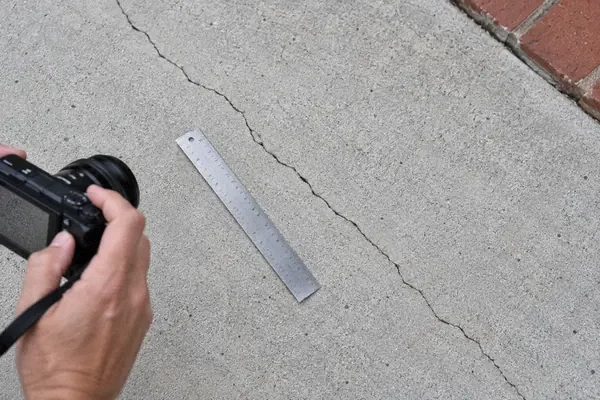
Have the affected areas marked on a floor plan or annotated photographs. Record both visible loose spots and areas requiring further review. Include joints, old patches, drains and areas of different finish. The map gives the owner and contractor a common basis for discussing scope changes.
Ask how the assessment will be performed and who will interpret it. A casual tap in one corner is not necessarily a complete survey. The method should match the importance of the coating investment and the suspected extent of damage.
Avoid personally breaking away large areas to help the contractor. Uncontrolled removal can change the repair boundary and create additional work. If exploratory removal is needed, agree on its location, purpose and how the findings will be documented before it starts.
Choose preparation by the required result
Grinding and shot blasting are methods, not guarantees of readiness. The key question is whether the chosen process reaches suitable concrete and produces the condition required by the coating system. Ask the installer to state that result rather than simply naming the equipment included in the quote.
If weak areas extend deeper than initially expected, the process may need to change. A fixed-price coating proposal should explain what happens when preparation reveals such conditions. It is better to pause for an agreed repair scope than to continue because materials are already on site.
Also ask how dust, debris and surrounding areas will be managed through the contractor's appropriate work procedures. This is an operational part of the scope, not a reason for the homeowner to attempt the removal with an improvised tool setup.
Patching must fit the coating system
A patch material needs to suit the repair depth, substrate and next finish. Do not select it solely from its advertised compressive strength. Ask the coating manufacturer or system provider to confirm compatibility and the required waiting or preparation steps before coating.
The ARDEX CD technical data illustrates the product-specific nature of substrate preparation and repair limits. It should not be assumed to be the right patch for every garage epoxy project. The complete coating system may have different requirements.
Clarify the treatment of joints and existing cracks. A repair that makes the floor visually continuous can still leave movement concerns. The finished appearance, joint detail and possibility of reflected cracks should be described before the owner approves a smooth, seamless expectation.
Moisture remains a separate readiness question
Reaching sound concrete does not establish that the floor meets the coating's moisture limits. NRMCA CIP 28 discusses the relationship between slab moisture and finish performance. Ask which tests the selected system requires and how results will be recorded.
This matters when preparation and coating are scheduled close together. A repaired, clean floor can look ready while another acceptance condition remains unresolved. The schedule should allow a decision based on the system's requirements rather than on the appearance of the surface alone.
Do not assume that a moisture-mitigation primer, if proposed, resolves every kind of water issue. Its suitability and limits need to be confirmed for the actual condition and system.
A scope-change checklist
- What area is confirmed or suspected to be unsound?
- How will removal boundaries be established?
- What constitutes suitable concrete after preparation?
- Which repair materials are compatible with the coating?
- How are deeper unexpected areas handled and priced?
- What moisture and other readiness checks remain?
- What appearance differences or joints will remain visible?
The checklist protects the owner from a cosmetic finish over an unresolved substrate and gives the contractor a clear process for necessary additional work.
A hypothetical garage discovery
Imagine a hypothetical epoxy job where the first preparation pass exposes several detached patches. The original quote allowed only minor pinhole filling. Instead of covering the areas, the contractor maps them and proposes a defined repair stage with a readiness review before coating.
The owner can now approve the additional work with an understanding of its purpose and uncertainty. If the condition proves too extensive for the proposed system, the finish plan can change before money is spent on an unsuitable coating. That pause is useful project control, not evidence that the preparation process has failed.
Do not let the finish deadline decide
Ask for a documented substrate acceptance point before epoxy begins. Keep the damage map, repair information and test results with the coating warranty documents. The finished floor is only the visible part of the project; the hidden preparation determines whether the selected system has the conditions it requires. Resolve the unsound material first, then choose and install the finish on that basis.
Related questions
Will a thicker epoxy coat bridge delamination?
Do not rely on a finish coat to make detached concrete sound. The substrate condition must be addressed under the coating system's requirements.
Does a hollow sound prove the slab has a void underneath?
Not by itself. Surface-layer separation and loss of support are different possibilities requiring appropriate interpretation.
Research references
- primary · full
NRMCA CIP 20 - Delamination of Troweled Concrete Surfaces - primary · search-excerpt
ARDEX CD Technical Data - primary · full
NRMCA CIP 28 - Concrete Slab Moisture - reddit · search-excerpt
concrete delamination