- Identify the material's job
- Read the complete bag label
- Check thickness and exposure
Reddit discussions identify questions; technical guidance comes from the linked primary sources. This article is not a site inspection or an engineered specification. How we research.
The practical difference appears when you ask what the material must do. A driveway needs a slab mixture suitable for its loads and exposure. A brick wall needs a material intended to bed and bond masonry units. Buying a bag because it says “cement” somewhere on the label does not resolve either question.
A Reddit discussion about concrete, cement, and mortar captures the confusion: the words sound like different stages of the same material. They are not a useful sequence of powder, wet paste, and hardened slab. This distinction matters before buying supplies because correcting the wrong material after placement is much harder than correcting an order.
Start with the binder, then identify the mixture
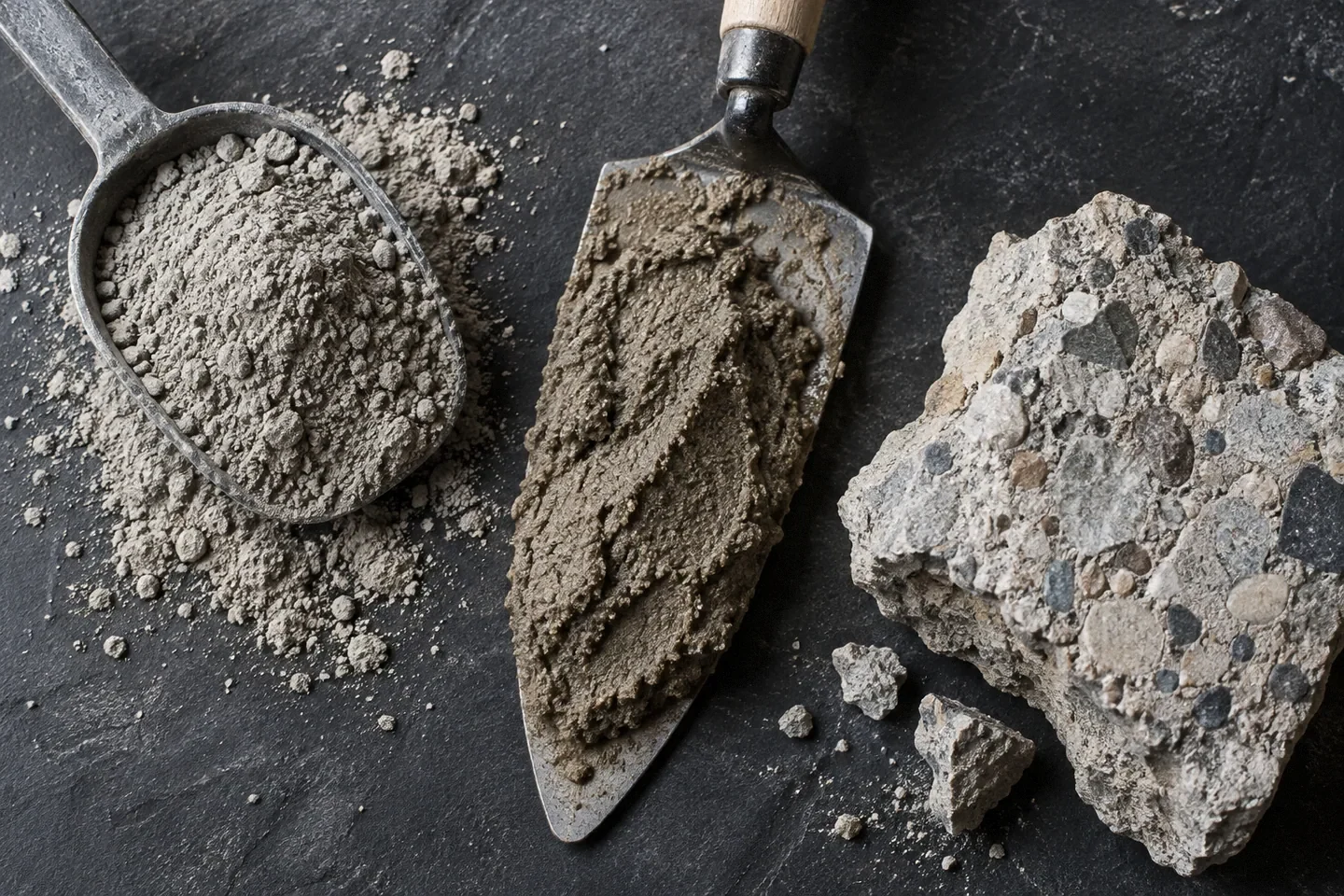
Cement reacts with water and serves as a binding ingredient. Concrete combines a cementitious binder, water, and aggregate. Mortar is formulated for applications such as masonry bedding and bonding. The QUIKRETE glossary distinguishes these ingredients and material terms. That vocabulary helps you interpret labels, but the exact product instructions still determine what a particular bag can do.
Imagine a shelf containing Portland cement, concrete mix, mortar mix, and a specialized repair material. The bags might share a manufacturer and similar colors. Their intended applications, aggregate sizes, required water, and placement thicknesses can differ. The store aisle is therefore a poor place to improvise a recipe based on appearance.
“Just add water” is especially important. A packaged concrete mix may already contain its aggregate. A bag of Portland cement is a different starting point. Adding water to the latter does not recreate the packaged slab product sitting beside it.
Choose by function rather than a familiar word
Before comparing brands, describe the actual work in one sentence. “I am placing a freestanding patio slab” is more useful than “I need cement.” Likewise, “I am bedding concrete masonry units” distinguishes that job from filling a formed footing or patching a thin surface defect.
Then answer four questions: how thick will the material be, what supports it, what loads will it carry, and what conditions will it experience? These are selection inputs, not a home-designed engineering specification. If a drawing names a material, strength, or installation method, bring that information to the supplier rather than translating it into a casual bag description.
| Intended work | Useful starting category | What still needs checking |
|---|---|---|
| New patio or walkway slab | Concrete intended for slabs | Thickness, exposure, support, finish |
| Bedding brick or block | Appropriate masonry mortar | Masonry type and specified mortar |
| Thin localized repair | Product designed for that repair | Minimum depth and substrate preparation |
| Casting a countertop | Suitable casting or countertop mix | Aggregate, forming, reinforcement, curing |
| Mixing from raw ingredients | A designed mixture | Proportions, moisture, equipment, consistency |
The table is a shopping framework. It does not make products within each category interchangeable. A fast-setting repair compound and an ordinary slab mixture can both contain cement while requiring very different working methods.
A hypothetical shopping mistake
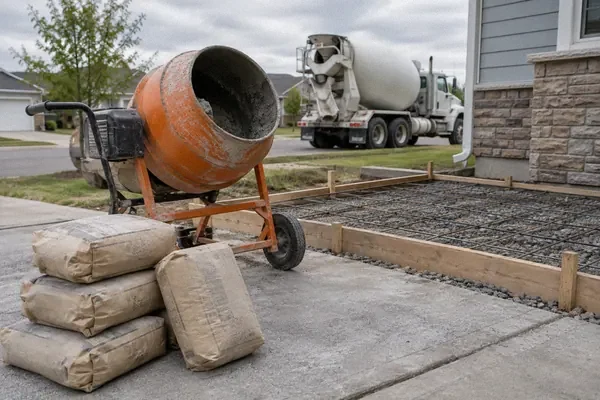
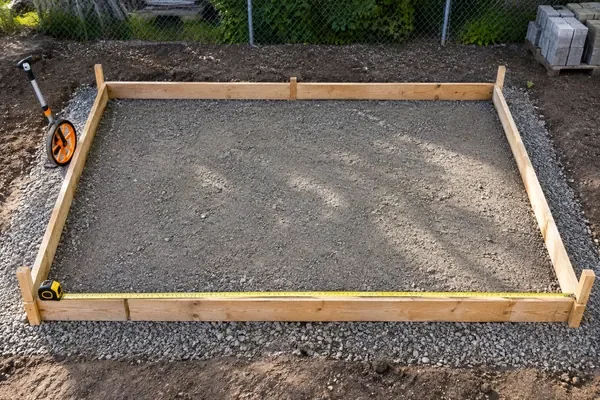
Suppose a homeowner wants to extend a patio with a small rectangular pad. They buy Portland cement because the existing surface is commonly called a “cement patio.” At home, the bag lists additional ingredients rather than a simple water-only preparation.
The correct next step is to stop and identify the intended slab mix. Trying to compensate by adding whatever sand and gravel are nearby turns one product-selection mistake into an uncontrolled mixture. It also creates new questions about aggregate moisture, proportions, and batch consistency that the homeowner did not plan to manage.
Now suppose the same homeowner is setting a row of masonry units around a planter. A slab concrete mix may have coarse particles that make it unsuitable for the intended joint. The project has changed, so the selection should change too. The fact that unused bags remain from another job is not a reason to force them into the new application.
Why names become less helpful on specialized products
Repair materials, grouts, overlays, and casting mixes complicate the simple three-word comparison. Some contain polymers or other ingredients that change their handling and permitted uses. Some names describe a function more than a single universal recipe.
Read the product data sheet with your project in mind. Locate the application list, substrate requirements, thickness range, mixing instructions, working time, and curing procedure. If the intended use is missing, ask the manufacturer about that exact use. A retailer's broad category label is weaker evidence than the named product's instructions.
Avoid adding extra cement to a packaged product merely to make it appear smoother or richer. That changes the mixture the manufacturer described. A surface appearance problem might instead involve forming, consolidation, aggregate clearance, or the finishing process.
Bring a useful question to the supplier
Take dimensions, photographs of the work area, and any applicable drawing. Explain whether the material will stand alone, bond to an existing surface, sit between masonry units, or fill a confined space. State whether it is outdoors, indoors, or continuously exposed to moisture.
Ask for the exact product name and data sheet rather than accepting “this is basically the same.” Confirm that you understand what must be added and how the quantity is calculated. Keep the label and batch information until the work is complete.
The most useful decision is the one made before mixing: identify the function, select a product documented for it, and follow that product's preparation and curing requirements.
Frequently asked questions
Can I make a patio with mortar instead of concrete?
Do not substitute masonry mortar for a slab mixture just because both contain cement. The patio needs a product intended for that placement, along with an appropriate support and installation plan.
Does a bag labeled cement contain gravel?
Not necessarily. Check whether it is a binder or a complete packaged mixture. The full description and mixing instructions tell you more than the largest word on the bag.
Research references
- primary · search-excerpt
QUIKRETE glossary - reddit · search-excerpt
Whats the difference between cement, concrete, and mortar?