- Create dated reference photos
- Track opening and height change
- Match repair to movement
Reddit discussions identify questions; technical guidance comes from the linked primary sources. This article is not a site inspection or an engineered specification. How we research.
A crack is a condition over time
The temptation is to treat a crack as a fixed shape: measure it once, buy something that fits, and fill it. That approach misses a central question. Is the opening still changing, or is it a stable remnant of an earlier event? A photograph records a moment, not a movement history.
In a Reddit discussion about an opened driveway joint, the owner described both water entry and an offset between sections. Responses focused heavily on sealant brands. The more useful distinction is between limiting water entry and addressing the movement that produced the offset. One proposed product does not necessarily accomplish both.
Start by identifying the surface. Ordinary ground-supported driveway concrete, an elevated slab and a structural wall have different implications. If the crack affects a structural element, the evaluation must reflect that role. Do not use a homeowner observation log as a substitute for a needed professional assessment.
What active and dormant mean for the decision
In practical repair discussions, active means movement remains relevant to the repair; dormant means the crack is being treated as no longer moving for the proposed application. The important point is the basis for that judgment. Ask whether it comes from measurements, history, site conditions or an assumption made because only one visit was possible.
Concrete can respond to changes in moisture, temperature, loading and support, as outlined in NRMCA CIP 4. An apparently quiet week does not represent every condition the slab will experience. That does not mean every homeowner needs a year-long study. It means the evaluator should state the limits of the available evidence.
A repair specification may distinguish between moving and dormant cracks. For example, the ARDEX CD technical data warns that movement can cause a crack to reappear through its dressing. This is a product limitation, not a prediction about your slab. It illustrates why identifying movement matters before selecting a cosmetic covering.
Build a baseline that can be compared
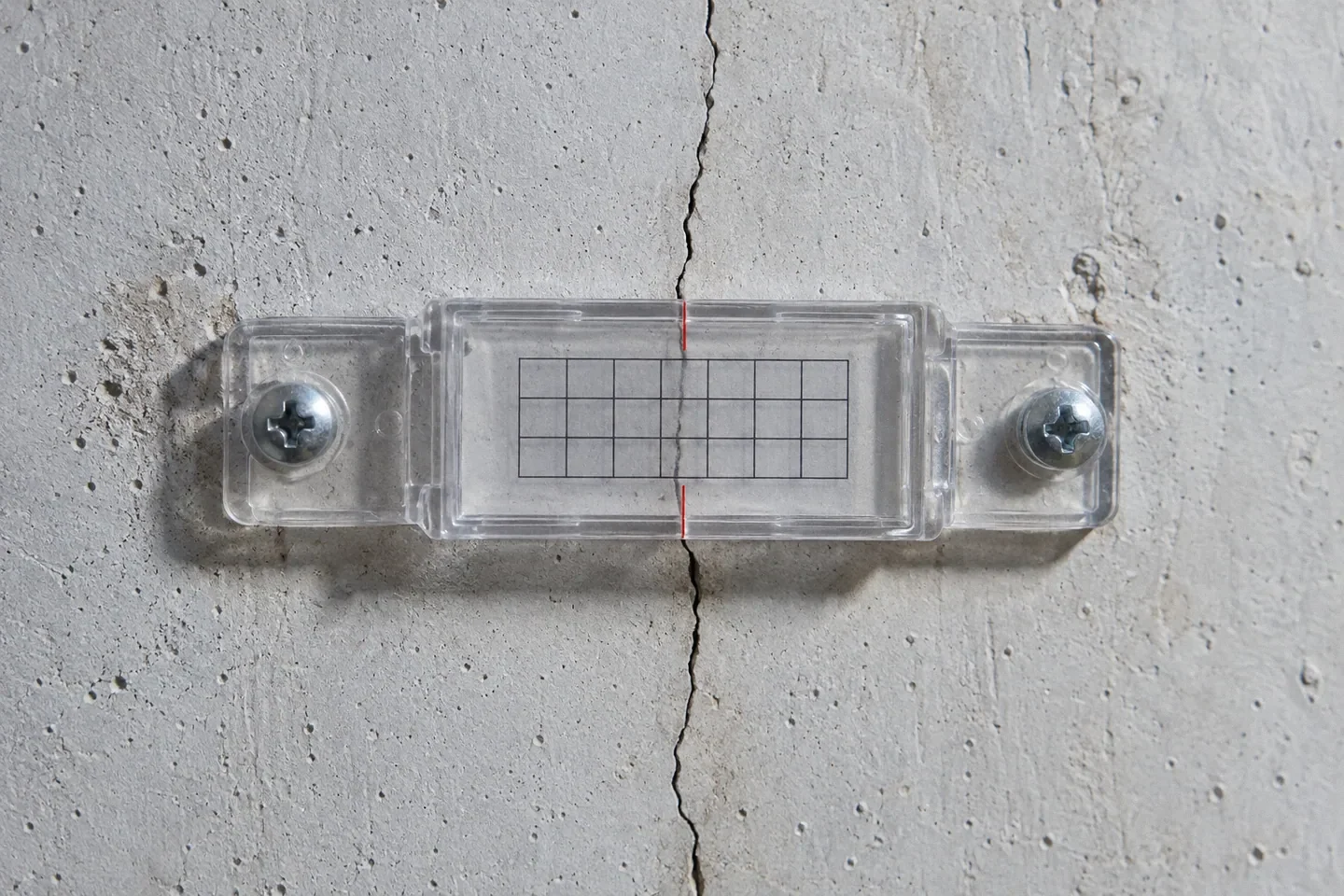
Choose recognizable reference points along the crack, such as its intersection with a joint or a fixed feature nearby. Photograph each point with a suitable scale and record the date. Use a consistent camera angle and avoid comparing a shadowed image with a brightly lit one. Include one wider view each time so the reference location remains clear.
Record changes in height as well as opening. If you cannot measure an offset reliably, describe it as an observation rather than assigning a precise value. Note whether doors, gates, drainage or normal traffic are affected. Those effects may be more useful to the evaluator than an uncertain decimal measurement.
If specialized gauges or monitoring are proposed, ask who will install and interpret them. Do not attach improvised devices in a way that damages a finish or creates a hazard. The method should match the importance of the decision being made.
Keep the observation log short enough to use
A useful entry can fit in a few lines:
- Date and reference location.
- Opening or offset measurement, including how it was taken.
- Dry, wet or recently exposed to rain.
- Any unusual loading or nearby work since the last entry.
- Any change in drainage, loose edges or normal use.
- Photograph filenames and the next planned review.
Separate facts from interpretations. “Water remained along the line after the rest dried” is an observation. “The foundation is failing” is an interpretation that requires much more evidence. Keeping the log factual makes it easier for another person to assess and avoids anchoring the discussion to an unproven cause.
Match the repair objective to the evidence
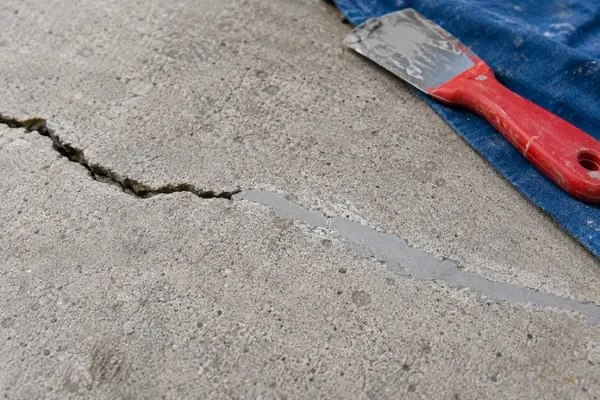
Ask what the repair is intended to accomplish. A flexible sealant may be considered for a movement joint, while a rigid material may serve a different repair purpose. Neither should be selected only because it is called concrete crack filler. The exact product limitations, substrate condition and installation geometry matter.
A contractor proposing a rigid fill should explain why continued movement is not expected to defeat it. A contractor proposing flexible sealing should explain the movement and exposure conditions the product is intended to accommodate. If the panels have displaced, ask how the repair addresses the resulting height difference. A neat surface bead can leave that separate concern untouched.
For a planned overlay, clarify whether a repaired crack will remain visible, be carried through the finish or potentially return later. Put that expectation in the scope. Otherwise the owner may interpret a visible line as a failed promise even when the product's limitations were predictable.
A hypothetical seasonal comparison
Imagine a hypothetical driveway crack measured once during a dry period. A rigid fill looks attractive because the edges appear quiet. Before the work begins, an older photograph shows the same location under different weather conditions with a visibly different opening. That evidence changes the conversation: the repair must account for movement rather than treating the current measurement as permanent.
Now imagine a different crack with a documented stable history but loose, weak edges. Movement may not be the main issue, yet simply pouring filler into the opening is still incomplete. The surrounding material must be suitable for the selected repair. Stability and substrate soundness are separate conditions, and both belong in the decision.
Ask for a review trigger
End the initial assessment with an agreed next action and a reason to revisit it. That might be a scheduled inspection, a measurement change or a new effect on drainage or use. Do not rely on a vague instruction to keep an eye on it. A defined record and review point make it possible to decide whether the crack is behaving as expected and whether the proposed treatment still fits the evidence.
Related questions
How long must a crack be watched before it is dormant?
There is no universal observation period for every slab and exposure. The evaluator should explain what conditions and time span are needed to judge the particular crack.
Can flexible sealant fix vertical movement?
A sealant is not a substitute for correcting a support or displacement problem. Ask separately how the movement and any resulting trip or drainage issue will be addressed.
Research references
- primary · full
NRMCA CIP 4 - Cracking Concrete Surfaces - primary · search-excerpt
ARDEX CD Technical Data - reddit · search-excerpt
Crack opened in concrete driveway: best sealant [Colorado]