- Identify actual service exposure
- Specify required air with producer
- Match finish to the mixture
Reddit discussions identify questions; technical guidance comes from the linked primary sources. This article is not a site inspection or an engineered specification. How we research.
“It is outside, so add air” is too incomplete to serve as a concrete order. So is “air makes it weak, so leave it out.” A useful specification starts with the conditions the concrete will experience and the surface the project needs.
A Reddit discussion about power trowels on broom-finished slabs shows how mixture and finishing questions become tangled. Participants were discussing different regions, processes, and exposure assumptions. A method used successfully elsewhere is not enough information to copy the whole specification.
Begin with service conditions
Will the slab become wet and experience freezing and thawing? What environmental requirements apply to the project? Is it an exterior walking surface, a garage, or another application with a specified finish?
NRMCA's ordering guidance discusses air content in connection with freezing exposure and aggregate size. It does not support selecting one air percentage for every project bearing the word “patio.”
Give the producer the exposure information and applicable specification. If a designer has already established requirements, use those rather than substituting a local rule of thumb from an unrelated project.
Distinguish entrained air from visible voids
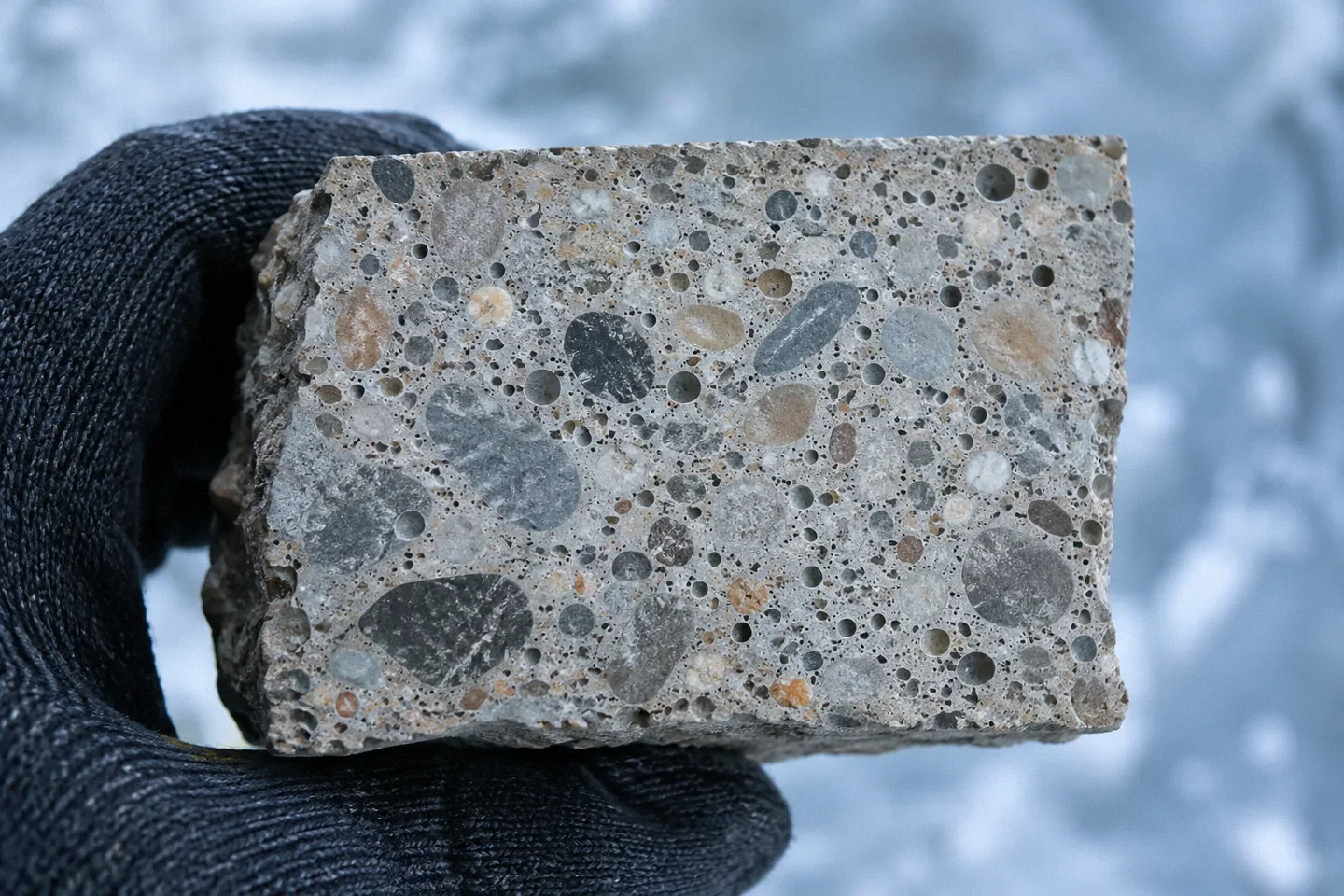
The phrase “air in concrete” can refer to different things. An intentionally specified air system is not the same conversation as large unintended voids caused by poor placement. Avoid treating every air-related term as a single defect.
For the purchaser, the practical issue is to identify what was specified and how compliance will be established. Do not diagnose air content by looking at the wet surface or counting visible holes.
A manufacturer or producer discussion grounded in admixture guidance is more useful than an argument about whether concrete should contain “bubbles.” Use the terminology that appears in the project requirements and test records.
Choose the finish with the mixture
A very smooth appearance can be attractive in a photograph, but exterior walking surfaces also need an appropriate texture and drainage plan. The intended finish should be discussed before the mixture is ordered.
NRMCA's flatwork finishing guidance addresses finishing practices and cautions relevant to air-entrained concrete. Do not assume that a hard-troweling sequence used on an interior floor can be transferred unchanged to an exterior slab.
There is also a difference between using a machine with a floating pan and repeatedly hard troweling a surface. Ask what operation the contractor actually proposes. The equipment name alone may conceal important process differences.
A hypothetical two-area project
Suppose a property owner wants an interior workshop floor and an exterior apron to look identical. The contractor initially describes both as “smooth concrete,” and the owner expects the same finishing sequence.
During planning, the team identifies different exposure and traction requirements. The workshop's desired appearance and the apron's weather conditions must be reconciled separately. The solution may involve different surface treatments or mixtures, depending on the design.
The owner can still request visual coordination. A sample panel, clear finish description, and discussion of expected differences are more useful than insisting that both areas receive an identical process.
This example does not establish a required mix for either area. It demonstrates why adjoining slabs can need separate specification decisions.
What to ask before approving the order
| Question | A useful answer includes |
|---|---|
| What exposure is assumed? | The actual service conditions |
| What air requirement applies? | The written mixture specification |
| How will it be checked? | The applicable verification process |
| What surface is intended? | A defined finish or approved sample |
| Is the finishing sequence compatible? | An explanation tied to the mixture |
| What changes are permitted on site? | A producer-supported procedure |
Keep the discussion focused on the planned work. A statement that “we always do it this way” does not explain whether the method fits this exposure and finish.
Do not improvise air entrainment in bags
A homeowner mixing bags may encounter advice to add dish soap or another household ingredient. That is not a controlled substitute for a documented admixture and mixture procedure.
Use a product intended for the application and consult its manufacturer if additional air entrainment is required. Adding an ingredient independently changes the packaged system and creates questions that the bag's original instructions may no longer answer.
If the project requirements cannot be met with the available product, choose a suitable material or obtain professional assistance with the mixture. Convenience at the store is not evidence of compatibility.
Keep placement and testing connected
When air content is a specified acceptance property, arrange the relevant testing as part of the project. Testing should follow the applicable procedure and be coordinated with any authorized adjustments.
Record the mixture delivered and any changes. Do not assume that a label on an order automatically describes every later condition after handling and placement.
For an owner without a testing role, the practical responsibility is to make sure the project team has identified who verifies what. Ask for the agreed requirements and records rather than trying to perform an improvised field test.
Make an exposure-based decision
The final choice should link service exposure, mixture requirements, placing method, and finish. Those items support one another. Selecting air content separately from everything else can create a specification the crew cannot sensibly execute.
Start by describing where the slab is and how it will be used. Then have the producer and installer explain how their proposed material and process satisfy that need.
Frequently asked questions
Does all outdoor concrete need the same air content?
No. The relevant exposure and specification control the discussion. Avoid copying a percentage without its context.
Can I insist on a glossy hard-troweled exterior surface?
Discuss compatibility and traction before deciding. A photograph of another slab does not establish that its mixture, exposure, or finishing process matches yours.
Research references
- primary · full
NRMCA CIP 31 Ordering Ready Mixed Concrete - primary · full
NRMCA CIP 15 Chemical Admixtures for Concrete - primary · full
NRMCA CIP 14 Finishing Concrete Flatwork - reddit · search-excerpt
Power trowel on brushed concrete